Bail Hotline Bail Bonds | Whittier Bail Office

Local bail bondsmen ready 24/7 to help you or someone you love get out of jail in Los Angeles County

  • Fast 24/7 online bail support
  • Flexible and cheap bail bond payment plans
  • Licensed bail bondsmen with years of experience
  • Free inmate search and bail guidance
Call this office 24/7 (562) 450-0236

NO COMMITMENT TO BAILING OUT WITH US

Free inmate search & information Free bail guidance Bail out completely online

Complete the secure form for free inmate information and bail guidance.

Office essentials

Whittier Bail Office

Address
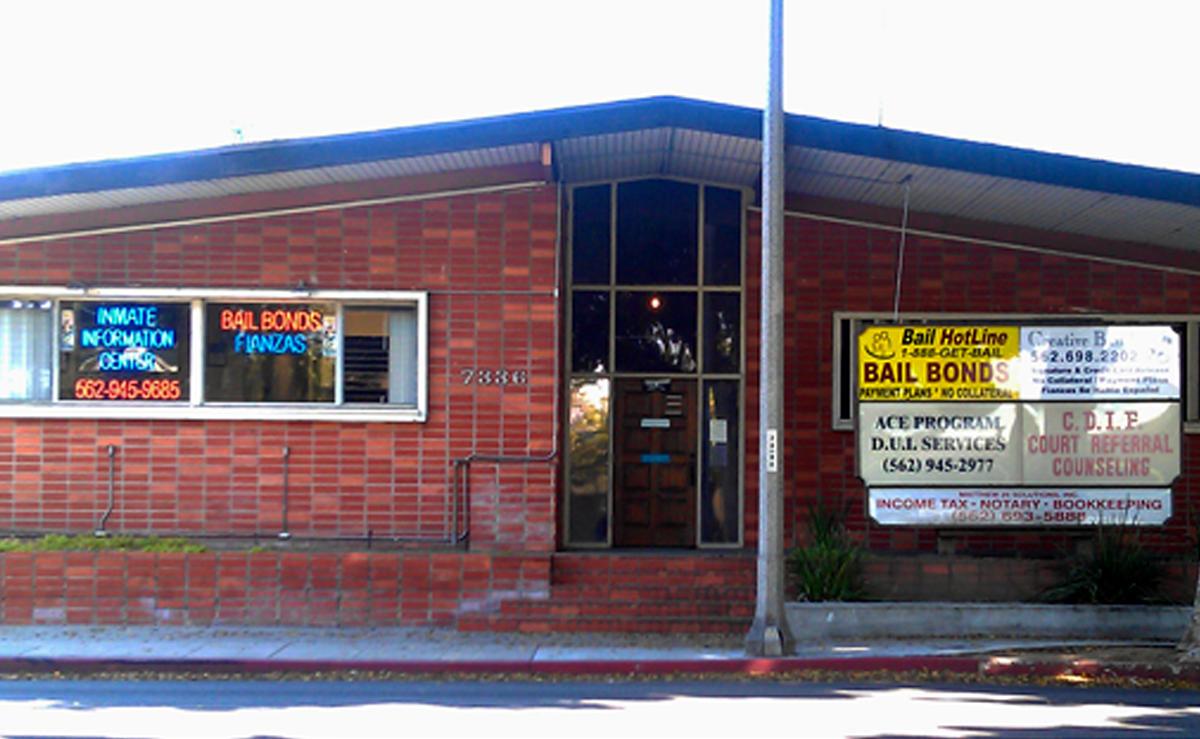
7336 Painter Avenue
Whittier, CA 90602
Phone & bail-service hours
Phone and bail-service help 24 hours a day, 7 days a week. Call ahead for an office visit.
Get directions

Map to Whittier Bail Office

A Bail Bond Company You Can Trust

Bail Hotline brings experienced bail bondsmen, 24/7 local service, free information assistance, online bail arrangements, and flexible payment options together for Whittier families. When someone you care about has been arrested, we help you find the available information, understand your choices, and move the bail process forward.

Our Whittier Bail Office is at 7336 Painter Avenue, Whittier, CA 90602, on Painter Avenue in Whittier. Call (562) 450-0236 with whatever you know. You can start with a name, an approximate arrest time, or the place where the arrest happened. You do not need to finish an inmate search or know the bail amount before asking for help.

Experienced Bail Bondsmen With Local Knowledge

Family-owned since 2004, Bail Hotline brings more than two decades of company experience to the families we serve. Our Whittier bail bondsmen work with arrest, custody, warrant, court, and bail information as part of their regular responsibilities. We help families navigate Whittier city-jail records, LASD county-custody information, transfers, court dates, and the release status that applies to the individual case.

That experience helps us identify the right next step: find a booking record, confirm the current jail, review a reported bail amount, prepare a bond, or explain why a court decision must come first. We follow the current record as the case moves through the system, so families have a clearer picture of what is happening.

Free Help, 24/7 Availability, and Online Service

Phone and bail-service support are available 24 hours a day, seven days a week, including nights, weekends, and holidays. Our Whittier office is open for service; call ahead to arrange an in-person visit. You can also ask about completing your bail arrangements online.

Inmate-search help, available warrant and court-information checks, bail-amount searches, and general bail guidance are free. You do not have to buy a bond or become a client. We can search the available information for you, help you use the official resources yourself, or explain a result that has left you unsure. An official agency may charge for a particular record or search; our information assistance is free.

Affordable Options and Clear Costs

Tell us what your household can manage. Bail Hotline offers California Instant Rebates, approved low down payments, and California payment plans with no financing interest. A modest income or poor credit does not automatically rule out consideration, and qualified cosigners or several approved signers may help support an arrangement.

Ask about 1 percent bail, 0 percent bail, or $500 bail down payments. These describe an approved initial payment toward the premium; the remaining premium is paid under the agreement. Qualified clients with $25,000 or less in court-set bail may be approved for $500 or less down. An approved Instant Rebate can also reduce the total premium itself. Your bail bondsman will explain the total cost and the options available for your application.

Most approved Bail Hotline bonds do not require property collateral. We explain fees at signing and guarantee a refund of any fee we charge that was not clearly explained then. If circumstances change during a payment plan, call ahead so our team can discuss an adjustment. Our affordability guide explains the options, the fee-refund guarantee, and how previous premium payments can be credited when the same charges return after an original Bail Hotline bond is exonerated.

English and Spanish Assistance Through a Connected Team

For bail bonds en español, call the same Whittier number. Bail Hotline provides English and Spanish assistance through our office and bondsmen network. If the first person who answers does not speak Spanish, we can connect you with a Spanish-speaking Bail Hotline bondsman who can guide the conversation and coordinate the bond work.

Our local office also has the support of Bail Hotline’s wider network of offices, licensed bail bondsmen, experienced operations managers, and local posting coverage. When another facility, county, or posting location is involved, we can coordinate the information, paperwork, and appropriate local handoff while keeping the Whittier office connected with your family.

Specialized Support When Bail Becomes More Complicated

Since 2012, Bail Hotline has been developing and refining its coordinated process for the bail side of PC 1275.1 source-of-bail matters. Every Bail Hotline office can activate that specialized support. The team organizes the proposed transaction and source information with the family and the defendant’s chosen attorney while the assigned bail bondsman works on the remaining bond requirements.

We also help families work through available information about warrants, multiple cases, Magistrate Review, and delayed release. Our role is to prepare and coordinate the bail work; the court makes its release decisions, and the jail completes physical release. We explain what is ready and what must happen next. The full PC 1275.1 guide describes the specialized process.

Respectful Service and Continued Support

Patience, clear explanations, responsive communication, professionalism, and respect are standards Bail Hotline values throughout its Whittier office. Our bail bondsmen work together to keep information and paperwork coordinated, help clients understand the next available step, and continue answering questions after the immediate bail process.

The team section below explains the communication, follow-through, teamwork, and respect you can expect when contacting our Whittier office.

Call (562) 450-0236 for Whittier bail help. Tell us what happened and what you need. We will help you understand the available information, your payment options, and the next step.

Outstanding Whittier Bail Bondsmen

Our Whittier office is at 7336 Painter Avenue, Whittier, CA 90602. The Whittier Police city jail is at 13200 Penn Street, Whittier, CA 90602. It is a temporary city-custody facility, separate from Bail Hotline and from the county facilities involved after a transfer.

Whittier Police serves Whittier and Santa Fe Springs. Families may call us for Whittier jail inmate-search help, Santa Fe Springs bail help, or questions after a transfer into Los Angeles County custody. The nearby Whittier Courthouse at 7339 S. Painter Avenue is listed for family law; criminal court assignment must come from the case record. Official courthouse directory.

These are relevant regional facilities, not a guaranteed route from any particular arrest. The current custody location and assigned courthouse should always be confirmed. While clients sort through those questions, our Whittier bail bondsmen can explain the bail bond process and help them understand the next available steps.

Patience, clear explanations, responsive communication, professionalism, and respect are standards Bail Hotline values throughout its Whittier office. Our bail bondsmen work together whenever a client calls or visits our office.

Supportive Guidance From the First Call

A useful conversation begins with listening and helping the client understand what can happen next. You can start with a name or whatever information you have; you do not need to understand the jail system before asking for help.

We want every client to receive care from our Whittier office. Clear explanations and respectful treatment help families take the next step with more confidence, even when information is still incomplete.

Clear Explanations of the Bail Process

For Bail Hotline, efficient service includes explaining the next step clearly. We want clients to understand the information being checked, the choices available, and what is needed to move the bond work forward.

Our Whittier bail bondsmen work together to keep information and paperwork coordinated. We can explain the total premium, an approved initial payment, and the remaining payment arrangement before you decide how to proceed.

Patience and Continued Support

Families can still have questions about the bond, a payment arrangement, or the next reported court date after release. We want clients to feel comfortable asking questions and receiving attention when they call.

Our team can help locate available information and explain what needs to be confirmed with the jail, court, or attorney. If circumstances change during a payment plan, call ahead so our team can discuss the available next step.

Coordinated Bail Assistance

For Bail Hotline, working together means keeping the client connected with useful information as the bail work moves forward. A family should be able to ask questions and understand which next step is ready, even when more than one team member is involved.

We value the contribution of every Whittier team member who brings clear communication and respectful treatment to the same work. When another facility or county is involved, our office can coordinate the appropriate company handoff and local posting support.

A Guide to Whittier Bail

How do you get someone out of jail? First, call Bail Hotline Bail Bonds’ Whittier office at (562) 450-0236.

Do not wait until you have found the person online, confirmed the jail, obtained a booking number, or learned the bail amount. If you know the arrested person’s name, that is enough for a bail bondsman to begin helping. If you do not know the person’s name yet, call anyway and tell us whatever you do know, such as when and where the arrest may have happened, the person’s approximate age, or which agency may have made the arrest.

That early call matters in Whittier because temporary city-jail custody and a transfer into the Los Angeles County jail system require different follow-up. An arrest may involve Whittier Police, the Los Angeles County Sheriff’s Department, California Highway Patrol, or another arresting agency. The person may be released under an applicable procedure, taken to court, or transferred into county housing. Bail Hotline can help organize the available information and determine which part of that process should be checked next.

The immediate path is:

  1. Call Bail Hotline with whatever information you have.
  2. Confirm the arresting agency, current custody location, and actual release or bail status.
  3. Complete the applicable release or bail-bond process, then allow the responsible jail or court to finish its work.

Arrested in Whittier: What Happens Next?

The exact arrest location and arresting agency matter more than the words “Whittier” by themselves. Whittier Police identifies Whittier and Santa Fe Springs as its service communities. That service area does not establish where a particular person is currently held.

  • Whittier: check the agency named on the arrest information and whether the person is at the Penn Street city jail.
  • Santa Fe Springs: Whittier Police service may be relevant, but the current agency and custody record still need confirmation. A city name alone does not decide court assignment.
  • A nearby unincorporated area or another city: provide the exact street or intersection. Another police or sheriff’s agency may be responsible.
  • A county transfer: follow the latest LASD record and confirm whether the person is at court, in reception processing, or in an assigned housing facility.

Neighborhood names can overlap or be used loosely. The exact street, intersection, business, residence, or freeway location can help identify the correct system. An arrest near our office does not establish the present housing or release-pickup location.

If the Person Is at Whittier Police Jail

If the available information points to the Whittier Police jail, ask staff whether the person is still held there, whether booking is complete, and which release or court-transport instructions apply.

13200 Penn Street
Whittier, CA 90602

The jail contact is (562) 567-9220. The department describes its jail as a Type I temporary local facility that handles pretrial misdemeanor and felony arrestees, bail and bond processing, and court transportation. It is a city police jail, not a Los Angeles County Sheriff’s station.

Bail Hotline’s Whittier office has a different address:

7336 Painter Avenue
Whittier, CA 90602

The addresses must not be confused. Bail Hotline is a private bail bond company and is not part of, operated by, or affiliated with Whittier Police, LASD, a jail, or a court.

A Whittier jail inmate search should follow the current record. A very recent arrest may not appear immediately, and the city jail may no longer be the holding location after court or transfer. A blank result does not prove release, transfer, or that an arrest never occurred.

A temporary city-jail classification does not guarantee that the person will be released when that stage ends. Transfer to county custody can mean continued detention under the same case or another custody requirement.

What If the Person Moves From Whittier City Jail to a Los Angeles County Jail?

Whittier Police city-jail custody and LASD county housing involve different agencies and locations. A person may leave the Penn Street jail for court, reception processing, or an assigned county facility. Ask for the latest location rather than continuing to rely on the city jail named in the first call.

That means a person may begin at Whittier Police Jail, be transported to court, or later appear in the official Los Angeles County inmate locator under LASD custody. The facility shown in a custody record can change during the same case.

Names a family may encounter in the county system include:

  • The Inmate Reception Center, LASD’s central processing facility for male prisoners, including booking and release functions and bail-and-bond coordination.
  • Men’s Central Jail, a separate county housing facility at 441 Bauchet Street.
  • Twin Towers Correctional Facility, a separate county facility at 450 Bauchet Street.
  • Century Regional Detention Facility in Lynwood, which LASD uses for female processing and release functions.

These are not interchangeable names, and none should be treated as an automatic destination. Housing and transfer decisions can depend on the person’s court status, classification, security considerations, medical or mental-health needs, available space, and other case-specific circumstances.

Before driving to a jail or planning a release pickup, confirm the person’s present housing location through the official LASD Inmate Information Center or LASD’s current inmate-information line at (213) 473-6100.

Why Is the Person in Custody, and Why Can That Change the Bail Procedure?

Someone may enter or remain in custody because of a newly alleged misdemeanor or felony, an arrest or bench warrant, a missed court date, an alleged probation, parole, or postrelease-supervision violation, a domestic-violence or protective-order allegation, a DUI or other custodial traffic arrest, multiple pending cases, or a warrant or hold from another county or agency.

These are examples of custody paths, not a claim that they are the most common arrests in Whittier. An arrest is also not a conviction.

The reason for custody matters because Los Angeles County does not assign a money-bail amount to every warrantless arrest. Under the Los Angeles Superior Court’s 2026 Felony Bail Schedule and 2026 Misdemeanor Bail Schedule, many eligible offenses are designated at $0 for cite and release, book and release, or magistrate review when the person is arrested without a warrant.

Cite and release or book and release can result in release under the applicable protocol. Magistrate review requires booking and an individualized decision. The magistrate may order release with appropriate conditions or defer the release decision until arraignment.

A $0 pre-arraignment designation does not mean that the case has been dismissed, that the person has been found innocent, or that release is unconditional. Other allegations, statutory exceptions, enhancements, warrants, court orders, supervision matters, additional cases, or holds may require a different procedure.

Before the first court appearance, a warrant case may use the bail amount endorsed on the warrant, while a warrantless arrest uses the applicable Los Angeles County schedule or pre-arraignment protocol. Once the defendant has appeared before a judge on the charge, the judge’s bail or release order controls.

Even familiar labels such as theft, battery, domestic violence, DUI, or a controlled-substance allegation do not determine the result by themselves. The exact code section, allegation, enhancement, warrant status, other pending cases, supervision status, and court orders can change the procedure.

The Los Angeles Superior Court summarizes three broad outcomes after a person is taken to jail:

  • Release without charges being filed.
  • Release after posting bail or on the person’s own recognizance, with a court date.
  • Continued custody and transportation to court to see a judge.

Bail Hotline does not set bail, decide whether charges are filed, remove a hold, determine guilt or innocence, or provide criminal-defense advice.

How the Whittier Bail Bond Process Works

  1. Call Bail Hotline before trying to solve the system alone. Tell the Whittier office whatever you know. A name is enough to begin, and incomplete information is expected soon after an arrest.
  2. Identify the arresting agency and present custody location. A bail bondsman can help distinguish Whittier city custody from LASD county housing and explain which official source should be checked. The office will not guess that the person remains at Whittier Police Jail merely because the arrest happened nearby.
  3. Allow the jail booking process to create and update the record. During booking, the agency records identifying information, alleged charges, warrants, cases, property, and other custody information. The record may be temporarily unavailable or may change during transport, court processing, or transfer. A booking number is useful when available, but it is not required before calling Bail Hotline.
  4. Confirm the actual release or bail status. The next step may be cite and release, book and release, magistrate review, release on recognizance, a financial bail amount, a court hearing, or continued detention. The bail bondsman must review the current record rather than assume that every arrest requires a bail bond.
  5. Review how to post bail when a surety bond is available. When a surety bond is available, your bail bondsman explains the total premium, payment options, any collateral requirement, and what the signers need to do. We complete the paperwork and present the authorized bond to the proper receiving unit. A separate bond may be needed for another pending case.
  6. Coordinate the bond with the correct receiving and holding units. When the person is in LASD custody, LASD’s integrated bail procedure allows the bail-receiving location to coordinate with the unit that physically holds the person. The place where a bond is presented is therefore not always the place where the person is housed or released. Your bail bondsman confirms the proper receiving location and whether a bond is currently available.
  7. Let the jail complete the jail release process. Before release, the facility verifies the case, amount, bond, custody status, and whether another charge, warrant, hold, or court order still affects release. After a bond is accepted, jail staff—not the bail bond company—control final record checks, movement, property processing, and release. No responsible bail bond company can guarantee an exact release time.

After release, the defendant must attend every required court appearance and comply with all court orders. A bail bond does not dismiss the case or determine guilt or innocence. An attorney handles criminal defense and legal advice; Bail Hotline handles the bail-bond transaction and related coordination.

What Information Should You Have Ready?

Call even if all you have is a name. If more information is available, it can help the bail bondsman distinguish between people and custody systems:

  • Full name and spelling.
  • Date of birth or approximate age.
  • Time and exact place of arrest.
  • Arresting agency or officer’s station, if known.
  • Booking number, case number, or warrant number, if known.
  • Current jail or custody status shown in an official record.
  • Any bail amount, court date, separate case, or hold that the agency has already reported.

None of these items is a prerequisite to asking for help. Do not delay the first call because a booking record is incomplete or because the family does not yet understand the Los Angeles County bail schedule.

Start With One Call

If someone you care about has been arrested in Hyde Park, Watts, Crenshaw, Leimert Park, Vermont Knolls, Athens, Lennox, or another Whittier community, call Bail Hotline Bail Bonds’ Whittier office at (562) 450-0236.

The office can help identify the appropriate city-jail or LASD county-custody path, explain what is confirmed and what is still unknown, and guide the family through the next practical step.

How to Get Cheap Bail in Whittier

To get cheap bail in Whittier, call Bail Hotline at (562) 450-0236 and ask about an Instant Rebate, a low down payment, and a payment plan that fits your household. Qualified clients may have access to 1 percent bail down payments, 0 percent bail down payments, or a $500-or-less starting payment on bail of $25,000 or less.

An arrest can create an expense your family never planned for. Rent, groceries, transportation, and other bills do not disappear because someone needs bail. Tell the bail bondsman what you can put together, how income arrives in your household, and whether relatives or friends could help.

Tell us what you can manage. Our Whittier team will explain the starting payment, total premium, any collateral or signer responsibilities, and the support available after posting so you can decide with confidence.

What Do 1 Percent Bail, 0 Percent Bail, and $500 Bail Mean?

These Bail Hotline options describe an approved initial down payment toward the bail-bond premium. The remaining premium is paid under the agreement.

Down-payment examples using $25,000 in total court-set bail
Down-payment optionWhat it meansExample using $25,000 in total court-set bail
1 percent bail down paymentAn approved starting payment equal to 1% of the court-set bail amount$250 initially
0 percent bail down paymentAn approved arrangement requiring no initial payment before posting$0 initially
$500 bail down paymentAn approved $500 starting payment toward the bond premium$500 initially

1 percent bail means the approved down payment is calculated at 1% of the court-set bail amount. It does not mean the entire premium costs 1%.

0 percent bail means an approved $0 initial payment. The premium still must be paid according to the agreement. This is also separate from Bail Hotline’s policy of charging no financing interest on California payment plans.

$500 bail, as used in these offers, means a $500 down payment. It does not mean that the court set bail at $500 or that the entire bond costs $500.

For qualified clients with bail set at $25,000 or less, Bail Hotline may approve $500 or less down. Some qualified clients may receive a starting payment between $0 and 1% of the bail amount. Your bail bondsman will explain which arrangements can be approved for your circumstances.

If the approved total premium is $2,000, for example:

  • A $250 down payment leaves $1,750 in premium to pay.
  • A $500 down payment leaves $1,500.
  • A $0 down payment leaves the full $2,000 payable under the agreed schedule.

A manageable down payment can help you begin. Understanding the remaining balance helps you choose an arrangement you can maintain.

An Instant Rebate Can Reduce the Total Premium

A low down payment addresses the immediate expense. An approved California Instant Rebate can reduce the total premium itself.

Qualifying Bail Hotline transactions may receive rebates of 1–3 percentage points from an applicable 10% premium rate, producing an approved rate of 9%, 8%, or 7%.

For $25,000 bail, that means:

  • $2,500 at 10%.
  • $2,250 at 9%.
  • $2,000 at 8%.
  • $1,750 at 7%.

Possible qualifications include homeownership, military service or qualifying military family status, student status, union membership, government employment, fixed-income assistance, and representation by a private attorney. Other documented circumstances may also be considered.

Tell your bail bondsman about the qualifications of the people participating in the bond. Documentation and approval determine the rebate available. Learn about Bail Hotline’s California Instant Rebates.

The California Department of Insurance confirms that bail bondsmen may negotiate lower fees through rebating. Ten percent is a common California premium, rather than a percentage every customer is legally required to pay.

Can I Get Affordable Bail Bonds With Low Income or Bad Credit?

A modest income or poor credit does not automatically disqualify someone from consideration. Bail Hotline looks at the application as a whole and can consider documented wages, part-time work, self-employment, retirement, disability, and other lawful recurring income.

Several approved signers may also support an application together when one person could not qualify alone. Tell the bail bondsman about the resources available across the people willing to help. Bond approval, rebate approval, and approval of a particular payment arrangement are separate decisions. Read how Bail Hotline considers income and multiple signers.

Property collateral is also uncommon on approved Bail Hotline bonds. Most are written without requiring a home, vehicle, savings, or other valuable property. Ask about your actual application before assuming that cheap bail or a low down payment requires pledging something you cannot afford to lose.

Can I Add a Cosigner Just to Qualify for Better Terms?

Yes. A qualified cosigner may be added primarily to help the bond qualify for an Instant Rebate, a lower down payment, or a more manageable payment plan. That person still accepts the responsibilities in the agreements they sign.

For example, a relative’s documented qualification might support a rebate even though the defendant plans to make every payment after release. Another person’s income or stability might help support a lower starting payment.

A cosigner accepts the obligations in the documents they sign, even if someone else plans to make the payments.

Your bail bondsman will explain which payments and court-appearance duties the signature covers, including responsibility for guaranteed payments or permitted expenses if the agreement is breached.

Ask which agreements and payment obligations you are accepting, what happens after a missed court date or an unpaid installment, and whether any property is being pledged.

Someone may also contribute money without becoming a cosigner. The bail bondsman should explain whether the proposed contribution requires a signature and what that signature would mean.

Flexible Payments When You Call Ahead

Bail Hotline works with families on payment arrangements, including changes in who contributes, how a payment is divided, and adjustments that can be approved when circumstances change. Call ahead so the team can work through the options with you.

One relative might make the initial payment while the defendant handles the installments after release. Several people might divide a payment in different amounts. Those contributions can change from one installment to the next when coordinated with Bail Hotline.

If a paycheck is delayed, work hours change, or an unexpected bill makes the next installment difficult, contact the team before the payment is due. We can discuss moving a due date, adjusting a scheduled payment, changing the contributors, or another workable arrangement. Confirm any agreed change so you know the revised amount and deadline.

Bail Hotline does not charge financing interest on its California payment plans. Paying the premium over time does not cause the balance to grow through financing interest. Ask about any separate payment-related charges and their conditions at signing.

For existing payment arrangements, call Financial Services at (951) 224-8573. Payments can be made through the app, a requested payment link, by phone, or at a Bail Hotline office. The Payments page explains the available methods.

Fees Explained at Signing, With a Refund Guarantee

Bail Hotline explains the fees you are agreeing to, including potential future fees such as recovery expenses. If we charge a fee that was not clearly explained at signing, we guarantee a refund of that fee.

You should understand the financial agreement before committing to it. That includes the premium, down payment, remaining balance, payment schedule, collateral requirements, and circumstances that could create additional charges.

For a possible future expense, such as recovery work after a breach of the agreement, we explain what could trigger the charge, what work or expense it covers, how it would be determined, and who could be responsible.

California restricts the expenses bail bondsmen may collect. Certain breach-related expenses must be actual, reasonable, necessary, and connected with the written agreement. A fee does not become permissible merely because it appears in a contract. California Code of Regulations, title 10, section 2081.

If you believe a charged fee was not explained at signing, contact Bail Hotline and identify it. Our guarantee is to refund that fee. You should not have to discover what you supposedly agreed to only after receiving a bill.

What Happens to My Previous Payments if the Charges Are Refiled?

If your original Bail Hotline bond is exonerated and the same charges are later picked back up, the premium payments you already made toward that bond are credited against the premium balance of the new Bail Hotline bond.

Exoneration ends the original bond. If those same charges return and a new Bail Hotline bond is needed, we apply the previous premium payments as a credit.

Ask the bail bondsman to show you:

  • The premium payments previously made.
  • The credit being applied.
  • The premium for the new bond.
  • The resulting balance and payment arrangement.

This is Bail Hotline’s policy for the same charges returning after the original Bail Hotline bond was exonerated. It provides a credit toward the new bond, rather than a cash refund of the original premium.

Bail Hotline also does not add an annual or renewal premium because the same bond remains active into another year. California prohibits renewal premiums on covered bail agreements. An existing unpaid premium balance remains separate from a new annual charge. California Department of Insurance bail guidance.

Cheap Bail Should Include Fair Treatment After You Sign

The lowest advertised starting payment should not be your only reason for choosing a bail company. How the company handles a problem can have a much larger financial effect on the defendant and cosigner.

Ask how the company responds to a missed court date, a difficult installment, an unexpected warrant, or a question about collateral. A low starting price offers little reassurance if you later encounter unexplained recovery charges, inflexible treatment, or avoidable risks to valuable property.

One person who contacted Bail Hotline reported that another bail company took a brand-new truck pledged by the cosigner as collateral for a bond covering just $5,000 in total court-set bail after the defendant missed a court date.

The total bail amount was $5,000. It was not a $5,000 premium or a $5,000 down payment. In Bail Hotline’s experience, $5,000 is a very low total bail amount, particularly for an arrangement requiring a brand-new truck as collateral. Most approved Bail Hotline bonds do not require property collateral at all.

According to the caller, the other company pursued the truck instead of helping the defendant return to compliance with the court. This was the caller’s account; Bail Hotline did not handle that bond or review the complete records.

The amount alone does not establish whether a particular collateral requirement or enforcement action was proper. It does give a family a strong reason to ask why valuable property is being required for a relatively small bond and exactly what could happen to it.

Before pledging a vehicle or other property, ask:

  • Why is collateral required for this bond?
  • Can another signer or approved arrangement avoid that requirement?
  • What obligations does the collateral secure?
  • What happens after a missed court appearance?
  • Will the company work with us to correct the problem?
  • When could recovery expenses arise?
  • Under what circumstances could the property be taken or sold?
  • How will the company account for any money recovered from the property?

How Bail Hotline Responds When Something Goes Wrong

Bail Hotline’s approach is to communicate with the client, understand what happened, and work toward correcting a missed appearance when the circumstances allow.

A missed court date is serious, but there may be a way to return the defendant to compliance and address the forfeiture. California law allows a court to set aside a forfeiture and, in appropriate circumstances, reinstate the same bond. The available remedy depends on the case, deadlines, and judicial decision. California Penal Code section 1305.

Contact Bail Hotline and the defendant’s attorney promptly if an appearance is missed. The family should understand what needs to happen next, which deadlines matter, and what expenses could arise.

The defendant and cosigner remain responsible for their agreements, and recovery or collateral action may still become necessary. Helping the family correct a problem, however, is part of the service to consider when choosing a company.

An affordable bond should come with an understandable agreement, clearly explained potential expenses, careful handling of collateral, and people who remain available after release.

Ask the Whittier Office About Your Options

Call Bail Hotline’s Whittier office at (562) 450-0236 to discuss cheap bail, an Instant Rebate, or an approved down payment.

You can ask directly:

  • “Could I qualify for a 1 percent bail down payment?”
  • “Is a 0 percent bail down payment available for this bond?”
  • “Could we start with a $500 bail down payment, or less?”
  • “Would another cosigner help us qualify for better terms?”
  • “What will we owe in total?”
  • “What potential future fees should we understand?”
  • “How will you help us if a payment or court appearance becomes a problem?”

The office is located at 7336 Painter Avenue, Whittier, CA 90602. Start with the information you have and explain what your household can manage. Bail Hotline can help you understand the proposed cost, payment options, and responsibilities before you decide.

Inmate Search and Bail Resources for Whittier

Need to find someone in jail, check a possible warrant, locate a court date, or understand a bail amount? Call Bail Hotline’s Whittier office at (562) 450-0236. Our experienced bail professionals can help find the available information for you, navigate the appropriate resources, and explain what the results mean.

Working with arrest, custody, court, warrant, and bail information is a regular part of our bail bondsmen’s work. We know which resources answer which questions, what details help identify the correct person or case, and when information needs to be checked with another agency. You do not have to learn the entire system before asking for help.

Our inmate-search assistance, available warrant and court-information checks, bail-amount searches, and general bail guidance are free. You do not have to purchase a bond or become a client. Start with whatever you know, even if that is only a name, an approximate arrest time, or the place where something happened.

If you prefer to search yourself, we have collected the official resources below. We believe people should have access to these resources themselves and be able to choose how they get information. You can research independently, ask Bail Hotline to help with the search, or call us when something you find needs an explanation.

Which Resource Should I Use?

Bail Hotline can help you choose and use the appropriate resource. If you are searching on your own, start with the question you need answered.

Swipe horizontally to see all resource columns.

Official resources organized by the information a family needs
What you need to findWhere to startWhat to keep in mind
Someone’s current jail or booking informationLASD Inmate Information Center or (213) 473-6100Confirm the person’s identity and current custody location.
Someone believed to be at Whittier Police Jail(562) 567-9220, Whittier Police jail operationsConfirm the person has not transferred from city custody into the LASD system.
A criminal case number when you only know a nameLos Angeles Superior Court defendant-name searchThe court charges for name searches. Traffic and other infractions are excluded.
Information about a known criminal caseLos Angeles Superior Court Criminal Case AccessHave the criminal case number available.
A criminal court dateLos Angeles Superior Court Criminal Case CalendarConfirm uncertain or conflicting information with the court or attorney.
A traffic ticket or citationLos Angeles Superior Court Traffic Online ServicesHave the citation number or driver’s-license information available.
Guidance on checking your own warrant statusLASD Records and Identification FAQLASD directs people checking their own status to a local police department or sheriff’s station. For another person, ask the responsible court or agency what it can provide. This is guidance, not a public warrant-search form.

Each resource serves a different purpose. Finding a court case does not establish that someone is currently in jail, and an empty inmate search does not establish that no warrant exists. Our bail bondsmen can help you connect the information and identify what still needs confirmation.

For an inmate search by name, gather as much of the following as you have:

  • Full legal name, including both last names, a middle name, or suffix.
  • Date of birth or approximate age.
  • Other names or spellings the person may have used.
  • Approximate date and time of arrest.
  • The street, neighborhood, or city where the arrest occurred.
  • The arresting agency, if known.
  • A booking number, citation number, or criminal case number.
  • A jail name, court notice, or information received during a phone call from custody.

These details help distinguish the correct person from someone with a similar name. A booking number identifies a custody booking; a court case number identifies a court matter. Keep both when available.

None of these details is a requirement before calling Bail Hotline. Our bail bondsmen are accustomed to helping families who have incomplete information. We can begin with what you know and help identify the next useful detail or resource.

How Do I Search for Someone in a Los Angeles County Jail?

The LASD Inmate Information Center is the inmate-search destination linked by the Los Angeles County Sheriff’s Department. It is a useful starting point when looking for a person’s available booking and custody information.

You can also call (213) 473-6100, the inmate-information number listed in the LASD phone directory.

Bail Hotline bail bondsmen can help search the available records for you and work through questions such as:

  • Is the person currently in custody?
  • What is the booking number?
  • Which facility currently holds the person?
  • What charges and bail information are available?
  • Is a court date listed?
  • Has the person been transferred or released?

These are also useful questions to ask when speaking directly with custody staff.

LASD’s published inmate-information policy identifies booking and arrest information, bail amounts, housing locations, court dates, release dates, and holds as information that may be made available to the public. Not every detail will necessarily appear on a public search screen. LASD policy on releasing inmate information.

What if the Person Was Arrested in Whittier or Santa Fe Springs?

If you believe the person is at Whittier Police Jail, call (562) 567-9220. The jail is at 13200 Penn Street, Whittier, CA 90602.

An arrest near Whittier does not establish that the person was booked at that city jail. Ask which agency made the arrest and which facility is holding the person now. Whittier Police also serves Santa Fe Springs; an arrest elsewhere may involve a different agency.

Our Whittier bail bondsmen can help you work through that distinction. Before driving to a jail for a release pickup, confirm the location with custody staff. The original arrest location, booking location, court location, and eventual release location may be different.

Why Can’t I Find Someone Who Was Just Arrested?

A missing search result does not prove that the person was never arrested or has already gone home.

Possible explanations include:

  • Booking or publication of the record is still pending.
  • The name was entered or searched with a different spelling.
  • The person was booked by another agency or in another county.
  • A transfer has occurred and the available information has not caught up.
  • The person was cited and released instead of remaining in jail.
  • The record is restricted or unavailable to the public.
  • The person is in a different custody system, such as state prison or federal detention.

Bail Hotline’s guidance for families after an arrest explains that records can be delayed, incomplete, or restricted and that searches sometimes need to be repeated.

If the first search produces nothing, our bail bondsmen can help review the details, consider another appropriate resource, and identify which agency may be able to confirm the situation. You do not need to keep repeating the same unsuccessful search without guidance.

If you are continuing independently, return to the details you know: who made the arrest, where it happened, when it happened, and what name the agency may have recorded. Contact the arresting agency or custody-information line rather than treating one unsuccessful search as the final answer.

How Do I Find Out if Someone Has a Warrant in Los Angeles County?

Call Bail Hotline with any information you have about the possible warrant, missed court date, citation, or prior case. We can help check available information, identify the relevant court or agency, and explain where to seek authoritative confirmation.

An old citation, prior arrest, or court notice may provide a case number and courthouse. Our bail bondsmen can help you identify those details and use them to narrow the search.

If you prefer to check directly, LASD’s guidance for checking your own warrant status directs you to a local police department or sheriff’s station. For another person’s situation, ask the responsible court or agency what information it can provide. The link does not provide a public online database that certifies whether someone has any outstanding warrant.

For a known criminal matter, contact the court handling the case or the person’s attorney. If the Public Defender represents the person, its client FAQ explains how to contact the appropriate branch and obtain help with a pending case or court date.

A criminal case search, inmate locator, or commercial background check may provide useful leads. None should be treated as permanent warrant clearance. A warrant may relate to a different case, court, county, or agency.

If you believe an active warrant exists, discuss how to address it with your attorney before making an in-person visit to law enforcement. Bail Hotline can explain reported bail information and help determine whether a warrant bond may be available.

How Do I Find a Criminal Case Number?

If you know the person’s name but not the case number, use the Los Angeles Superior Court Search for Case by Defendant Name.

The court describes the results as a list of matching:

  • Criminal case numbers.
  • Defendant names.
  • Filing dates.
  • Filing locations.

This court service charges a fee for searches. Guest access is available, and the court explains its charges before use. It excludes traffic and other infractions, which have a separate search system.

A name match is a starting point. Confirm that the case belongs to the person you are looking for before relying on its details.

Bail Hotline can help you search for available case information and understand which result may be relevant. You do not have to know the correct court website or arrive with a case number before contacting us.

How Do I Find Court Information or My Next Court Date?

Once you have the criminal case number, use Los Angeles Superior Court Criminal Case Access to look for the available case summary.

For hearing information, use the Criminal Case Calendar.

Record the:

  • Case number.
  • Hearing date and time.
  • Courthouse.
  • Department or courtroom.
  • Hearing type, when provided.

The court warns that its online case and calendar information is not the official court record and may contain errors or omissions. If an online result conflicts with a court notice or information from the attorney, confirm the correct instructions with the court or attorney promptly.

Use the Los Angeles Superior Court courthouse directory to find the address and contact information for the courthouse connected to the case. Do not assume that the courthouse closest to your home or the Whittier bail office is the assigned court.

If the person has a Public Defender, the office associated with the case can also help identify the assigned attorney or next court date. Los Angeles County Public Defender contact information.

Our bail bondsmen can help locate the available court information, explain the details shown, and identify the correct contact when something needs verification.

Where Do I Check an Old Traffic Ticket or Citation?

Use Los Angeles Superior Court Traffic Online Services for a traffic citation or other matter handled through that system.

Have the citation number or driver’s-license information available. Follow the court’s instructions for the particular ticket and review any service fees before continuing.

Traffic-ticket lookup is separate from the criminal defendant-name search. Searching the criminal index and finding nothing does not establish that an old traffic matter was resolved.

If the ticket is missing online, or you are concerned about a missed appearance, contact the traffic court identified on the citation. Searching a website does not extend a deadline or excuse a required response.

Bail Hotline can help you understand which resource fits the information you have, particularly when an old ticket or missed appearance has become a question about a possible warrant or bail.

How Do I Find Arrest Information or Request an Arrest Record?

A current booking search, an arrest summary, a police report, and a court disposition are different records. Bail Hotline can help you identify which type of information you need and the appropriate place to request it.

For a recent arrest and current custody information: contact the arresting agency, jail, or inmate-information line. Ask for available booking details and the current location.

For records from the arresting agency: request the arrest report, detention letter, or other record from the agency that created it. Whittier Police and LASD do not hold identical records. Follow the responsible agency’s current requester-identification, access, and fee requirements.

For records held by LASD: review the LASD Records and Identification FAQ. The type of record and the requester’s legal entitlement determine what can be released. LASD directs requests for court information and final case dispositions to the court that handled the case.

For your own California criminal-history record: the California Department of Justice record-review service provides a fingerprint-based process to review your record for accuracy and completeness. Fees apply, with a possible DOJ fee waiver. This personal-review process does not authorize someone to request another person’s criminal history.

Some records must be requested by the person concerned, an attorney, or another authorized requester. Our bail bondsmen can help explain the route, but the responsible agency determines access.

Historical record requests take a different route from finding someone currently in jail. They should not delay an immediate call for custody or bail information.

How Do I Find the Current Bail Amount?

Bail Hotline can help look for the reported bail amount, understand the current release status, and identify whether the information needs confirmation from the jail or court.

The Los Angeles Superior Court publishes its 2026 Felony Bail Schedule and 2026 Misdemeanor Bail Schedule. These explain scheduled amounts, release classifications, and applicable exceptions.

Our bail bondsmen work with bail schedules and custody information as part of their regular responsibilities. They can help you understand why a general schedule, an earlier booking entry, and a later court order may show different information.

A schedule is a reference. It does not by itself establish the amount required for a particular person’s release. A warrant, enhancement, additional case, hold, or later judicial order may change the situation.

When asking about an inmate’s bail amount, clarify:

  • Is there a financial-bail amount that can currently be posted?
  • Does that amount relate to one case or several?
  • Is a separate warrant or hold affecting release?
  • Is the person awaiting Magistrate Review or another court decision?
  • Has a new order changed the earlier information?

The court’s online-services FAQ distinguishes its criminal case-search services from bail and bond-status information. Do not treat a case-number result as confirmation that a bond can be posted.

What if the Person Is in State Prison or Federal Custody?

Los Angeles County jail searches do not cover every custody system. If the known arrest or transfer information points elsewhere, these official resources may help:

  • California state prison: use CDCR’s California Incarcerated Records and Information Search, or CIRIS. CDCR’s contact page also provides help for people who cannot locate someone.
  • Federal Bureau of Prisons custody: use the BOP Inmate Locator. It covers BOP records and is not a complete locator for every recent federal arrest or person held for the U.S. Marshals Service. For a recent federal case that does not appear, confirm the holding agency with the attorney or the appropriate U.S. Marshals district office. A “released” or “not in BOP custody” result does not establish release from every other agency.
  • Immigration detention: use ICE’s Online Detainee Locator System. Have the person’s A-number and country of birth, or their exact name, country of birth, and date of birth. The system does not display people under 18, and a record may be missing because processing is incomplete or disclosure is restricted. If the search does not locate the person, use ICE’s published field-office guidance or ask the immigration attorney for help.

A missing county result alone does not establish that someone has been transferred to state, federal, or immigration custody. Bail Hotline can help you identify the appropriate search based on the information available.

Let Bail Hotline Help Find the Information You Need

You can ask our bail bondsmen to help search with you or to find the available information for you. We provide these links because we believe families should also have the option to use the resources themselves.

Our Whittier team brings professional experience to finding and understanding arrest, custody, warrant, court, and bail information. We can help turn scattered details into a clearer picture of what is happening and what to do next.

That assistance can include:

  • Beginning an inmate search with incomplete information.
  • Identifying and using the appropriate custody or court resource.
  • Finding available booking numbers, case numbers, and court dates.
  • Checking available warrant and bail information.
  • Understanding a reported release status.
  • Comparing information from different sources.
  • Finding the correct agency, courthouse, or department to contact.
  • Explaining which details still require official confirmation.
  • Reviewing a possible bail bond and payment arrangement if a bond is available.

You do not need to finish the research before calling us. Helping you find the information is part of what we do.

Our information assistance is free. Official agencies may charge for particular records or online searches, but you do not need to buy a Bail Hotline bond to ask us for help.

If a caller claims you must immediately pay to “clear a warrant,” verify the claim through an independently obtained official number. LASD has warned about fake warrant calls demanding payment.

Call (562) 450-0236 or contact the Whittier office at 7336 Painter Avenue, Whittier, CA 90602. English- and Spanish-language assistance is available. If another location is more convenient, you can also find a Bail Hotline office.

Bail Hotline is a private bail bond company. The responsible court, jail, or government agency controls the official record and release decision; an attorney handles advice about the criminal case.

Police Stations, Jails, and Courts Serving Whittier

If you need help identifying the police station, jail, or courthouse connected with an arrest, call Bail Hotline’s Whittier office at (562) 450-0236. Our experienced bail bondsmen can help find available information, identify the appropriate facility, explain its role, and help you prepare for the next step.

You may be trying to locate someone who was arrested, find the right court, recover belongings, understand a notice, or learn what to do after a detective contacts you. Those situations can involve different offices, even when they concern the same incident.

We provide this guide so you can navigate those places yourself if you prefer. You can also ask Bail Hotline to help with the research and explain what you find. Our information assistance is free and does not require purchasing a bond.

First, Understand Which Place Handles Your Question

Swipe horizontally to see all facility columns.

Facility types, general responsibilities, and questions to ask
Type of facilityWhat it generally handlesQuestions to direct there
Police or sheriff’s stationPatrol services, incident reports, investigations, and certain records or property mattersWhich agency handled the incident? Which detective or records unit should I contact?
City jailCustody and booking within a city police department’s jail systemIs the person still there? What booking or bail information is available?
County reception centerIntake, screening, classification, and processing within the county jail systemIs the person being processed? Has a housing or release location been confirmed?
County jail or correctional facilityHousing, custody services, visits, and facility operationsWhere is the person housed? How do I arrange a visit or confirm a pickup?
CourthouseHearings, judicial orders, case records, and court administrationWhere and when is the hearing? Which department handles the case?

The agency that made the arrest, the facility holding the person, and the court handling the case may be different. Before traveling, confirm both the destination and the purpose of the visit.

For an emergency or immediate danger, call 911.

Police and Jail Contacts for Whittier and Santa Fe Springs

Use the arresting agency shown on the available paperwork. Bail Hotline can help you identify which contact fits the question.

Whittier Police Department and City Jail

13200 Penn Street, Whittier, CA 90602
Jail operations: (562) 567-9220

Whittier Police serves Whittier and Santa Fe Springs. For current city-custody questions, use the jail-operations contact and confirm whether the person remains at Penn Street.

The department operates its own temporary city jail. It is not a LASD station, and a later LASD booking or housing entry describes a separate county-custody stage.

If the arrest occurred outside the department’s service communities, or the original agency is unknown, use the exact arrest location to identify the right contact. A person living in Whittier may still have a case, warrant, or custody record in another jurisdiction.

City Jails and County Custody Facilities

Before planning a visit or pickup, confirm the person’s current location through the LASD Inmate Information Center or the inmate-information line at (213) 473-6100. Bail Hotline can help search the available information and identify what still needs confirmation.

Whittier Police Jail — Temporary City Custody

13200 Penn Street, Whittier, CA 90602
Jail information: (562) 567-9220

The Type I city jail handles temporary custody, bail and bond processing, and court transport. Confirm the person’s location and current bail status directly. County transfer and release pickup should not be inferred from the first city-jail entry.

Inmate Reception Center — LASD

Address: 450 Bauchet Street, Los Angeles, CA 90012
Custody information: (213) 473-6100

The Inmate Reception Center, often called IRC, handles central intake and processing for men entering the county jail system. That work includes screening and classification before housing placement, as well as release-related processing.

A reference to IRC may describe a processing stage rather than a long-term housing destination.

IRC and Twin Towers share the published address 450 Bauchet Street, but their names describe different functions. Confirm the correct public entrance or collection point before traveling for a pickup or property request. County IRC contact listing, IRC inspection and screening information.

Men’s Central Jail — LASD

Address: 441 Bauchet Street, Los Angeles, CA 90012
Custody information: (213) 473-6100

Men’s Central Jail is a county housing facility in the downtown jail complex.

Its address is 441 Bauchet Street, which is different from IRC and Twin Towers at 450 Bauchet. Families should use the facility named in the current custody record when arranging a visit.

For pickup or belongings, ask staff to confirm the correct location. Housing at Men’s Central Jail does not by itself tell you which public location will handle every release or property request. County Men’s Central Jail listing.

Twin Towers Correctional Facility — LASD

Address: 450 Bauchet Street, Los Angeles, CA 90012
Custody information: (213) 473-6080
Facility administration: (213) 893-5100

Twin Towers is a county correctional complex. It shares its published address with IRC, so the facility name and purpose of your visit are important.

If the record lists Twin Towers, confirm the current housing and visiting information before going. Use the custody-information number for questions about the person; the administrative number serves a different purpose. County Twin Towers listing.

Century Regional Detention Facility — LASD

Address: 11705 S. Alameda Street, Lynwood, CA 90262
Service and administration: (323) 568-4500
Visiting information: (323) 568-4520

Century Regional Detention Facility, often called CRDF, houses women in Los Angeles County custody and includes reception functions.

It is separate from Century Sheriff’s Station next door. Confirm that you are going to the detention facility at 11705, rather than the station at 11703.

Before arranging a visit or release pickup, confirm the person’s present location, the current instructions, and the appropriate entrance. County CRDF listing.

What Should I Know Before Visiting a Jail?

Confirm the person’s location and the purpose of your trip before leaving. A facility operating around the clock does not mean that family visits, records services, or property collection are available at every hour.

For Whittier city-jail questions, contact jail operations at (562) 567-9220 before traveling. For LASD facilities after a transfer, use the official visiting system and check its current instructions. Before going, ask:

  • Is the person still at this facility?
  • Is an appointment required?
  • What identification is accepted?
  • How early should I arrive?
  • Which belongings may I bring inside?
  • Which entrance should I use?
  • Has the visit been affected by a transfer or operational restriction?

For a release pickup, confirm that staff are discussing the actual release location. A bond being prepared or accepted is not the same event as the person physically leaving custody.

For belongings, ask whether they are held by the arresting station, a jail property office, or as evidence. Explain what you are trying to collect and ask what authorization is required.

Criminal Court Directions for Whittier Cases: Confirm the Assignment

The assigned court comes from the case record and release paperwork. The closest courthouse is not automatically the correct destination.

Whittier Courthouse Is Listed for Family Law

7339 S. Painter Avenue, Whittier, CA 90602

The Los Angeles Superior Court directory lists Whittier Courthouse for family law. Its proximity to Bail Hotline at 7336 Painter Avenue does not make it the place to handle a criminal arraignment, warrant, or bail hearing. Follow the actual criminal case assignment.

Norwalk Courthouse

12720 Norwalk Boulevard, Norwalk, CA 90650

Norwalk is a relevant nearby criminal-court location in the official court directory. Confirm that the case is actually assigned there before planning a hearing or clerk visit. Check the case number, department, hearing date and time, and whether the defendant must appear in person.

A family seeking Norwalk court-date help can call Bail Hotline for assistance locating available information. The court and attorney confirm appearance requirements; our bail office does not assign the courthouse.

Another Los Angeles County Court or an Out-of-County Case

A transfer to county housing does not by itself change the assigned courthouse. A separate downtown Los Angeles matter may identify the Clara Shortridge Foltz Criminal Justice Center at 210 W. Temple Street. Use the official directory for the location actually named in the case.

Keep each case number and hearing notice separate when an older warrant or another county matter is also involved. A bond on one case does not satisfy another court’s appearance requirements.

What Should I Know Before Going to Court?

Before leaving, confirm the courthouse, department, hearing date, and reporting time. Building hours, clerk hours, and your required appearance time are different.

Bring the case number and relevant court paperwork. Allow time for parking and security screening, and review the court’s security order and prohibited-items list. Everyday items such as a pocketknife, pepper spray, or a glass container can create an entry problem.

If you need disability access or an accommodation, contact the court as early as possible through its ADA resources. If you need an interpreter, tell your attorney or the court before the hearing when possible.

Court clerks can help with appropriate case and procedural information. Your attorney advises you about the charges, what to say in court, and the legal decisions in your case. An appointment to speak with a clerk does not replace a required court appearance.

What if a Detective Contacts Me or I Think I May Be Under Investigation?

If police or a detective want to speak with you about an incident, establish which agency and unit made the request. You can use the station’s published number to verify the contact.

If you may be a suspect, speak with a criminal-defense attorney about the request and any proposed interview or voluntary visit. A detective’s office is an investigative contact; a bail bondsman does not act as your defense attorney.

The Los Angeles County Public Defender explains how to contact its offices and obtain information about representation.

Bail Hotline can still help with the practical bail questions: checking available warrant or custody information, identifying the facility involved, and discussing possible advance bond arrangements when the case and local procedures allow. Court dates, surrender instructions, and other official requirements should be addressed with the responsible court and attorney.

How Bail Hotline Helps You Navigate These Facilities

You do not have to work out the entire station, jail, and court system on your own.

Bail Hotline’s Whittier bail bondsmen regularly help families identify the right facility, find available records, understand reported bail information, and coordinate the bond process when a bond is available.

We can help you:

  • Identify the agency connected with an arrest or incident.
  • Search available information for the person’s current custody location.
  • Distinguish the jail number from the station’s front desk.
  • Find the appropriate records, property, or court contact.
  • Locate available court information and explain what still needs verification.
  • Confirm which questions to ask before a visit or pickup.
  • Understand whether a reported warrant, hold, or court decision affects bail.
  • Coordinate with another Bail Hotline office or posting bail bondsman when another location is involved.

You may use the official links yourself or ask us to help find the information for you. Our goal is to make the next step clearer, whether or not you ultimately need a bail bond.

Call (562) 450-0236 or contact Bail Hotline’s Whittier office at 7336 Painter Avenue, Whittier, CA 90602. Our office address is separate from Whittier Police Jail at 13200 Penn Street.

Bail Hotline is a private bail bond company. Police, sheriff’s departments, jails, and courts control their own records and operations; the defendant’s attorney handles criminal-defense advice.

Warrants, Warrant Bail Bonds, and Delayed Release in Whittier

A warrant may be eligible for a bail bond when its current order allows financial bail. Our Whittier bail bondsmen can check the available warrant, case, and custody information and explain whether a bond can be posted. A court-only order, another case, or a separate hold may require action first.

If you hear warrant, bench warrant, failure to appear, court only, remand, or hold, call Bail Hotline Bail Bonds' Whittier office at (562) 450-0236. Start with the person's name or whatever information you have. You do not need every case detail before calling. Our bail bondsmen can help separate what is confirmed from what still needs to be checked.

Why Can a Warrant Appear Months After a Ticket, Court Order, Missed Court Date, or Arrest?

A warrant may be issued after an earlier search, entered or matched later, or discovered during a more complete court, law-enforcement, booking, or release review. Bail Hotline staff regularly encounter three paths that can produce an unexpected warrant. These are staff-observed situations, not a claim that every Los Angeles County warrant begins the same way.

1. A Person Misses a Required Court Date

A court may issue a bench warrant when a person fails to appear as ordered after release on bail, release on their own recognizance, or release on a citation. A missed appearance does not automatically produce the same result in every case, but California Penal Code section 978.5 says a court may issue a bench warrant in specified failure-to-appear situations. The statute also permits a California bench warrant to be served in any county.

The person may have moved, missed a mailed notice, misunderstood the date, forgotten a later hearing, or believed an attorney would appear for them. The warrant may then be discovered during a traffic stop, a new arrest, a court-record check, booking, or a final jail release review. Families dealing with this situation can also read what happens after a missed court date.

2. A Person Does Not Respond to a Citation or Comply With a Court or Supervision Order

A California traffic citation or notice to appear is not always only a request to pay a fine. When a person signs a written promise to appear, that document creates a court obligation. The Los Angeles Superior Court explains that, depending on the case and the court's action, a traffic failure to appear can lead to a bench warrant that an officer discovers during a later stop. California Vehicle Code section 40515 also permits a magistrate to issue a warrant in the circumstances stated in that law after certain violations of a written promise to appear or an agreed bail-installment obligation.

Not every unpaid ticket or unresolved citation automatically becomes an arrest warrant. Depending on the case, the court may use a civil assessment, collection process, another hearing, or a different remedy. The current court record controls.

Unexpected warrants, holds, or court-only decisions may also follow an alleged failure to comply with a court-ordered requirement, probation condition, parole condition, postrelease community supervision requirement, required program, test, class, appointment, or reporting obligation. These matters need careful review. A supervision issue may involve a warrant, warrantless rearrest authority, a revocation process, a custody hold, or a judicial release decision. It should not automatically be described as an ordinary, bondable warrant.

3. Charges Are Filed After the Original Arrest

An arrest does not always lead to an immediate criminal complaint. A person may be arrested and released while the investigating agency sends the matter to the prosecutor for review. In situations Bail Hotline staff encounter, charges may be filed weeks or months later, after the person believed the original arrest had ended without a case.

For a later-filed felony complaint, California Penal Code section 813 permits a magistrate to issue an arrest warrant when the statutory requirements are met. In the scenario described here, the prosecution typically files the complaint, but a judge or magistrate, not the District Attorney, decides whether to issue the warrant. A summons may be used in some circumstances, and a delayed filing does not mean every case will produce a warrant.

If the court issues a warrant after the original arrest, the person may not learn about it until a later traffic stop, official court or law-enforcement record check, new arrest, or jail booking. This is one reason someone may find no case immediately after an arrest but encounter an arrest warrant months later.

How Do You Find Out if Someone Has a Warrant in Los Angeles County?

There is no single public internet search that should be treated as final proof that someone does or does not have an active Los Angeles County warrant. Begin with official court and law-enforcement sources, then confirm the current case, warrant, bail, and custody information with the responsible court or agency.

The current Los Angeles Superior Court criminal defendant name search can help locate a possible criminal case number, defendant name, filing date, and filing location. It is fee-based, excludes traffic and infraction matters, and does not provide final bail or bond status. The Court's online-services FAQ expressly says bail or bond status is not provided online. Its Criminal Case Access service also warns that online information is not the official court record.

LASD’s guidance for checking your own warrant status directs you to a local police department or sheriff’s station. For another person’s situation, ask the responsible court or agency what information it can provide. Depending on the matter, the issuing court or another responsible agency may need to provide authoritative confirmation. A commercial warrant lookup, an old booking result, or a previous search that found nothing is not permanent warrant clearance.

Useful identifying information includes the person's full legal name, date of birth, possible court or filing location, case number, warrant number, citation number, and the date of any missed appearance. Bail Hotline can help organize reported information and review whether an official record appears to show a financial bail amount. A bail bond company does not operate the court's warrant system and cannot declare a warrant recalled, quashed, cleared, or removed.

Did the Warrant Suddenly "Activate"?

When a family says a warrant "activated," the warrant may have been issued later, entered later, matched to better identifying information, located in another jurisdiction, or discovered during a more complete booking or release check. The phrase describes what the family experienced, but it is not a precise legal status.

Possible explanations include:

  • The court issued the warrant after the earlier search.
  • Later-filed charges led to a later court warrant.
  • The warrant was entered into the applicable system after issuance.
  • Earlier records did not contain enough identifying information for a reliable match.
  • The warrant existed in another county or jurisdiction that the earlier search did not cover.
  • A later booking, fingerprint match, or final custody review produced a more complete result.

For certain people taken directly from a station to court, LASD's court-lockup release procedure for station bookings requires a Countywide Warrant System check before staff complete the court-ordered release. That is one reason a complete custody review may identify a warrant that a family did not find in an earlier public or commercial search. This does not establish exactly when the warrant was issued or entered, so the responsible court or law-enforcement agency must confirm the current record.

Can You Get a Bail Bond for an Arrest Warrant or Bench Warrant?

A warrant with a presently usable financial bail amount may be bondable. A warrant requiring court review may not become bondable unless and until the court acts. A no-bail order, remand, supervision hold, or separate custody basis cannot be solved merely by posting another bail bond.

When a magistrate issues a bailable arrest warrant, California Penal Code section 815a directs the magistrate to set and endorse the bail amount. Before the defendant first appears on that charge, Penal Code section 1269b makes the amount stated in the warrant controlling, or uses the applicable countywide schedule when no arrest warrant has been issued. After the person appears before a judge on the charge, the judge's current bail or release order controls.

Before preparing a warrant bail bond, the important questions include:

  • Does the warrant show a current financial bail amount?
  • Has a later judicial order replaced the amount shown on the warrant?
  • Does the warrant require a court appearance or other review before release?
  • Are there other cases, warrants, charges, supervision matters, remand orders, or agency holds?
  • Will the receiving agency accept a surety bond on each matter that presently requires bail?

A bail bond can address the financial release condition on an eligible warrant. It does not erase the warrant, dismiss the case, excuse a missed appearance, change a judge's order, or remove an unrelated hold.

Can Bail Be Arranged Before Turning Yourself In on a Warrant?

Call before traveling to a jail, police station, sheriff's station, or courthouse. If current official information shows a warrant with an eligible financial bail amount, ask whether any bail paperwork can be prepared before the person appears or surrenders. Availability depends on the warrant, receiving agency, court status, other cases, identification, signatures, payment arrangements, collateral review, underwriting, and surety authorization.

Advance preparation is not a promise of immediate booking, immediate bond acceptance, or same-day release. A criminal-defense attorney should advise the person about whether, when, and where to surrender or appear, and whether the court can be asked to recall or modify the warrant.

How Can an Additional Warrant Change Bail or Delay Release?

A bail bond is written for a particular case, warrant, charges, and bail amount. A bond posted for one arrest does not automatically satisfy a separate warrant or another case. If the additional warrant has its own bondable amount, a separate or additional bail bond may be required.

When another warrant is discovered:

  • It may carry a separate financial bail amount.
  • The total bail needed to cover all bondable matters may increase.
  • The existing bond may continue to cover only the original arrest.
  • The jail may pause release while confirming identity and the warrant.
  • The issuing court may need to act if there is no currently usable bail amount.
  • Another county may need to confirm the warrant or decide whether to take custody.
  • A supervision matter, remand, no-bail order, or other hold may continue even after every bondable amount has been posted.

For example, a family may arrange a bond for a new Whittier arrest. During booking or the final release check, the jail finds an older bench warrant tied to a missed court appearance. If that warrant has a separate, usable bail amount, an additional bond may be required. If it requires a court appearance or carries no presently usable amount, the person may remain in custody until the issuing court acts.

The original bail bond has not necessarily failed. It may properly cover the first case while the newly discovered warrant creates a separate legal reason for continued custody. LASD's multiple-case bail procedure requires sufficient bail for all charges that require bail before release.

Why Might a Bail Bond Not Be Ready to Post Yet?

A delay before posting means the bond transaction cannot yet be completed or accepted. This is different from a bond that has already been formally accepted while the jail completes its release process.

Reasons a bond may not yet be ready include:

  • The booking or custody record is incomplete. The arrest may be recent, identity review may still be underway, or the record may be changing during court transport or a facility transfer.
  • There is no presently usable financial bail amount. The warrant, booking record, bail schedule, and current judicial order may not yet provide an amount on which a surety bond can be written.
  • A judge or magistrate must act. The person may be awaiting magistrate review, arraignment, a required hearing, a remand decision, or another court order.
  • A hearing may be required before bail or release conditions can change. Penal Code section 1270.1 generally requires an open-court hearing before specified release decisions involving listed offenses. This does not mean every arrest in one of those broad subject areas is automatically "no bail."
  • A bail-deviation request is unresolved. For specified warrantless arrests, Penal Code section 1269c permits a request to change scheduled bail. When a qualifying request has been made and no order is issued within the statutory eight-hour period after booking, the statute addresses release upon posting the applicable scheduled bail. It does not promise physical release within eight hours.
  • There are multiple cases, charges, or warrants. The total bondable amount must account for every matter that requires bail, and some matters may require separate bonds or court action.
  • Another county or agency is involved. A Los Angeles bond does not erase an out-of-county warrant or prevent another authorized agency from taking custody. LASD's out-of-county warrant policy distinguishes between a person who remains unavailable because local holds continue and one who becomes available after local matters are discharged. The timing still depends on the warrant, distance, bail status, remaining local matters, and the issuing agency's action.
  • A probation, parole, or postrelease supervision matter requires separate review. The current 2026 Los Angeles County Felony Bail Schedule directs magistrate review for specified new arrests involving active felony probation, parole, or postrelease community supervision. Not every supervision matter is automatically no-bail, and not every such matter can be resolved with an ordinary bond.
  • The bail transaction is incomplete. Identification, signatures, forms, payment arrangements, collateral review, underwriting, surety approval, or agency acceptance may still be pending.
  • A court has ordered a source-of-bail-funds hold. Penal Code section 1275.1 uses a separate judicial process concerning the source of bail funds. The dedicated 1275.1 section on this page explains that process in detail.

No single out-of-county, magistrate-review, or bail-deviation timeline should be presented as the person's promised release time.

Why Can Release Take Longer After a Bail Bond Is Posted?

Posting a bail bond and physically walking out of jail are separate events. After a bond is accepted, the custodial agency must still confirm that the person may be released on every matter in the custody record and then complete its internal release process.

If a family says, "The bail bond was posted, but the person has not been released," first determine whether the bond was merely prepared, presented, or formally accepted. Then check whether any other case, warrant, hold, court order, identification issue, or transfer still affects custody.

Reasons for a delayed jail release can include:

  • Positive identification is still pending. LASD's felony bail-release procedure says release ordinarily awaits fingerprint identification. Its internal follow-up checkpoints are measured from electronic LiveScan transmission, not from the arrest, booking, bond presentation, or bond acceptance. They are internal safeguards, not public release-time guarantees.
  • Required medical or mental-health screening, clearance, or coordination is incomplete. A health evaluation, return from a hospital, medication or treatment handoff, or clinical clearance can affect when custody staff can finish intake, movement, transfer, or physical discharge. A family should not assume this is the cause of a particular delay unless the facility confirms it.
  • The court or custody status changed. A new order, changed bail amount, added charge, new warrant, remand decision, or supervision matter can stop a release that an earlier record appeared to permit.
  • One bond does not cover every case. A valid bond on one matter can coexist with a second case, warrant, or hold that still authorizes custody.
  • Another county or agency must act. An out-of-county warrant, supervision proceeding, or another authorized hold may remain after the Los Angeles case is bonded. The existence and effect of any reported hold must be confirmed with the responsible agency.
  • The person is at court, in transport, or being transferred. The place where the person was arrested, initially booked, later housed, where a bond is received, and where physical release occurs may all be different.
  • Court, booking, and jail records have not yet been reconciled. A release order, bail receipt, warrant disposition, added case, or other custody update may need to be received, matched to the correct person, and communicated to the unit that physically holds them.
  • The receiving and holding units must coordinate records and release authority. When the person is in LASD custody, LASD's integrated bail procedure addresses bail and court information, authorization to release, custody-record updates, and communication between the unit holding the bond and the unit holding the person.
  • The final release review finds another issue. For certain station bookings taken directly to court, LASD's court-lockup release procedure requires staff to check additional holds and Countywide Warrant System hits before completing the court-ordered release.
  • The facility's physical release sequence is still underway. The custodial agency controls record checks, internal movement, property return, release authorization, and physical discharge. A bail bond company cannot move a person through that sequence or promise the exact time it will finish.

These delays do not all mean the bond failed. The next step depends on whether the unresolved item is a correctable bail transaction, another bondable matter, a court-only decision, an agency hold, a transfer, or ordinary jail processing.

Can Overcrowding or Staffing Make a Los Angeles County Release Faster or Slower?

Population pressure and custody staffing can affect how people move through the Los Angeles County jail system, but they do not change every release in the same direction. Population-management rules can accelerate release for some qualifying sentenced people, while an intake surge, limited staffing, medical or mental-health screening, transportation, and housing or transfer constraints can add processing time. None of those conditions overrides an active case, warrant, court order, or hold.

LASD’s second-quarter 2026 population report, covering April through June, reported an overall average daily jail population of 12,979. In the BSCC-rated facilities, the average population was 12,330 against 12,404 rated beds—slightly below the combined rated capacity when the nearly empty Pitchess East facility was included. Excluding East, LASD reported the rated system at about 7 percent over capacity. The pressure remained uneven: Men’s Central Jail was 6 percent above its individual rated capacity, Pitchess North was 53 percent above, and North County Correctional Facility was 39 percent above, while several other facilities were below capacity.

Rated beds also are not the whole operational picture. The Los Angeles County Office of Inspector General's first-quarter 2026 report cautioned that the official rated-capacity number does not account for staffing shortages or the deteriorated physical condition of Men's Central Jail. The careful conclusion is that parts of the Los Angeles County jail system operate under serious crowding and staffing pressure, not that every LA jail is equally overcrowded or understaffed at every moment.

That same LASD report says accelerated release practices remained in effect to maintain a reduced jail population. These percentage and short-sentence rules concern qualifying people serving county sentences. They should not be described as an automatic early-release program for a newly arrested person, someone with an unresolved warrant, or someone awaiting release after a bail bond. Every current case, warrant, charge, court order, and hold still has to be addressed.

Staffing can affect the pace of intake and movement, but the current picture is more nuanced than saying that Los Angeles jails are simply too understaffed to process releases. Los Angeles County's first Rutherford quarterly report documented how a severe clinical staffing shortage and booking surges slowed screening, clearance, and movement through the Inmate Reception Center in 2022 and 2023. By August 2025, the County reported that prioritized custody staffing, added clinical staff, new tracking technology, training, and other corrective steps had sharply reduced intake and screening wait times. LASD's tenth Rutherford quarterly report reported substantial compliance during the fourth quarter of 2025, with one recorded event over 24 hours involving an urgent-care stay with access to a bed; the County and LASD disputed whether that event counted as a violation of the stipulated order. This evidence concerns LASD custody operations, especially the Inmate Reception Center. It should not be generalized into a claim that every LAPD station jail or police staffing shortage routinely delays a bail bond or physical release.

For an individual family, crowding or staffing may be part of the operating environment, but it is rarely enough by itself to explain why release has or has not occurred. The useful questions remain: Was the bond formally accepted? Are all cases and warrants covered? Is another hold active? Is identity confirmed? Is the person at court, in transport, or transferring facilities? Which agency currently controls the release? A bail bond company cannot promise that population pressure will speed release or that staffing levels will delay it.

Warrants and Transfers After a Whittier Arrest

A Whittier arrest does not guarantee that the person remains at the city jail. Someone may go to court, transfer into an LASD facility, or be held for another agency. Confirm the current custody location before driving to a jail, courthouse, or release site.

Whittier Police Jail is at 13200 Penn Street, Whittier, CA 90602; its jail contact is (562) 567-9220. Bail Hotline is a separate private bail bond company at 7336 Painter Avenue, Whittier, CA 90602.

The arrest location, initial booking location, current housing location, place where a bond is accepted, and release-pickup location may differ. Before driving to Penn Street, a downtown Los Angeles facility, Lynwood, or a courthouse, confirm where the person is currently held. A booking record may also take time to appear or change during transfer.

When a warrant comes from another court or county, confirm the issuing court and whether that matter creates a separate release requirement. The Whittier Courthouse across Painter Avenue is listed for family law; do not assume that it is the criminal court handling the warrant. Bail Hotline can help organize the current record and coordinate an authorized bond when one is available.

How Bail Hotline Helps With Warrants, Multiple Cases, and Delayed Releases

Bail Hotline can help the family organize available warrant, case, custody, and bail information, identify which facts still need official confirmation, and prepare an authorized surety bond when a presently eligible financial bail amount is available.

Depending on the reported circumstances, the Whittier team can help the family work through questions such as:

  • Which jail, court, warrant, or additional case is involved?
  • What bail amount is currently reported for each bondable matter?
  • Which case does an existing bail bond cover?
  • Does another warrant appear to require a separate bond?
  • Does a court, supervision authority, another county, or another agency need to act first?
  • Was the bond prepared, presented, or formally accepted?
  • Is the family waiting on the bail transaction, court action, jail processing, or another agency?

The court controls warrant and release orders; the custodial agency controls transfers, final custody checks, and physical release. Your attorney advises you about the criminal case. Bail Hotline handles the bond and related coordination, and helps you identify which part of the process needs attention.

What Information Should You Give a Whittier Bail Bondsman?

Call even if all you have is a name. If available, the following details can help identify the controlling case and the reason for a bail or release delay:

  • Full legal name and spelling, including any former names or aliases.
  • Date of birth or approximate age.
  • Arrest location and approximate time.
  • Arresting agency or police station.
  • Booking, case, citation, or warrant number.
  • Court name, filing location, department, or hearing date.
  • Date and location of a missed court appearance.
  • Reported bail amount from an official record.
  • Any reported no-bail, remand, probation, parole, out-of-county, or other-hold information.
  • Whether a bond was prepared, presented, or formally accepted, and where that occurred.

Do not assume that a blank inmate search means the person was released. Do not assume that one displayed bail amount covers every case. Do not wait for perfect information before asking for help.

If someone was arrested on a warrant, missed a court date, is considering a voluntary surrender, needs a warrant bail bond, or remains in custody after bail was posted, call Bail Hotline Bail Bonds' Whittier office at (562) 450-0236. The immediate goal is to identify where the person is, which case or warrant controls custody, whether bail is currently available, and what must happen next.

Public court, statute, agency, and custody information reviewed September 9, 2026. The reports above describe their stated reporting periods. Procedures and records can change. Confirm current information with the responsible court, jail, law-enforcement agency, or licensed professional before relying on it for an individual case. This page provides general bail information and is not legal advice.

PC 1275 Holds: How Bail Hotline Helps Whittier Families Establish a Lawful Source of Bail

A PC 1275 hold is a court-ordered review of the money, property, collateral, loan, or other resources proposed for bail. Bail Hotline Bail Bonds can prepare and coordinate the bail side of the transaction, but only a judge or magistrate can vacate the hold and approve the proposed source of bail.

If you have been told that someone has a PC 1275 hold, 1275.1 hold, source-of-bail hold, or source-of-funds hearing, call Bail Hotline Bail Bonds’ Whittier office at (562) 450-0236.

Call even if all you know is the person’s name. Bail Hotline can start by helping identify the person’s custody record, court, case, reported bail amount, and the exact restriction affecting the bond.

What Is a PC 1275 Hold?

What people commonly call a “PC 1275 hold” is usually a source-of-bail review governed by California Penal Code section 1275.1.

When the hold has been ordered, a judge or magistrate has found probable cause to question whether some part of the proposed bail transaction may have been obtained through conduct constituting a felony. Release on the proposed bail cannot proceed until the required source-of-bail showing has been made and the court has acted.

A 1275.1 hold does not automatically mean that bail has been permanently denied. It also does not prove that the defendant, a family member, a bail bond cosigner, or another person contributing to the bond committed a crime. The hearing concerns the source of the proposed bail transaction. It is not a trial deciding whether the defendant committed the charged offense.

Penal Code Sections 1275 and 1275.1 Are Different

Although the terms are often shortened to “1275 hold,” Penal Code section 1275 and Penal Code section 1275.1 address different questions.

Penal Code section 1275 concerns the factors a judge considers when setting, reducing, increasing, or denying bail. Those factors include public safety, the seriousness of the alleged offense, the defendant’s criminal history, and the probability that the defendant will appear in court.

Penal Code section 1275.1 concerns where the money, property, collateral, security, or other support for the proposed bail bond came from. That is the statute behind what courts, attorneys, bail bond companies, and families commonly call a PC 1275 hold.

What Crimes or Cases Commonly Raise a PC 1275.1 Question?

No California charge automatically creates a PC 1275.1 hold. The decisive issue is not simply the name of the alleged crime. A judge or magistrate must have case-specific probable cause to believe that some part of the money, premium, collateral, loan, pledge, security, deposit, or indemnification proposed for bail may have been obtained through conduct constituting a felony.

Source-of-bail questions are especially likely to arise in alleged proceeds-producing cases, including:

  • Drug sales or drug-trafficking allegations. Questions may arise when investigators report multiple alleged sales, a substantial quantity of drugs, seized cash, unexplained property, or little documented lawful income. The current Los Angeles County District Attorney Legal Policies Manual specifically addresses a Penal Code section 1275.1 motion when a person who is already released on bail is arrested for a new narcotics-sales offense.

  • Identity theft, benefit fraud, financial fraud, and grand theft cases. These cases may produce a source-of-bail review when prosecutors claim that the defendant had access to money or property generated by the alleged scheme. An official Los Angeles County case involving alleged EBT skimming, identity theft, and grand theft included a request for a bail review and source-of-bail motion. That example does not mean every identity-theft or fraud arrest receives a hold. Los Angeles County District Attorney case announcement

  • Embezzlement and alleged white-collar schemes. In the published California decision People v. Pollard, the dispute involved whether property purchased with stolen funds could be offered as bail collateral. A different contribution from the defendant’s stepfather was later presented as an independently sourced transaction.

  • Counterfeit-goods sales and other alleged illicit businesses. In the Los Angeles County case People v. Indiana Lumbermens Mutual Insurance Company, the source of the bond premium remained a concern even though the real-property security was not disputed. This illustrates that the court can examine different parts of the same proposed bond separately.

  • Theft, burglary, fraudulent business operations, or other alleged profit-generating felonies. These allegations may raise a 1275.1 question when investigators identify a particular connection between the alleged proceeds and the money or property proposed for bail.

In practice, facts that may lead to closer scrutiny include:

  • a large amount of cash with no clearly documented source;
  • property allegedly purchased with proceeds from the charged conduct;
  • recent transfers or gifts that cannot yet be traced;
  • money taken from a business account connected with the allegations;
  • a proposed loan whose funding or repayment source is unclear;
  • several people contributing different parts of the premium or collateral;
  • a proposed payer whose relationship to the transaction is unclear; or
  • a difference between the source described to the court and the transaction later presented for posting.

These are examples, not automatic rules. A drug arrest, theft charge, fraud allegation, high bail amount, cash possession, homeownership, or use of a bail bond cosigner does not by itself prove that the proposed source is unlawful. The court must evaluate the particular facts connecting the proposed bail resources to alleged felony proceeds.

Who Can Request a 1275.1 Hold?

A peace officer or prosecutor may submit a sworn declaration presenting probable cause to believe that a proposed source of bail was feloniously obtained. A judge or magistrate may also reach that probable-cause conclusion independently.

Only a judge or magistrate can order the hold. An arresting officer or prosecutor may request it, but the police, jail, prosecutor, and bail company do not make the final judicial decision.

Los Angeles Superior Court currently publishes SCLAC CRIM 205 for law-enforcement requests to restrict the source of bail. The form records information including:

  • the arresting agency;
  • the jail and booking number;
  • the reported charges;
  • additional reported cases, warrants, or holds;
  • the current bail amount; and
  • the facts being offered as probable cause for the requested restriction.

The requesting officer signs the declaration under penalty of perjury, and the form provides a place for the judicial officer to grant or deny the request.

CRIM 205 is a law-enforcement and court-processing form. It is not a form that the defendant’s family should complete or upload through an ordinary bail bond company contact form.

What Can the Court Examine?

A 1275.1 review can examine every proposed part of the bail transaction, not merely one cash payment. Depending on the proposed arrangement, the court may examine:

  • the money being used to pay the bond premium;
  • money supplied by the defendant;
  • contributions from family members or friends;
  • a cosigner’s or indemnitor’s proposed contribution;
  • real estate or other property offered as collateral;
  • money from a business or business account;
  • a gift;
  • a loan;
  • a pledge or promise supporting the bond;
  • the source of an indemnification agreement; and
  • contributions from more than one person or entity.

This matters because proving ownership of one house may not explain how the premium will be paid. Showing that money exists in a bank account may not establish how that money was earned. A loan agreement may explain the terms of a loan without establishing where the lender’s money came from or how repayment will be funded.

The complete proposed transaction should identify who is contributing, what each person is contributing, who owns the money or property, how it was acquired, and how every part relates to the bond being presented to the court.

Can a Bail Bond Cosigner Help With a 1275.1 Hold?

A bail bond cosigner, also commonly called an indemnitor, may help create a workable proposed bond, but a cosigner does not automatically remove a PC 1275.1 hold. Only the judge or magistrate can vacate the hold.

Finding a workable cosigner structure is one of Bail Hotline’s practical strengths. The specialized team can help the family identify relatives, friends, property owners, or other willing people the family knows who may be able to participate in the bond. The team then evaluates the proposed arrangement under Bail Hotline’s and the surety’s underwriting requirements and helps organize the source information for each contributor.

The team may need to establish:

  • who the proposed cosigner or indemnitor is;
  • that person’s relationship to the defendant or family;
  • what the person is promising or contributing;
  • whether the contribution involves money, collateral, property, or another obligation;
  • how the person obtained the money or property; and
  • whether the proposed arrangement is consistent with the transaction being presented to the court.

There are two separate decisions. Bail Hotline and the surety determine whether a proposed cosigner satisfies their underwriting requirements. The court separately determines whether the proposed source of every part of the transaction satisfies Penal Code section 1275.1.

A person can qualify under a bail company’s underwriting requirements without automatically satisfying the court’s source-of-bail concerns. Conversely, a person may have clearly lawful money but still need to complete the surety’s other bond requirements.

Can a Loan Be Used?

Yes. Penal Code section 1275.1 expressly permits a loan, but the money funding the loan and the money expected to repay it must not have been feloniously obtained.

A legitimate loan is not automatically disqualified. However, simply describing money as a loan does not avoid the source-of-bail review. The court may still need to understand:

  • who is providing the loan;
  • where the lender obtained the money;
  • the terms of the loan;
  • who is responsible for repayment; and
  • the lawful source expected to fund that repayment.

How Do You Get a PC 1275.1 Hold Removed?

The defendant must persuade the judge or magistrate, by a preponderance of the evidence, that no part of the proposed bail transaction was obtained through conduct constituting a felony. Only the judge or magistrate can release or vacate the hold.

“Preponderance of the evidence” generally means showing that it is more likely than not that the proposed premium, collateral, loan, pledge, security, deposit, and indemnification were not feloniously obtained.

The defendant’s chosen defense attorney should determine the legal strategy, respond to the probable-cause declaration, decide what evidence should be presented, and make the legal arguments to the court.

Bail Hotline handles the bail side of the process. Its job is to build one complete, accurately documented, internally consistent proposed transaction that the family, attorney, surety, and court can evaluate without receiving conflicting descriptions of who is paying, what is being pledged, or where the resources came from.

PC 1275.1 Cases Are a Bail Hotline Specialty

Since 2012, Bail Hotline has been perfecting a coordinated internal process for the bail side of PC 1275.1 matters. That experience gives our team a tested way to prepare the proposed transaction, coordinate the participants, and reduce avoidable preparation delays.

Every Bail Hotline office can activate the company’s specialized 1275.1 support team. While the assigned licensed bail bondsman works on underwriting and the ordinary bond requirements, the specialist team works in parallel on the source-of-bail issue.

That division of work means the bond process does not have to sit idle while the court question is being addressed.

Bail Hotline’s specialized process includes:

  1. Confirming the exact restriction. The team separates a true Penal Code section 1275.1 source-of-bail hold from an increased bail amount, remand order, warrant, probation or parole matter, another criminal case, Magistrate Review issue, or unrelated agency hold.

  2. Mapping the complete proposed transaction. The team identifies every proposed payer, premium payment, cosigner, indemnitor, property owner, collateral item, gift, transfer, loan, pledge, and business contribution.

  3. Evaluating possible cosigners and contributors. Bail Hotline helps the family evaluate willing relatives, friends, or other people the family identifies. The team determines what each person proposes to contribute and whether that arrangement can satisfy Bail Hotline’s and the surety’s underwriting requirements.

  4. Organizing the lawful-source trail. The specialist team helps organize the records explaining who owns each proposed resource, how it was obtained, and how it will be used in the bond. The goal is to prevent gaps, unexplained transfers, or conflicting versions of the proposed transaction.

  5. Preparing a case-specific bail-source package. Bail Hotline’s trained team prepares the factual bail-side materials, transaction summary, contributor information, and supporting-document package for coordination with the defendant’s chosen attorney.

  6. Coordinating the application and legal filing. Penal Code section 1275.1 expressly preserves a licensed bail agent’s right to make an application to the judge or magistrate. When a legal motion is used, the defendant’s chosen attorney independently reviews the facts, determines the legal strategy, revises or approves the legal filing, and presents the legal argument to the court.

  7. Supporting the bail hearing. When appropriate and permitted, a licensed Bail Hotline bail bondsman may attend the hearing or remain available to explain the proposed premium, collateral, indemnitors, loan, and other factual details of the bond. The defense attorney handles the defendant’s legal advocacy, and the judge or magistrate makes the decision.

  8. Preparing the bond while the source issue is pending. When possible, the assigned bail bondsman continues working on underwriting, signatures, payment or collateral arrangements, and surety authorization while the specialized team addresses the 1275.1 requirements.

  9. Confirming the court-approved transaction. If the judge vacates the hold, the licensed bail bondsman verifies that the payer, premium, collateral, loan, indemnitors, and bond paperwork match the transaction approved by the court and authorized by the surety.

  10. Moving promptly toward posting and release verification. If the court approves the source and all remaining surety and bond requirements are complete, the bail bondsman can move promptly to present the authorized bond instead of beginning the process from the start. Bail Hotline can then follow the bail record and help determine whether another case, warrant, court order, transfer, jail procedure, or unrelated hold still affects physical release.

Since 2012, handling these cases has given Bail Hotline practical familiarity with local procedures, prosecutor submissions, surety requirements, recurring documentation problems, and the coordination required between the family, licensed bail bondsman, defense attorney, and court.

That familiarity is not special influence or a promise of a favorable ruling. It means Bail Hotline knows how to communicate through the proper channels, anticipate common bail-side questions, organize a consistent transaction, and prevent unnecessary back-and-forth.

How Fast Can a 1275.1 Hold Be Cleared?

Some PC 1275.1 matters can be resolved quickly, especially when the proposed lawful source is straightforward, the records are available, the attorney can act promptly, and the court can hear the matter without delay. No bail company can promise a particular hearing date or guarantee when the judge will rule.

Bail Hotline moves immediately on the tasks within its control. Its parallel process can reduce preventable preparation delays because the specialist team works on the source-of-bail package while the assigned bail bondsman prepares the remaining bond requirements.

The actual timeline can still be affected by:

  • the complexity of the proposed transaction;
  • how many people or sources are contributing;
  • the availability and completeness of records;
  • the defense attorney’s strategy and filing;
  • the prosecutor’s response;
  • the court calendar;
  • the questions raised by the judge;
  • additional cases, warrants, or holds;
  • surety authorization; and
  • jail processing after a bond is accepted.

Bail Hotline cannot guarantee that a judge will vacate the hold, promise when the court will hear the matter, or control when the jail completes physical release.

What Records May Help Explain the Source of Bail?

There is no universal document checklist for every PC 1275.1 matter. The potentially useful records depend on the proposed source, the probable-cause declaration, the judge’s questions, and the defense attorney’s strategy.

Depending on the circumstances, useful records may include:

  • identification and contact information for each proposed contributor;
  • bail agreements, premium receipts, and collateral records;
  • bank records tracing a particular deposit or transfer;
  • pay stubs, W-2 or 1099 forms, employer records, or tax records;
  • business ownership, payroll, sales, or accounting records;
  • signed loan terms;
  • records identifying the source of the lender’s money;
  • records explaining the expected source of repayment;
  • deeds, titles, escrow records, or sale records;
  • inheritance or estate-distribution records;
  • records tracing a gift to the person who earned or owned the funds;
  • proof of ownership and acquisition of proposed collateral; and
  • records connecting each person to the money, property, or obligation they are offering.

These are examples, not documents that everyone must produce.

Do not send Social Security numbers, complete account numbers, tax returns, unredacted bank records, or other sensitive financial evidence through an ordinary website contact form. Call first and ask the defense attorney and Bail Hotline team which information may be relevant and which approved method should be used to provide it.

Can a Family Member, Friend, or Licensed Bail Bondsman Ask the Court to Act?

Yes. Penal Code section 1275.1 preserves the right to apply to the judge or magistrate personally or through:

  • the defendant’s attorney;
  • a bail agent licensed by the California Department of Insurance;
  • an admitted surety insurer;
  • a friend; or
  • a family member.

The right to make an application does not allow any of those people to lift the hold themselves. The judge or magistrate decides whether the statutory burden has been met.

A person contributing money, property, collateral, or another part of the transaction may also ask the judge to close the source-of-bail hearing to the general public to protect that person’s financial privacy. Whether to close the hearing is within the judge’s discretion.

Does the 24-Hour Rule Mean the Hold Must Be Removed Within 24 Hours?

No. Penal Code section 1275.1 contains a narrow 24-hour provision that is frequently misunderstood.

If a probable-cause declaration has been filed with a judge or magistrate and is not acted upon within 24 hours, the statute directs that the defendant be released upon posting the bail amount already set.

That rule applies to an unacted-upon declaration. It does not promise that a hold already ordered by a judge will be resolved within 24 hours. It also does not guarantee that a hearing, bond posting, or physical release will occur within 24 hours.

Once a judge acts and orders the hold, the source-of-bail review continues until the court makes its next decision.

What Happens After the Court Approves the Source of Bail?

When the defendant satisfies the statutory burden, Penal Code section 1275.1 directs the judge or magistrate to release the hold.

When a surety bond will be used, the judge may vacate the holding order on the condition that the court approves the consideration supporting that particular bond.

That is why the transaction should not be changed casually after the hearing. Replacing a payer, changing a loan, substituting collateral, adding a new property owner, or using a different indemnitor can create a mismatch between the transaction the court approved and the transaction later presented for posting.

When underwriting, signatures, payment or collateral arrangements, source documentation, and surety authorization have been prepared in parallel, the licensed Bail Hotline bail bondsman is positioned to present the approved bond promptly after the court vacates the hold.

“Ready to post” does not mean that physical release is instantaneous. Court acceptance, another case or warrant, an unrelated hold, a transfer, identification processing, and the jail’s final release procedures may still affect when the person leaves custody.

Call Bail Hotline Before Moving Money or Pledging Property

If someone in Los Angeles County has a reported PC 1275 hold, call Bail Hotline Bail Bonds’ Whittier office at (562) 450-0236 before:

  • moving money between accounts;
  • changing the proposed payer;
  • accepting or arranging a loan;
  • pledging a home or other property;
  • replacing a cosigner;
  • making a large unexplained deposit; or
  • assuming that an ordinary bond can be posted immediately.

Start with the person’s name. If available, also have:

  • the person’s date of birth;
  • booking number;
  • arresting agency;
  • current jail or custody location;
  • criminal case number;
  • court or courthouse;
  • current reported bail amount; and
  • the exact words used to describe the hold.

Do not place bank records, tax documents, or other sensitive case information in the ordinary office contact form.

Bail Hotline can begin with very little information, activate its specialized 1275.1 team, organize the bail-side transaction, coordinate with the defendant’s chosen attorney and surety, and prepare the remaining bond requirements in parallel.

For a general explanation of California bail bonds, see How Do Bail Bonds Work? A California First-Timer’s Guide or visit the Bail Hotline FAQ.

Bail Hotline Bail Bonds’ Whittier office is a private bail bond company located at 7336 Painter Avenue, Whittier, CA 90602. It is not affiliated with LAPD, LASD, Los Angeles Superior Court, the Los Angeles County District Attorney, Probation, or any other government agency.

This information is general and is not a substitute for advice from the defendant’s independently chosen attorney.

What Does “Awaiting Magistrate Review” Mean in Los Angeles County?

Magistrate Review, commonly shortened to MR, is a pre-arraignment release review for certain people arrested without a warrant in Los Angeles County. An MR-designated offense is on the $0, nonfinancial pre-arraignment track, so there is no financial bail bond to post for that offense while the review is pending. A separate charge, financial-bail enhancement, warrant, or later court order can change the applicable release path. See the 2026 Los Angeles County bail schedule.

MR is most commonly associated with certain alleged nonviolent or nonserious offenses that require an individualized release decision. An arrest may also reach Magistrate Review because of a designated exception or MR-listed enhancement, active felony probation, parole or post-release community supervision, or a qualifying law-enforcement request. For certain offenses otherwise eligible for cite and release or book and release, three or more failures to appear that resulted in warrants during the three years before the current arrest also trigger review. An enhancement requiring financial bail follows a different release path.

Not every nonviolent arrest receives Magistrate Review, and not every MR case produces a financial-bail amount.

After the person is booked, the case is sent through Los Angeles County’s pre-arraignment review system. The magistrate may consider information including:

  • the current booking charges;
  • facts reported about the arrest;
  • the release designation in the current bail schedule;
  • alleged enhancements or exceptions;
  • the person’s criminal history;
  • other open criminal cases;
  • prior failures to appear;
  • outstanding warrants;
  • active probation, parole, or post-release supervision;
  • available risk-assessment information; and
  • other facts concerning court appearance, public safety, and victim safety.

The initial review does not necessarily require the person to appear physically before the magistrate. The magistrate reviews the available booking and case information and decides whether pre-arraignment release can be authorized.

What Can the Magistrate Decide?

For an MR-designated arrest, the magistrate may generally:

  1. Release the person on their own recognizance. This is commonly called an OR release. The person promises to appear in court, and no bail bond is required.
  2. Release the person at $0 bail with nonfinancial conditions. The conditions may address returning to court, contact with another person, travel, supervision, or other concerns identified by the magistrate. No commercial bail bond is required for a $0 release.
  3. Defer the release decision until arraignment. The protocol permits this under limited circumstances, including clear and convincing evidence that appropriate nonfinancial conditions cannot reasonably assure public or victim safety or court appearance, or a statutory restriction on pre-arraignment release. Release can also await arraignment if the person does not accept the conditions.

Families sometimes hear the third outcome described as:

  • “The judge wants to see the person first.”
  • “They are being held for court.”
  • “There is no bail yet.”
  • “The person is on an MR hold.”

Those phrases usually mean that pre-arraignment release has not been authorized and the person must wait for the arraignment court to reconsider release.

The arraignment judge is not bound by the pre-arraignment magistrate’s decision. At arraignment, the court can consider information from the prosecution and defense and determine the appropriate financial or nonfinancial release conditions under the law.

Does “$0 Bail” Mean the Person Must Be Released Immediately?

No. In the Magistrate Review system, $0 bail does not mean there is a free commercial bail bond, and it does not always mean immediate release.

It means that the pre-arraignment release track does not begin with a traditional dollar amount that can be paid in cash or covered by a surety bail bond.

A person designated for Magistrate Review must first be booked and reviewed. Until the magistrate authorizes release and establishes any applicable nonfinancial conditions, the person may remain in custody.

Additional matters can also affect release, including:

  • another criminal case;
  • an outstanding warrant;
  • a probation or parole matter;
  • an out-of-county or out-of-state hold;
  • an identity-verification issue;
  • a statutory restriction;
  • a release order that must be received and processed; or
  • the jail’s remaining discharge procedures.

How Bail Hotline Uses the Bail Schedule During Magistrate Review

Bail Hotline’s Whittier bail bondsmen use the current Los Angeles County bail schedule, booking information, and reported case details to understand which release path appears to apply.

The bail schedule helps the bail bondsman determine whether the reported offense is assigned to:

  • cite and release;
  • book and release;
  • Magistrate Review;
  • traditional financial bail; or
  • another release category or exception.

The bail bondsman also checks whether an enhancement, additional charge, warrant, active supervision status, or separate case may change the apparent release path.

The bail schedule is an important starting point, but it does not replace the current booking record or judicial order. The magistrate or arraignment judge controls the actual release decision, and the amount shown in a general schedule may not be the final amount authorized in an individual case.

How Bail Hotline Helps While the MR Decision Is Pending

While Magistrate Review is pending, our Whittier bail bondsmen prepare for the next step without assuming what the magistrate or arraignment court will decide.

While the person is awaiting Magistrate Review, Bail Hotline can:

  • confirm that the reported status is actually Magistrate Review;
  • distinguish MR from a PC 1275.1 source-of-bail hold;
  • review the applicable offense designation in the bail schedule;
  • identify reported enhancements, exceptions, warrants, or additional cases;
  • explain the possible MR outcomes to the family;
  • monitor available booking and release-status information;
  • identify whether an arraignment decision may be required;
  • begin gathering the basic information that may be needed if financial bail is later authorized;
  • discuss potential cosigners, payment arrangements, or collateral without treating any arrangement as final;
  • prepare the bond-side paperwork that can reasonably be completed before an amount is set; and
  • remain ready to respond after the magistrate or arraignment court acts.

This preparation can prevent the family from having to start from the beginning if a court later establishes a bondable bail amount.

We explain possible payment arrangements now and confirm the actual premium, collateral requirements, and bond terms if the court later authorizes financial bail. A bond can be posted only when financial bail exists and the current order permits release on that bond.

What Happens After the Magistrate Makes a Decision?

If the magistrate authorizes an OR release or another $0 release with nonfinancial conditions, a bail bond is ordinarily unnecessary. Bail Hotline can explain what the reported decision means, but the jail remains responsible for receiving the order and completing the physical release process.

If the magistrate defers release until arraignment, the person remains in custody until the arraignment court acts or another lawful release occurs. This is the situation bail bondsmen commonly describe as the judge wanting to see the person before deciding whether release should be allowed.

At arraignment, the court may:

  • authorize release on the person’s own recognizance;
  • impose appropriate nonfinancial release conditions;
  • establish a financial-bail amount when legally permitted;
  • continue detention under the applicable law; or
  • make another custody or release order based on the case.

If the arraignment court establishes a bondable financial-bail amount, Bail Hotline can compare the new order with the schedule and booking information, complete the remaining underwriting and surety requirements, finalize the approved payment or collateral arrangement, obtain the necessary signatures, and move promptly to present the bail bond.

The court sets the release conditions. Bail Hotline prepares and posts a bond only when a bondable financial-bail amount has been authorized.

Is Magistrate Review the Same as a PC 1275.1 Hold?

No. Magistrate Review and a PC 1275.1 hold address different questions.

Magistrate Review asks whether an eligible person should receive pre-arraignment release and what nonfinancial conditions, if any, should apply.

A PC 1275.1 hold asks whether the money, premium, property, collateral, loan, or other resources proposed for a bail transaction came from an acceptable source not obtained through felony conduct.

A person can be awaiting Magistrate Review without having a 1275.1 hold. A person can also have a traditional financial-bail amount but be unable to obtain release because a separate 1275.1 source-of-bail hold has been ordered.

Because the terms have very different meanings, Bail Hotline first identifies the actual restriction or release status before telling the family whether a bail bond can be prepared or posted.

Other Bail Hotline Offices for Regional Coordination

Bail Hotline’s Whittier office is part of a connected network of local teams. If another office is more convenient for your family, cosigner, or the facility involved, we can help coordinate. El Monte offers a San Gabriel Valley contact, Los Angeles offers a downtown county-custody contact, and Long Beach has its own city-jail and court context. Santa Ana is in Orange County; that office’s location does not change the jurisdiction of a Los Angeles County case.

Swipe horizontally to see every office address.

Other Bail Hotline office names and addresses for regional coordination
Bail Hotline officeAddress
El Monte11635 E. Valley Boulevard, Unit F, El Monte, CA 91732
Los Angeles921 N. Vignes Street, Los Angeles, CA 90012
Long Beach2340 E. Pacific Coast Highway, Unit F, Long Beach, CA 90804
Santa Ana321 E. 17th Street, Santa Ana, CA 92706

Visit our complete office directory for telephone numbers and directions, or call the Whittier office at (562) 450-0236 for help choosing a location.

Immigration Bond Help Through Liberty Immigration Bonds

If your loved one is in ICE immigration custody, Bail Hotline can connect you with Liberty Immigration Bonds, which specializes in immigration detention bonds.

Liberty Immigration Bonds and Bail Hotline Bail Bonds are both owned and operated by DMCG, Inc., and are operated by the same family. Our teams can coordinate the introduction so you reach the appropriate professionals for your situation. Liberty provides assistance in English and Spanish for immigration bonds that are available in the individual case.

You can contact Liberty Immigration Bonds directly at (888) 800-8896, or ask your Bail Hotline bail bondsman to help connect you.

Whittier help is available 24/7 Start with a call, directions, or the information you already have.