
Updated September 2026. A practical guide to letters, electronic notices, and messages connected with Los Angeles Superior Court. It explains how to identify the document, verify it through official channels, and protect the time you have to respond. The actual document, method of service, case type, and court orders determine the applicable requirements.
Quick answer: An “official notice” from Los Angeles Superior Court is not one standard document with one standard deadline. It might concern a hearing, a lawsuit, jury service, a traffic citation, a ruling, or an account in collections. Keep the notice and envelope or electronic delivery record, identify what it asks you to do, and verify the case or account through the court's official website or a phone number you obtain independently. Then follow the correct response process. A court seal or familiar name does not prove a message is genuine, and an unexpected message is not automatically a scam.
A Court Notice at a Glance
| What you received | What to establish first | Where to begin |
|---|---|---|
| A hearing notice or order | Case number, your role, court location/department, hearing date, and required action | The official case-access route, your lawyer, or the assigned courthouse |
| A summons and complaint | Type of case, how and when service occurred, and the response deadline | The applicable court self-help instructions and prompt legal advice |
| A jury summons or jury-service message | Whether the juror information and reporting instructions match an actual summons | The court's official Jury Services route |
| A traffic notice or payment text | Whether a citation has actually been filed and whether the communication matches an official service | The court's Traffic Citations route or verified Traffic Call Center |
| A message from a collection agency | Whether the account was referred to that court contractor and what the current official contact details are | The court's current Collections pages |
| A notice of ruling, entry, or judgment | The precise document and service event; these can affect different deadlines | The case record and an attorney familiar with the applicable review or appeal process |
| A public notice on the court website | Whether it is a general announcement and whether it affects your case | Read its issue date, effective date, scope, and any case-specific instructions |
In this guide: what the notice means · verification steps · texts and emails · notice types and deadlines · electronic filing and service · rulings and appeals · court examples · next-step checklist · how Bail Hotline can help · FAQ · sources.
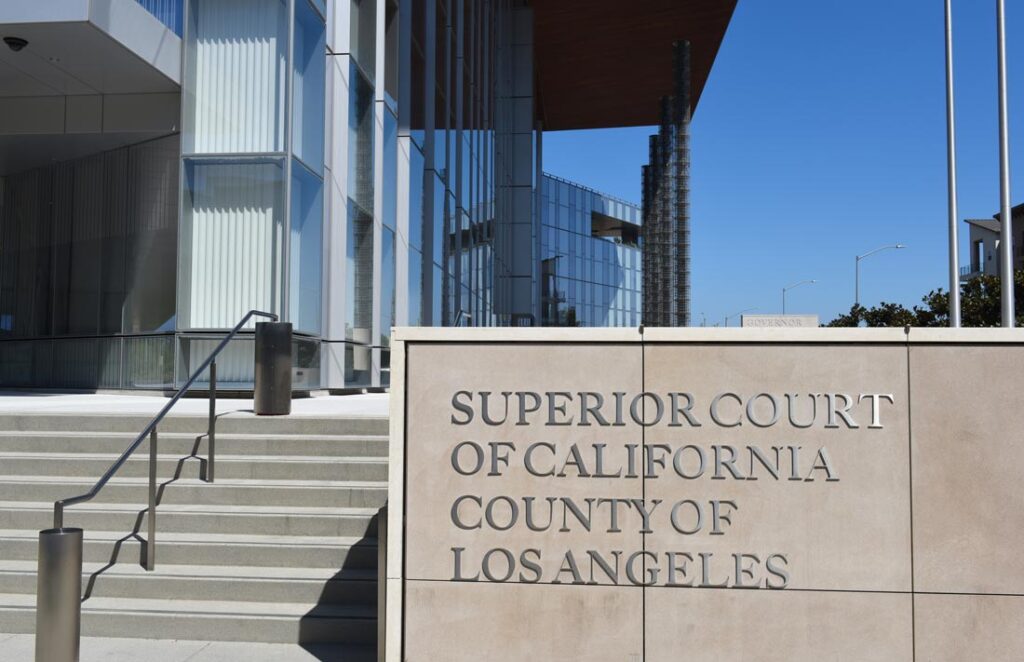
What Does an Official Notice From LA Superior Court Mean?
The phrase can describe many different communications. The useful starting point is the document's actual title, not just the words “official notice” on an envelope or message. Look for the case caption, case or citation number, issuing court or sender, date, department, requested action, and any response or appearance deadline.
Also identify your role. A plaintiff, defendant, witness, juror, attorney, property owner, and person receiving a copy for information do not all have the same duties. Some papers are issued by the court; others are prepared or served by a party, lawyer, or process server as part of a real case. A document does not have to be personally mailed by a judge to have legal significance.
The court's website also publishes general announcements called public notices. Those may concern a service change, courthouse operation, fee, rule, or scam warning. A public announcement is different from a case-specific order directed to you. Read the announcement's dates and scope before deciding that it changes a hearing or deadline.
Start from the court's current official homepage, Los Angeles Superior Court. The court moved its main website there in July 2025. Some official services and archived documents still use court-linked lacourt.org addresses. Verify the route through the official homepage rather than deciding authenticity from a domain ending alone.
How to Verify an LA Superior Court Notice
1. Preserve what arrived
Keep the letter and envelope, including any postmark. For an electronic message, preserve the message, sender details, delivery information, and attachment names. Write down when and how you received it. Do not discard a document because you do not recognize the case.
For an unexpected request for payment or sensitive information, verify it independently before using its links, QR codes, or contact details. A screenshot can preserve the message for reference, but it does not replace the original record or prove valid service.
2. Navigate to the court independently
Type the official court address into your browser or use a trusted saved link. Select the service that matches the notice: case access, traffic, jury service, or collections. A search advertisement, an urgent text link, or the first phone number printed in a suspicious message is not a substitute for an independently verified court route.
Court staff, an attorney, or an authorized contractor may need identifying information to locate a matter. The important step is establishing whom you are dealing with before providing it. Do not post a full notice containing private identifiers in a public forum to ask whether it is real.
3. Check the correct case or account system
The court's Access a Case page is the starting point for case information and records. As checked in September 2026, it also links a preview of the new Court Access Portal. The portal offers several search routes, but access and cost depend on the search and document. Its official guide says party-name and business-name searches require payment before results; some documents are also available for purchase. Do not assume that every search is free or that every record is available online.
Use the case number when you have it and select the correct case category. A civil search, traffic citation search, jury portal, and collections account are different systems. The following official routes help narrow the task:
| What you need to verify | Official starting point | What to keep in mind |
|---|---|---|
| A filed case or court document | Access a Case | Search coverage, document availability, fees, and confidentiality restrictions vary. |
| A traffic ticket or citation | Search My Ticket | A citation may not yet appear online. Follow the instructions and due date on the ticket. |
| Jury service | Juror Services | Reach the jury portal through this official court page and follow the summons instructions. |
| A referred court balance | Collections | Verify the account and contractor using current court-listed contact information. |
| The correct clerk or division | Contact the Court | Identify the courthouse and case type before calling. |
A missing online result is not proof that a notice is fake or that no response is due. There may be a filing delay, a search mismatch, a restricted record, or an older record requiring another access route. The court's civil case-summary service itself warns that its online information is not the official court record and may contain errors or omissions. Get the actual document or contact the appropriate division when an important detail is missing.
For traffic matters, the court's ticket-search instructions, checked in September 2026, say to contact the issuing agency if the ticket is not online. If it remains unavailable, go to the courthouse named on the ticket by its due date. Do not wait past that date for an online listing or a courtesy notice.
4. Match the details, not just the existence of a case
Confirm that the parties, case type, courthouse, department, hearing date, and document fit your situation. A real case number can be copied into an unrelated message. Conversely, a notice with an unfamiliar lawyer's name may relate to a case that has changed since you last checked it.
If the person named is someone else, tell the verified court office or your lawyer what you received. Do not assume that signing for mail, sharing an address, or having a similar name makes you the proper recipient. Whether service was legally effective is a separate question that may need advice about the actual facts.
5. Confirm the required action and response route
Ask the verified clerk's office about procedural information such as the correct division, where to file, whether a hearing is on calendar, and how to obtain a copy. Ask your lawyer about legal choices, objections, defenses, or how a deadline applies to your service history.
A phone call asking for information does not necessarily file a response, request a continuance, or stop a deadline. Keep following the existing order unless the court changes it through the proper process.
Can a Real LA Court Notice Arrive by Text or Email?
Yes, some genuine court-related communications are electronic. Their purpose and source still need verification. The court's scam warnings and its legitimate notification services should be read together.
Traffic payment scams and genuine citation alerts are different
In its April 2, 2026 traffic-scam warning, LA Superior Court described spam texts claiming a traffic ticket or toll violation required payment through a link or QR code. The court said those messages were not from it and that the Court does not ask for payment by text message.
The same notice recognizes the legitimate Traffic Citation Alert service. If someone previously signed up, its notification directs them to the court's webpage after a citation has been filed. The safe way to check is to go to the official court website independently and choose Traffic Citations. The April 2026 notice also lists the Traffic Call Center at (213) 633-6300.
Authorized collection agencies also send texts
An August 15, 2025 court announcement described text alerts beginning September 1, 2025 for past-due court balances referred to contracted collection agencies. The named contractors were Linebarger Goggan Blair & Sampson LLP and Harris & Harris Ltd. Their messages can contain links to their own official websites and contact information.
That does not authenticate a particular message bearing one of those names. Use the court's current Collections pages to identify the contractor and confirm the account. Contact information can change, so a current official court listing is a better route than an old announcement or an unverified message. Nor does a scam attempt prove that an unrelated genuine citation or debt does not exist.
Electronic case notices and domain changes require context
LA Superior Court uses electronic service for eligible case documents. Its April 16, 2025 family-law announcement described an expansion beginning May 1, 2025, with required electronic service for represented parties and an opt-in process for self-represented parties. Legitimate notifications can therefore involve secure document-access links and verification steps.
The court also changed its primary email domain on May 1, 2026. Its announcement says both the former @lacourt.org and new @lacourt.ca.gov addresses remain active, and notes that the older domain may be discontinued in the future. An older court notice showing an .org sender is not automatically fraudulent. A displayed .ca.gov sender is not, by itself, proof that a message is authentic either.
If an electronic case notice is unexpected, verify the case, service address, and access route with the court or your attorney. Keep electronic-service contact information current through the required process. Do not assume that leaving a message unopened prevents a legal deadline from starting.
Warning signs should trigger verification, not a guess
Be cautious about threats demanding immediate payment to avoid arrest, pressure to stay on the phone, unfamiliar payment methods, or requests to disclose sensitive information before you can independently verify the sender. The FTC's June 11, 2026 jury-impersonation alert describes impostors using arrest threats and convincing-looking warrants. A seal, caller ID, display name, correct address, or professional-looking PDF can be copied.
Do not decide a notice is genuine solely because a link contains “court” or “ca.gov” somewhere in its text. Read the actual destination and reach the service from the court's verified website. If you already provided money or sensitive information to a suspected scammer, preserve the evidence and contact the relevant financial provider or identity-protection resource through a trusted channel. Continue separately checking whether you have a real court obligation.
Which Court Notice Did You Receive?
The heading on the actual document is more useful than a general description such as “a letter from court.” The table below summarizes common categories under California law as checked in September 2026. It is a guide to identifying the next step, not a calculation of an individual deadline.
| Document | Usual purpose or response | Important distinction |
|---|---|---|
| Ordinary civil Summons and Complaint | Usually requires a written response filed within 30 calendar days after service | The legally completed service date matters; the complaint's filing date is not necessarily the start. |
| Eviction Summons and Complaint | Ordinarily requires a response within 10 court days after service | Saturdays, Sundays, and judicial holidays are excluded. Service rules and statutory exceptions must be checked. |
| Small-claims Plaintiff's Claim and Order | Directs the defendant to a hearing to present the defense | The conventional civil Answer procedure does not apply in the same way. |
| Criminal notice or hearing order | Gives case-specific appearance or other instructions | Follow the actual court instruction and coordinate with defense counsel. |
| Witness subpoena | Commands testimony, documents, or another specified act | Being a witness is different from being charged as a defendant. |
| Jury summons | Requires the jury registration and reporting process | Registering and reporting for service are separate steps. |
| Notice of ruling or entry | Communicates a decision or the entry of a judgment or order | Read attachments and service information because other deadlines may follow. |
An ordinary civil Summons and Complaint
For an ordinary civil lawsuit, Code of Civil Procedure section 412.20 generally requires a written pleading within 30 days after service. California Courts' summons-and-complaint guide explains the usual period as 30 calendar days.
Confirm how and when service became legally complete before counting. The proper response can depend on the claims and any available procedural objections. An informal email to the other side, a call to the clerk, or an agreement to talk later does not necessarily replace the required filing. Ignoring the papers can allow the plaintiff to seek a default.
An eviction summons is especially time-sensitive
The ordinary California eviction-response period changed effective January 1, 2025. Under Code of Civil Procedure section 1167, the usual period is 10 court days after service, excluding Saturdays, Sundays, and judicial holidays. Older materials stating five court days may be outdated.
The statute gives five additional court days when service occurs through the Secretary of State's Safe at Home address-confidentiality program. The service method can also affect when service is complete, so do not simply count from when you opened the envelope.
A landlord's notice to pay, correct a violation, or leave is different from a filed court eviction Summons and Complaint. Use the California Courts eviction guide and seek prompt help with the document actually received. Do not use the ordinary 30-day civil-response rule for an eviction summons.
A small-claims order usually centers on the hearing
The Plaintiff's Claim and Order to Go to Small Claims Court identifies a hearing at which the defendant can present a defense. This is different from the conventional Answer required in an ordinary civil lawsuit. A claim against the plaintiff, a request concerning the hearing, an objection, or the submission of evidence may involve separate papers and requirements.
Code of Civil Procedure section 116.340 addresses service before the hearing and proof of service. Those time periods should not be mistaken for a general defendant-Answer deadline. Read the hearing instructions and prepare the records and witnesses relevant to the dispute.
Criminal notices and witness subpoenas have different jobs
For a criminal defendant, verify the court, department, date, time, and attendance instructions with defense counsel or the assigned court. A hearing reminder may be helpful, but the actual order governs. If you believe a date was missed or a warrant was issued, obtain prompt help with the case and any bail arrangements.
A subpoena may require a witness to testify or produce specified records. Under Penal Code section 1326, authorized attorneys and public officials can issue criminal subpoenas; the document need not come directly from the clerk to be genuine. Read what it commands and ask promptly about a lawful objection or modification if needed. A witness subpoena is not itself a criminal charge against the recipient or a demand to pay bail.
A jury summons requires registration and reporting instructions
The court's jury questions and answers, checked in September 2026, instruct recipients to register within five days of receiving the summons. They separately explain how to check whether and when to report during the assigned service period. Follow the current summons and official portal instructions, including the proper process for a postponement or other request.
Treat a real jury summons seriously while independently verifying any threatening caller. The FTC's impersonation warning concerns scams; it does not excuse ignoring an authentic summons.
Do You Have to File or Respond Electronically?
Electronic filing, electronic service, and a reminder are different things. E-filing submits a document to the court for filing. Service formally delivers it to the people legally entitled to receive it. A reminder helps someone remember a date. One does not automatically accomplish the others.
The LA court's civil e-filing information distinguishes represented parties from people representing themselves. Self-represented civil litigants are generally exempt from mandatory e-filing and may choose it. California Rule of Court 2.253 addresses that exemption and the applicable requirements. Check the rules for the actual case type rather than assuming that one civil procedure governs every court division.
The court's Civil e-Filing Frequently Asked Questions, revised May 24, 2024 and still linked from its filing page when checked, also distinguishes submission from acceptance and filing from service. After submitting, check the acceptance or rejection notice and retain the filed document. If a submission was rejected, address the reason promptly and get advice about any approaching or expired deadline.
Choosing e-filing does not settle every service question
Code of Civil Procedure section 1010.6 sets rules for electronic service and filing. A self-represented civil party's act of e-filing does not itself amount to express consent to receive electronic service. Represented parties who have appeared are subject to different requirements, including confirmation of the proper service address before initial electronic service.
Qualifying electronic service is generally complete when sent, subject to the statute's court-day rules, rather than when the recipient first opens the message. Its ordinary two-court-day extension has exceptions, including a notice of appeal. Do not automatically add two days to every electronically delivered notice.
Save the notification, transmitted documents, filed copy, and proof of service as applicable. If you change an email address, use the required court process to update it. A calendar reservation or a remote-hearing connection is also a separate step; neither replaces filing and serving a required response.
Notice of Ruling, Notice of Entry, and Appeal Deadlines
A notice of ruling reports a court decision. A notice of entry gives notice that a judgment or order has been entered. They are not automatically interchangeable, and neither should be assessed by its title alone.
Under Code of Civil Procedure section 1019.5, the prevailing party on a motion generally gives notice of the ruling unless the court orders otherwise or the specified waiver applies. A genuine notice can therefore come from opposing counsel. Section 664.5 separately governs notice of entry, with its own rules and exceptions.
For appeal timing, examine the entire packet: the notice, attachments, any filed-endorsed judgment or appealable order, and proof of service. Do not assume an appeal clock has not started merely because a cover page says “Notice of Ruling.” Likewise, do not assume every informal report of a result starts the same clock.
The normal civil appeal periods depend on the case and trigger
The following is the normal framework under the California Rules of Court checked in September 2026. Special statutes and applicable extensions can change it, so get the actual deadline checked promptly.
| Type of civil appeal | Normal deadline framework | Governing rule |
|---|---|---|
| An appeal governed by Rule 8.104, commonly an unlimited civil appeal | The earliest applicable deadline: 60 days after qualifying clerk service, 60 days after qualifying service by or on a party, or 180 days after entry of judgment | Rule 8.104 |
| A limited civil appeal governed by Rule 8.822 | The corresponding earliest applicable deadlines are 30 days after qualifying service or 90 days after entry | Rule 8.822 |
“Qualifying service” here means the documents and service details specified by the rule, such as the required Notice of Entry or filed-endorsed judgment. It does not simply mean the day someone learned about the decision online.
Certain valid postjudgment motions can extend the normal period under Rule 8.108 or Rule 8.823. Merely making a phone call, negotiating, or filing any motion does not automatically create an extension. The general service extensions in section 1013 and section 1010.6 do not automatically add mail or electronic-service days to a notice-of-appeal deadline.
Small claims, criminal cases, and other specialized proceedings have their own rules. Do not apply this table to them without checking the correct procedure and eligibility to appeal. If you may seek review, preserve all versions of the order and service records and obtain help immediately rather than wait for a later reminder.
Why the Exact Document and Service Method Matter
Alan: the exact notice affected an appeal deadline
In Alan v. American Honda Motor Co., Inc. (2007), a Los Angeles case reached the California Supreme Court over which documents started the shorter time to appeal. The trial court had mailed a statement of decision and a minute order after a class-certification ruling. The Supreme Court held that the clerk's documents did not meet the rule's requirements; a later proper notice governed, and the appeal was timely.
The lesson is to keep the complete packet and its delivery information. The decision is not permission to wait or to ignore a notice that looks imperfect. Current rules, the precise documents, and the particular case determine the deadline.
Zara: awareness of a lawsuit and valid service are separate
In American Express Centurion Bank v. Zara (2011), the defendant found papers at his doorstep and disputed the claim that he had been personally served. The service declaration described someone who did not match him, and the record did not resolve that problem. The Court of Appeal held that actual awareness of the lawsuit did not cure the service defect shown in that record.
This was a specific Santa Clara service dispute. It did not establish that the underlying debt was nonexistent or that every document left at a home is invalid. If service appears wrong, obtain prompt help with the proper response rather than assume the papers can be ignored.
The court's scam alerts likewise document methods, not a measured probability that your notice is fake. They provide a verification route while leaving the actual case and any legal obligations to be checked separately.
In Their Words
“Go directly to the official court website at www.lacourt.ca.gov and select Traffic Citations.”
Los Angeles Superior Court's April 2, 2026 traffic-scam alert, directing readers to an independent verification route.
“they will also send text messages that include a link to their official websites”
The court's August 15, 2025 announcement, describing authorized collection-agency messages beginning the following month. The quoted fragment concerns those vendors, not an endorsement of an unverified incoming link.
“If you get a call like this, tell the FTC at ReportFraud.ftc.gov.”
The Federal Trade Commission's June 11, 2026 jury-impersonation alert, referring to the threatening impersonation scenario described in that alert.
What to Do Today
- Keep the complete notice and delivery record. Save the envelope or electronic transmission information and note when it arrived.
- Identify the document and your role. Read the actual heading, case type, party names, and requested action.
- Verify independently. Use the court's official website and the appropriate case, traffic, jury, collections, or courthouse contact route.
- Record every relevant date. Separate the hearing date, response deadline, document issue date, and service date. Do not treat them as interchangeable.
- Get the right help promptly. Use court self-help or an attorney for the legal response. A verified criminal-bail question can also be discussed with a licensed bail agent.
- Complete the required step through the proper channel. A phone inquiry, calendar reservation, reminder registration, or remote-hearing connection does not itself file a legal response.
- Keep proof of what you did. Retain accepted filings, confirmations, service records, new orders, and the next date you must act or appear.
How Bail Hotline Can Help
Everything above this section is written to be useful whether or not you ever call us. This is the one place we talk about ourselves.
Bail Hotline has been family-owned since 2004. We are licensed through DMCG, Inc., with the California Department of Insurance, license #1845394. Reach our agents 24 hours a day, 7 days a week, at (888) 958-1228.
Practical help when the notice involves criminal bail
A criminal court date, warrant, or custody question can leave a family unsure where to begin. Our team helps people understand the bail process and the next steps available in their situation. Share any case or booking information you already have so an agent can explain the bond questions clearly.
- Help understanding the commitment. We walk every co-signer through the agreement before signing.
- Support during the bond. Our clients receive text court-date reminders, and our team remains available for bond questions.
- Help after a missed appearance or warrant issue. We walk clients through the available next steps, including warrant walk-throughs where appropriate.
- Resources for complicated bonds. Dedicated posting agents are available around the clock, and a large, complicated, or out-of-county bond is not an automatic no.
Every case is different, and the judge makes the final decision on matters before the court. We cannot promise a particular result, and willful conduct is treated differently from an honest mistake. Court paperwork and response deadlines still need attention while the bail process is addressed.
| Service area | Where to start |
|---|---|
| Los Angeles County | Los Angeles Bail Hotline office or the number above. Check all locations for the appropriate office. |
Call before traveling to confirm arrangements. Read our bail FAQ for more about the process, or the warrant guide when a verified criminal warrant is part of the situation.
Frequently Asked Questions
What does an official notice from Los Angeles Superior Court mean?
It may concern a filed case, hearing, jury service, traffic citation, court balance, ruling, or general court announcement. “Official notice” is not a single legal document with one response deadline. Read the document's actual title, identify your role, and verify the requested action through the appropriate court channel.
How do I know whether a letter from LA Superior Court is real?
Keep the letter and envelope, then independently visit the court's official website. Check the relevant case, ticket, jury, or collections system and confirm important details with the appropriate court division. A copied seal or real case number alone does not authenticate the entire message.
Does Los Angeles Superior Court send text messages?
Some genuine services use texts, including opted-in traffic alerts, and authorized collection agencies also send account messages. The court's April 2026 warning says the court does not ask for payment by text. Verify through the court's website independently rather than treating every text as genuine or every text as a scam.
Is a lacourt.org email or website automatically fake?
No. The main court website moved to lacourt.ca.gov in July 2025, but court-linked older services and documents can still use lacourt.org. The court's May 2026 email transition also kept both domains active for the transition period. Independently verify the route and case; a displayed sender or domain alone is not enough.
Why can I not find my court notice or case online?
You may be using the wrong search system, entering mismatched details, checking before a filing appears, or seeking a record with limited online access. Use the case number if available and contact the correct division for missing information. An empty result does not suspend an existing deadline.
Do I have 30 days to respond to every court notice?
No. Thirty calendar days is the usual response period after service of an ordinary civil Summons and Complaint, subject to the applicable service rules. Eviction summonses, small-claims orders, subpoenas, jury summonses, and criminal appearance notices follow different procedures. Identify the actual document before calculating time.
How long do I have to respond to an eviction summons in California?
The ordinary period is 10 court days after service, excluding Saturdays, Sundays, and judicial holidays, under the rule effective January 1, 2025. Service through the Safe at Home program has an additional statutory period, and the method of service affects the calculation. Get the actual summons and service history checked promptly.
Can I just call the clerk instead of filing a response?
A call can help confirm the correct division, calendar, or filing procedure. It does not by itself file a response, make a legal objection, or extend the deadline. Complete the required court process and keep proof of the filing and any required service.
Do I have to e-file if I do not have a lawyer?
Self-represented civil parties are generally exempt from mandatory e-filing and may choose to use it. Check the actual case type and current court instructions. Choosing e-filing also does not, by itself, establish express consent to receive electronic service.
What is the difference between a notice of ruling and a notice of entry?
A notice of ruling reports a decision, while a notice of entry concerns entry of a judgment or order. For appeal timing, the complete packet and service event matter, including any filed-endorsed judgment. Do not rely on the cover-page title alone to decide whether a deadline has begun.
Does receiving a court notice mean I need to post bail?
No. Many notices concern civil cases, jury duty, witness appearances, or other matters unrelated to bail. If the verified notice involves a criminal case, custody, or a warrant, identify the court's instruction and discuss the relevant legal and bail steps with the appropriate professionals.
What should I do if I already missed the date on a notice?
Contact your attorney or the appropriate court division promptly to establish the case's current status and the correct next step. Preserve the notice and explain the actual delivery and timing facts. The remedy depends on the case and missed requirement; do not assume a later phone call automatically fixes a missed filing or appearance.
Why We Publish This
Clear information helps families respond to a court communication with a plan. This guide separates authenticity, case information, service, deadlines, and bail so readers can reach the appropriate source of help. It provides general information, not legal advice about a particular document or case.
Sources and Further Reading
Los Angeles Superior Court verification and services
- Official court homepage and July 1, 2025 website launch announcement.
- Access a Case and the court's Court Access Portal reference guide.
- Traffic ticket search, Juror Services, Collections, and Contact the Court.
- April 2, 2026 traffic-scam alert, August 15, 2025 collection-text announcement, and April 21, 2026 email-domain transition announcement.
- Civil e-filing information, civil e-filing FAQ, and April 16, 2025 family e-service announcement.
California law, rules, and self-help
- Code of Civil Procedure section 412.20, civil summons; section 1167, eviction response; and section 116.340, small-claims service.
- Code of Civil Procedure section 1010.6, electronic service and filing; section 1013, service extensions; section 1019.5, notice of ruling; and section 664.5, notice of entry.
- Penal Code section 1326, criminal subpoenas, and Rule of Court 2.253, electronic filing.
- California Rules of Court 8.104, 8.108, 8.822, and 8.823, concerning civil appeal timing.
- California Courts summons-and-complaint guidance and eviction self-help.