
TL;DR: “Bond exonerated” means your case has concluded and your bail obligations to the court are officially released. This blog explains how bail works, when a bond is exonerated, and what it means for your money and legal status.
Continue readingTL;DR: “Bond exonerated” means your case has concluded and your bail obligations to the court are officially released. This blog explains how bail works, when a bond is exonerated, and what it means for your money and legal status.
Continue reading
Bail is a complicated process. What happens to your premium? And do you get your bail money back if charges are dropped against you?
Continue reading
For most parents, losing child custody is a nightmare scenario. But if the courts are worried about a child’s safety or welfare, this is exactly what might happen. Below, we explain how child endangerment law works in CA and how it affects custody.
Continue reading
TL;DR: When a bond is revoked, the defendant loses pretrial release and returns to custody — but depending on the circumstances, reinstatement may still be possible through a formal court process. This breaks down why bonds get revoked, what happens to the money, and the steps required to seek reinstatement.
Someone you love gets arrested. From that first, heart-wrenching call to the countless others that follow, none of them are easy. Finding out their bond is revoked?
That adds another layer of stress to a situation that already feels impossible. Before panic sets in, let’s help you understand what’s happening and what options may still exist.
Here’s our straightforward walkthrough of the bond revocation process, why it happens, and what comes next.
When a judge says a bond is revoked, they’re canceling the agreement that allowed the defendant to stay out of custody while their case moves forward. That release is no longer valid. The defendant is ordered back into custody.
Bond revoked means the court has determined either that the defendant has violated the terms of their release or poses too great a risk to remain free pending their trial. This is never a warning or a modification; it is a formal court action. Their release is gone.
A bench warrant often follows a revocation order. Law enforcement can arrest the defendant wherever they are found, whether that’s at home, work, and so on.
Bonds don’t get revoked without cause. This is a step that Judges don’t take lightly, and they take it seriously. While there are too many reasons to list, in general, these are the common triggers that involve a violation of bond conditions (the legally binding rules a defendant agrees to follow in exchange for their partial release):
Failing to appear is one of the fastest paths to losing pretrial release. In most states, it also becomes a separate criminal charge on top of the original case.
An arrest on new charges while out on bond is among the most serious violations. Under the federal Bail Reform Act of 1984, courts may presume that no conditions of release can adequately protect the community when this occurs.
Any contact with a protected person — direct or indirect — can trigger immediate revocation
Many bonds include substance-related conditions; repeated failures can push a judge to revoke rather than modify.
Defendants are typically required to stay within a set area and notify the court of significant changes.
Even non-criminal failures to comply are treated seriously by courts.
The court issues a forfeiture order for the bail bond. This is one of the most common and most difficult questions families ask us. It doesn’t get any easier to give an answer people hope never to hear.
When a bond is revoked, any money or property used to secure the defendant’s release is typically turned over to the court.
If a bail bondsman posted a surety bond, for example, where the non-refundable premium (around %10 of the total bail amount) is not returned. The bondsman is notified and given a period of time, determined by state law, to produce the defendant or contest the forfeiture before it becomes final.
Collateral put up by a cosigner is also at risk. Violations carry consequences that extend well beyond the defendant.

Shortest, least-complication answer: possible, but it depends heavily on the specific situation.
After a revocation, the defendant returns to custody. The question now is whether the court will consider any form of release going forward. In many cases, a new hearing is scheduled to address the violation and determine next steps.
Can a bond be reinstated? For full transparency, it’s not a clear, definite, guaranteed yes. The answer is: sometimes. And it isn’t automatic if reinstated.
Start by understanding one key, critical fact: it requires a formal legal process. Here’s a brief, generalized breakdown of how it works:
Courts move fast after a revocation. The longer a defendant sits without legal representation, the harder reinstatement becomes.
An attorney can begin building arguments and filing motions before the situation becomes harder to address
A written motion is submitted to the court explaining the circumstances of the violation and why the defendant deserves another chance at pretrial release.
Both sides present arguments. The judge considers the nature of the violation, the defendant’s compliance history, the severity of the original charges, and whether the violation was willful.
Employment documentation, medical records, community ties, and character references all strengthen the case. Courts are more likely to grant reinstatement when the violation was not willful, and the government was not significantly harmed.
There is no promised legal standard or formula here that a defendant can meet to earn reinstatement. Judges alone decide. The outcome ultimately rests entirely on how the individual judge weighs the circumstances before them.
The most reliable way to avoid a bond being revoked is to treat every condition of release as non-negotiable. Show up to every court date. Follow every condition. If something changes, no matter what it is, from scheduling conflicts to medical emergencies, communicate with an attorney immediately before it can grow into a problem.
Bond conditions carry the force of the law. They’re the agreement that keeps somone you love home with the family while the legal process plays out. Taking them seriously from day one is your only real protection against losing that freedom.
You do not deserve to figure this out by yourself at midnight, with too many legal site tabs open and a dictionary for legalese at hand. Our caring Bail Hotline agents are available to you around the clock, and we know exactly how to move fast when it’s critical.
Call us, (888) 958-1228—email us, info@bailhotline.net. We’re here right now, day or night, and ready to work.
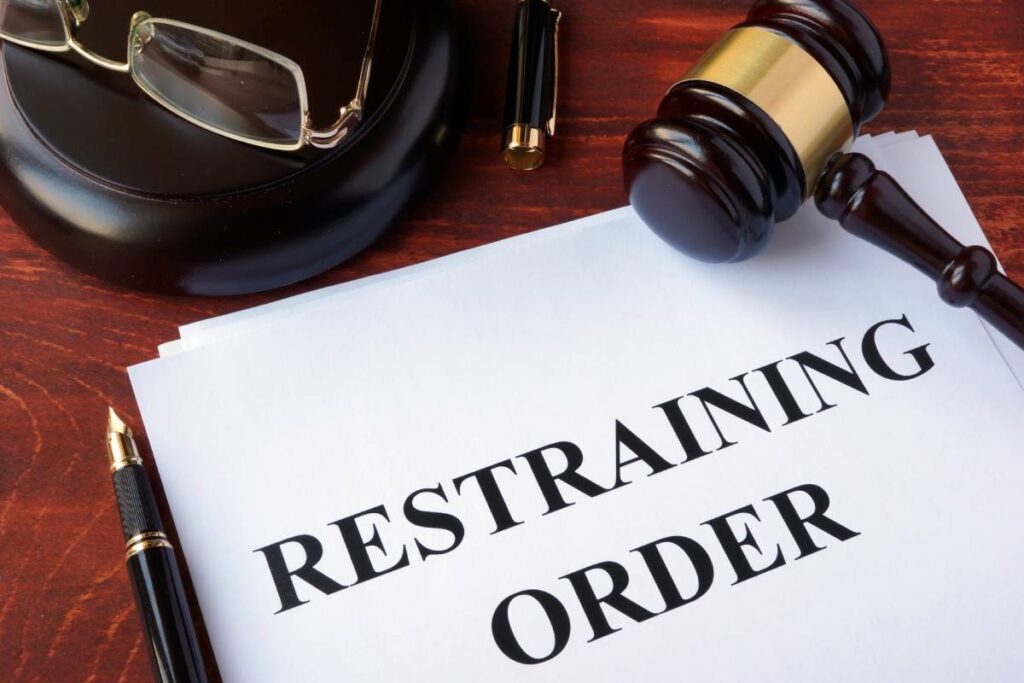
California takes harassment, abuse, and threats of violence seriously. And in some cases, such allegations can result in a restraining order (RO). Below, our team explains how these orders work, and the different types of restraining orders available in CA.
Continue reading
Stalking is illegal across all 50 states, and California takes the crime seriously. This is unsurprising: over 13.5 million people are stalked each year in the US, and it can have fatal consequences.
Continue reading
TL;DR: If you or your teen vape in California, the law is stricter than most people realize, especially under age 21. You need to understand where vaping is illegal, what penalties apply, and how quickly a minor issue can turn into a legal problem.
Continue reading
You probably already know that you shouldn’t drink and drive in CA. And you shouldn’t commit theft or violent crime. These laws are well-known and obvious to everyone.
Continue reading
There are various types of bail bonds available in California. One common type of bond is the “PR” bond. Here’s a look at what PR bonds are and who can get one.
Continue reading
If you’re placed in custody following an arrest, you might have the chance to post bail. Or, the judge might release you on your “own recognizance”. But what does this mean, and how do you secure a quick release? Below, we consider what an “O.R. release is” and how to get released on your own recognizance.
Continue reading