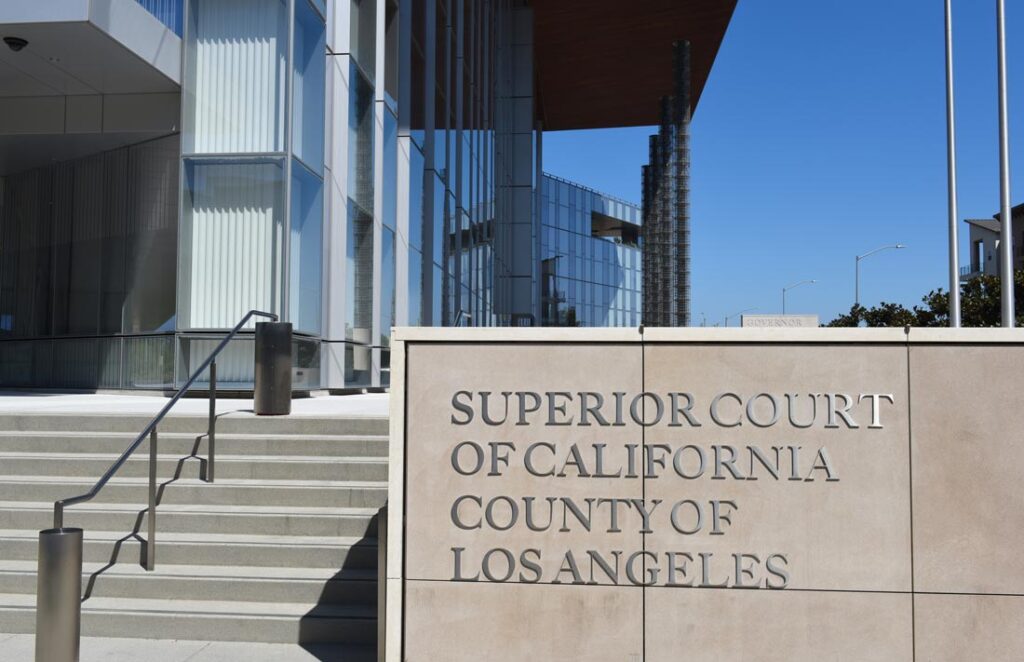
Updated September 2026. Written for anyone who carries a knife in California, and for families whose person was just arrested with one. Checked against the official California Penal Code text (September 2026), published California court decisions, the Ninth Circuit’s 2026 switchblade ruling, and each county superior court’s own bail schedule.
Quick answer: California lets adults own almost any knife and carry most of them. A folding pocketknife of any blade length can be carried in your pocket as long as it is closed (Penal Code 16470). A fixed-blade knife, like a Bowie knife or a double-edged dagger, can be carried openly in a sheath hanging from your waist (PC 20200), but hiding one on your body is a crime that can be charged as a felony (PC 21310). Switchblades and butterfly knives with blades 2 inches or longer cannot be carried on you, kept in the driver or passenger area of a car in public, or sold (PC 21510), though the statute does not list keeping one stored at home. A short list of disguised knives, plus throwing stars and metal knuckles, are illegal even to own. Schools, public buildings, and airports set their own blade limits, and several cities, including Los Angeles, ban carrying a 3 inch or longer blade in plain view. There is no statewide maximum blade length and no permit that makes concealed carry of a fixed blade legal.
California Knife Laws at a Glance
| Knife | Legal to own? | Carry hidden on your body? | Carry openly? | Main law |
|---|
| Folding pocketknife, closed (any blade length) | Yes | Yes | Yes under state law; some cities limit blades of 3 inches or more in plain view | PC 16470 |
| Folding knife with the blade open and locked | Yes | No: it counts as a dirk or dagger | Yes under state law, subject to city rules | PC 16470, 21310 |
| Fixed blade (Bowie, hunting, kitchen, dagger, double-edged, kukri, machete) | Yes | No | Yes, in a sheath worn openly at the waist; city rules may be stricter | PC 20200, 21310 |
| Switchblade, automatic, out-the-front (OTF), or gravity knife, blade 2 inches or more | Storing one at home is not a listed offense | No | No | PC 17235, 21510 |
| Butterfly knife (balisong), blade 2 inches or more | Same as a switchblade | No | No | PC 21510; Quattrone (1989) |
| Spring-assisted or thumb-stud folder with a detent | Yes | Yes (closed) | Yes | PC 17235 |
| Belt buckle, cane sword, lipstick case, writing pen, air gauge, shobi-zue, and ballistic knives; throwing stars; metal knuckles | No, possession itself is a crime | No | No | PC 20310 to 22410, 21810 |
| Undetectable (plastic or ceramic) knife | Yes; only commercial making and selling is banned | Folding and closed, yes; fixed blade, no | Yes, subject to place rules | PC 20810 |
The numbers that matter, in one place:
| Blade length | Where it applies | Law |
|---|
| No limit | Carrying a closed folding knife anywhere state law does not restrict | PC 16470 |
| 2 inches or more | Switchblades and butterfly knives become illegal to carry or sell | PC 17235, 21510 |
| Longer than 2 1/2 inches | Banned at K-12 schools (plus any locking folder) and, for fixed blades, at colleges | PC 626.10 |
| Less than 2 1/2 inches | The only pocketknives allowed in federal buildings | 18 U.S.C. 930 |
| 3 inches or more | Plain view carry banned in Los Angeles city and county, Glendale, Santa Monica, and other cities | LAMC 55.10 and local codes |
| More than 4 inches | Fixed or locking blades banned in state and local public buildings, courthouses, public meetings, the State Capitol, and airport secure areas | PC 171b, 171c, 171.5 |
In this guide: How California decides | Pocketknives | Fixed blades | Switchblades and butterfly knives | Knives illegal to own | Where you cannot bring a knife | City and county rules | Brandishing, assault, and self-defense | Minors | Guns | After an arrest | Real cases | Data | In their words | Outside California | County by county | Checklist | How Bail Hotline can help | FAQ | Sources
The Two Questions That Decide Almost Every California Knife Case
California does not rank knives by blade length the way many people assume. Almost every case turns on two questions.
1. What kind of knife is it? The Penal Code sorts knives into a few legal groups: ordinary folding knives, “dirks or daggers” (any knife or instrument “capable of ready use as a stabbing weapon that may inflict great bodily injury or death,” under PC 16470), switchblades (PC 17235), and a short list of “generally prohibited weapons” (PC 16590). Most fixed-blade knives are dirks or daggers under this definition, whether they have one edge or two.
2. How and where are you carrying it? Concealed or in plain view, on your body or in a bag, in a car, at a school, in a courthouse, or inside a city that has its own ordinance.
Three things surprise most people:
- There is no statewide maximum blade length. The numbers people repeat online (2.5 inches, 3 inches, 4 inches) each come from a specific place rule or a city ordinance, not a general limit.
- There is no knife permit. California’s concealed carry license process covers firearms only. No license makes it legal to hide a fixed blade on your body.
- Cities can add their own rules. California has a law preempting local rules on firearm registration and licensing (Gov. Code 53071), but no knife preemption law, and a Los Angeles appellate court held in 1985 that “Local regulation of knives, dirks, or daggers carried or worn in plain view has not been precluded by virtue of state preemption” (People v. Gerardo). That is why the county guide below matters.
Most of these sections were renumbered on January 1, 2012, when the Legislature moved the old weapons statutes (former PC 12020 and the old switchblade section, 653k) into new sections without changing how they work. Older cases and some county bail schedules still use the old numbers.
Pocketknives and Folding Knives: The “Exposed and Locked” Rule
This is the question most people are really asking, and the answer is good news for anyone who carries a pocketknife for work or everyday use.
Under PC 16470, a nonlocking folding knife, a folding knife that is not a switchblade, or a pocketknife counts as a dirk or dagger “only if the blade of the knife is exposed and locked into position.” In plain terms:
- Closed, it is legal to carry concealed, at any blade length, under state law. A 4 inch locking folder closed in your pocket is not a concealed dirk or dagger.
- Open and locked, it becomes a dirk or dagger. Carrying it that way hidden on your body can be charged under PC 21310.
- Open but not locked is not enough. In People v. Castillolopez (2016), police found a Swiss Army knife with a blade open in a man’s jacket pocket in San Diego. The California Supreme Court held the blade was not “locked into position” because it closed with simple pressure on its back: “A pocketknife blade is ‘locked into position’ if it is ‘firmly fixed’ in position by means of or as if by the interlacing or interlocking of parts.”
Two older cases show how this plays out for ordinary people. In In re George W. (1998), a Los Angeles County teen on probation had a closed Gerber locking knife in his front pocket that he used at work at the Pasadena Civic Auditorium “to open boxes and cut plastic bands.” The Court of Appeal reversed his conviction because there was no evidence the blade was open and locked. In In re Luke W. (2001), a Contra Costa County teen’s credit card style multi-tool was not a dirk or dagger because its blade could only be pulled out with both hands.
Knives in a bag or a car. PC 21310 covers a dirk or dagger “concealed upon the person.” A 2013 appellate case held that knives in a backpack the defendant was leaning on were not carried on his person, but in 2016 the California Supreme Court ruled, in a gun case, that everything inside a backpack you are wearing is on your person, and disapproved the earlier case’s reasoning (People v. Wade). Do not assume a fixed blade in a backpack you are wearing is safe. A fixed blade in a closed glove box or trunk is not “upon the person” under the statute’s words, but switchblades follow a different rule (next sections), and some cities ban dangerous weapons in cars.
Fixed-Blade Knives: Bowie Knives, Daggers, Double-Edged Knives, and Kukris
Owning any of them is legal. California has no ban on owning Bowie knives, hunting knives, daggers, double-edged knives, kukris, machetes, or swords.
Carrying one openly is legal under state law. PC 20200 says: “A knife carried in a sheath that is worn openly suspended from the waist of the wearer is not concealed within the meaning of Section 16140, 16340, 17350, or 21310.” The statute describes a sheath hanging from your belt, in sight. It does not protect a sheath covered by a jacket or shirt, and the jury instruction for this charge uses the words “substantially concealed” (CALCRIM 2501).
Hiding one on your body is a crime that can be a felony. PC 21310 punishes anyone “who carries concealed upon the person any dirk or dagger” with up to one year in county jail, or 16 months, 2, or 3 years under the felony sentencing rules of PC 1170(h). Prosecutors choose whether to charge it as a misdemeanor or a felony, which is why lawyers call it a “wobbler.”
Why you carry it does not matter, but knowing you carry it does. In People v. Rubalcava (2000), a San Diego man had a knife with a roughly three inch blade in his coin pocket under a long shirt and said it was a letter opener. The California Supreme Court held that prosecutors do not have to prove he meant to use it as a weapon. The court added that “A defendant who does not know that he is carrying the weapon or that the concealed instrument may be used as a stabbing weapon is therefore not guilty of violating section 12020,” the old number of the concealed dirk law. In People v. Mitchell (2012), a man who said his 5 inch fixed blade was for fishing and self-defense lost his challenge to the law; the court held the concealed dirk ban does not violate the Second Amendment.
Double-edged knives are not banned. A double edge makes a knife more clearly a stabbing instrument, so it is a dirk or dagger: legal to own and to carry openly in a waist sheath, illegal to carry hidden on your body. A double-edged automatic knife is still a switchblade if its blade is 2 inches or more.
Kitchen knives can be dirks or daggers too. A 1992 Kern County case held that one particular rounded-tip, serrated bread knife was not a dirk or dagger (People v. Barrios), but that case came before the current statutory definition, and the test today is whether the item is “capable of ready use as a stabbing weapon.” Do not assume a kitchen knife tucked in a waistband is legal.
Switchblades, Automatic Knives, and Butterfly Knives
What counts as a switchblade. Under PC 17235, a switchblade is a knife “having the appearance of a pocketknife,” including spring-blade, snap-blade, and gravity knives, “the blade or blades of which are two or more inches in length” and which open “by a flick of a button, pressure on the handle, flip of the wrist or other mechanical device.” That covers button automatics and out-the-front (OTF) knives. Note the wording: “two or more inches,” so a blade of exactly 2 inches counts.
What does not count. A knife that opens “with one hand utilizing thumb pressure applied solely to the blade of the knife or a thumb stud attached to the blade” is not a switchblade, “provided that the knife has a detent or other mechanism that provides resistance that must be overcome in opening the blade, or that biases the blade back toward its closed position.” If you are unsure about a knife, ask two questions: does it open only by pressure on the blade or a thumb stud, and does it resist opening when closed? If both answers are yes, it is outside the definition.
What PC 21510 actually bans. It is a misdemeanor to do any of three things with a switchblade that has a blade 2 inches or longer (PC 21510):
- “Possesses the knife in the passenger’s or driver’s area of any motor vehicle in any public place or place open to the public.”
- “Carries the knife upon the person.”
- “Sells, offers for sale, exposes for sale, loans, transfers, or gives the knife to any other person.”
Because the statute sets no specific punishment, the general misdemeanor rule applies: up to six months in county jail, a fine up to $1,000, or both (PC 19).
At home. Keeping a switchblade stored at home is not one of the three listed acts. Carrying one on your body is a different matter, even on private property. In In re S.C. (2009), police searched a teen on a Petaluma porch and found a flip-open knife in his shorts. The court held the “public place” wording applies only to the vehicle clause: “By having the knife in his pocket, thereby carrying it on his person, appellant violated the plain language of this clause.” The Ninth Circuit noted in 2026 that the parties “fiercely debate” whether carrying a switchblade inside your own home is covered, and said, “We need not decide that issue today.”
Why butterfly knives are treated as switchblades. A balisong opens by swinging its handles, a “flip of the wrist” motion named in the definition. In 1989 the Court of Appeal held that butterfly knives are switchblades under the old version of the same law, explaining that the definition’s language “is intended to cover different types of knives which operate similarly to those expressly listed” (People ex rel. Mautner v. Quattrone). The later exception for thumb-opening knives with a detent does not describe a balisong. So a butterfly knife with a blade 2 inches or longer follows the switchblade rules: illegal to carry, to keep in the car’s passenger area in public, or to sell or give away. We found no California case on unsharpened butterfly “trainers.” The definition turns on how the knife opens and its blade length, not on whether the edge is sharp, so treat a trainer with a 2 inch or longer blade with the same caution.
The federal lawsuit did not change this. Knife Rights, Inc. sued in federal court in San Diego to strike down California’s switchblade law. The trial court ruled for the state in 2024. On January 30, 2026, a Ninth Circuit panel affirmed, holding that “Plaintiffs’ facial challenge fails because they cannot establish that California’s switchblade regulations are unconstitutional in every one of their applications” (Knife Rights, Inc. v. Bonta, No. 24-5536). The panel upheld the ban on concealed carry of switchblades and expressly declined to rule on the law’s other parts. On July 16, 2026, the full court refused to rehear the case, over dissents from eight judges (order). Knife Rights said it was evaluating its options, including a U.S. Supreme Court petition. As of September 2026, PC 21510 is fully in force.
A 2023 Ninth Circuit decision striking down Hawaii’s butterfly knife ban (Teter v. Lopez) is sometimes cited online as making balisongs legal. It never struck down California’s law. The full Ninth Circuit later agreed to rehear the case, which vacated the 2023 decision, and after Hawaii changed its law in 2024, the full court held the case moot and vacated the trial court’s judgment on January 22, 2025 (en banc opinion).
Knives That Are Illegal to Own at All
For a short list of items, possession itself is a crime. Each of these sections punishes anyone who makes, imports, sells, gives, lends, “or possesses” the item, with up to one year in county jail or 16 months, 2, or 3 years as a felony:
| Item | What it is | Law |
|---|
| Air gauge knife | Looks like a tire gauge, hides a stabbing shaft | PC 16140, 20310 |
| Belt buckle knife | A blade of at least 2 1/2 inches built into a belt buckle | PC 16260, 20410 |
| Cane sword | A cane, umbrella, or stick hiding a sword or stiletto blade | PC 16340, 20510 |
| Lipstick case knife | A knife built into a lipstick case | PC 16830, 20610 |
| Shobi-zue | A staff or crutch hiding a blade that opens by a flip or mechanism | PC 17160, 20710 |
| Writing pen knife | Looks like a pen, hides a stabbing shaft | PC 17350, 20910 |
| Ballistic knife | Shoots its blade with a spring, elastic, or gas | PC 16220, 21110 |
| Shuriken (throwing star) | A pointed throwing weapon | PC 22410 |
| Metal knuckles | Metal worn on the hand to strike harder | PC 16920, 21810 |
Narrow exceptions cover museums and historical societies open to the public and film or TV productions (PC 17715, 17720). There is no general collector exception.
Undetectable knives are different. Plastic, ceramic, or carbon fiber knives made to beat metal detectors are covered by PC 20810, which punishes whoever “commercially manufactures” them or imports, exports, keeps, or offers them “for commercial sale.” Personal possession is not listed. A fixed-blade undetectable knife hidden on your body can still be a concealed dirk or dagger, and all knives are banned in airport carry-on bags.
Where You Cannot Bring a Knife, Even a Legal One
K-12 schools. PC 626.10 bans bringing or possessing on the grounds of any public or private K-12 school “any dirk, dagger, ice pick, knife having a blade longer than 2 1/2 inches, folding knife with a blade that locks into place, razor with an unguarded blade,” among other items. That is a wobbler, up to one year in jail or up to 3 years as a felony. A locking folder is banned at school at any blade length. Razor blades and box cutters are a separate misdemeanor at K-12 schools. In In re Rosalio S. (1995), a Poway High School case about a Leatherman tool, the court held that only the sharpened part of the blade counts toward 2 1/2 inches. Exceptions include school activities at a teacher’s direction and knives carried for a lawful job.
Colleges and universities. PC 626.10(b) covers “any dirk, dagger, ice pick, or knife having a fixed blade longer than 2 1/2 inches” at UC, CSU, community colleges, and private universities, with exceptions for use in a residence or food preparation. A folding knife that is closed is not on the college list.
State and local government buildings, including courthouses. PC 171b bans bringing into any state or local public building, or into a public meeting that must be open to the public, a switchblade, any of the prohibited weapons listed above, or “Any knife with a blade length in excess of four inches, the blade of which is fixed or is capable of being fixed in an unguarded position by the use of one or two hands.” The law says a public building “includes, but is not limited to, a building that contains a courtroom.” It is a wobbler. Security screening at many courthouses and county buildings turns away smaller knives too. Kern County, for example, bars “All knives, including pocket knives and Leatherman-type tools” from county buildings (Kern County Code 20.01.010). If you have court, leave the knife at home.
The State Capitol. PC 171c applies the same over-4-inch rule to the Capitol, the state office building at 1021 O Street in Sacramento, and legislative offices.
Airports. PC 171.5 makes it a misdemeanor to bring a fixed or lockable blade over 4 inches, a box cutter, or a straight razor into an airport’s screened area. Federal rules are stricter: the TSA allows knives in checked bags only, not carry-ons, except rounded butter knives and plastic cutlery (TSA).
Federal buildings and courthouses. Federal law bans dangerous weapons in federal facilities but exempts “a pocket knife with a blade of less than 2½ inches in length” (18 U.S.C. 930). A blade of exactly 2 1/2 inches is not covered by the exception. Post offices ban “dangerous or deadly weapons” without defining knives (39 CFR 232.1).
National parks. The Park Service rules treat as a weapon anything “the possession of which is prohibited under the laws of the State” (36 CFR 1.4). In our reading, that brings California’s knife bans (switchblades, concealed dirks) into Yosemite, Joshua Tree, and other parks here.
Transit. LA Metro’s code of conduct says: “No weapons, flammable materials, or dangerous objects” (Metro). In San Francisco, the penalty for the city’s concealed weapon loitering rule doubles to a $1,000 fine on a Muni platform or vehicle or within 25 feet of a bus zone (SF Police Code 1291(g)).
Parks and county property. Many cities and counties add their own park rules, such as Irvine’s ban on “exposed knives, daggers, and martial arts weaponry” in city parks and Santa Maria’s ban on fixed-blade knives in parks. The county guide below lists the ones we found.
City and County Knife Ordinances
Because California has no knife preemption law, cities and counties can regulate knives carried in plain view, and many do. Some of these ordinances date to the 1950s. Where an old local rule overlaps with something state law already covers (concealed dirks, switchblades), it may not be enforceable to that extent, and several say so themselves: Oakland’s, Modesto’s, and Richmond’s carry rules state they do not apply to any act that is already a state crime. The plain view bans are the ones courts have clearly upheld.
Los Angeles. Municipal Code 55.10 says: “No person shall wear or carry in plain view any knife or dagger upon any public street or other public place or in any place open to the public.” It applies to a “knife, dirk or dagger having a blade 3 inches or more in length,” plus ice picks and razors. It does not apply to carrying “for use in a lawful occupation, for lawful recreational purposes, or as a recognized religious practice,” or while traveling to or from those activities. It has been on the books since 1988. A violation is a misdemeanor (up to six months and $1,000), or an infraction up to $250 if the City Attorney charges it that way (LAMC 11.00).
Put state and city law together and the result in the city of Los Angeles is strict: a fixed blade of 3 inches or more cannot be carried hidden (state law) or in plain view (city law), unless you are carrying it for work, recreation, or religious practice. A closed folding knife in a pocket is not in plain view and is not a dirk or dagger, so it is covered by neither rule.
The most common local rules we found (read September 2026; details and links in each county’s section below):
| Place | Rule | Code |
|---|
| Los Angeles County (unincorporated) | No knife of 3 inches or more, or any spring-blade knife, carried in plain view; work, recreation, religion exceptions | County Code 13.62 |
| Los Angeles, Glendale, Santa Monica, Santa Barbara, Clearlake | Plain view carry bans (3 inches, or 2 inches in Clearlake) | LAMC 55.10; GMC 9.24.050; SMMC 3.29; SBMC 9.10.010; Clearlake 5-6.7 |
| Oakland, Richmond, Berkeley, Modesto, San Luis Obispo | Carrying a 3 inch or longer knife banned, with a good faith work or recreation defense | OMC 9.36; RMC 11.12; BMC 13.68; Modesto 4-2.03.1; SLOMC 9.16 |
| Pasadena | No concealed knife with a 5 inch or longer blade in a public place or a vehicle | PMC 9.84.020 |
| San Francisco, Sacramento, Stockton, Fontana, Redding, Garden Grove | 3 inch knife is a “dangerous weapon” for rules on concealed carry while loitering, fighting, near bars, or (in some) in cars | SF Police Code 1291; SCC 9.32; Stockton 9.52; Fontana 16-131 to 16-136; Redding 10.56; GGMC 8.32 |
| San Francisco, Oakland, Salinas, San Mateo County, Ukiah, Eureka | Spring-blade or switchblade knives banned at any blade length | SF 1292; OMC 9.36.040; Salinas 21-43; SMCC 3.16.020; Ukiah 6201; Eureka 133.05 |
| San Francisco, Los Angeles County, Lancaster, Alameda County, Hayward | Limits on selling knives to minors | SF 1293; LACC 13.58.010; Lancaster 9.04.050; ACC 9.12.060; Hayward 3-4.10 |
San Francisco is often described online as having a 3 inch carry ban. Its Police Code does define a 3 inch knife as a “dangerous or deadly weapon,” but only for rules against carrying one concealed while loitering, fighting, or hanging around places that sell alcohol, and it exempts “ordinary tools or equipment carried in good faith for uses of honest work, trade or business or for the purpose of legitimate recreation” (SF Police Code 1291).
Orange County has no county knife ordinance that we could find. Garden Grove, Huntington Beach, and Irvine have local rules, summarized in the Orange County section.
Using or Showing a Knife: Brandishing, Assault, and Self-Defense
Carrying is one set of laws. Pulling a knife out in an argument is another, and the penalties climb fast.
Brandishing. PC 417(a)(1) covers anyone who, “except in self-defense,” in front of another person, “draws or exhibits any deadly weapon whatsoever, other than a firearm, in a rude, angry, or threatening manner.” It is a misdemeanor with a minimum of 30 days in county jail.
Assault with a deadly weapon. PC 245(a)(1) punishes an assault “with a deadly weapon or instrument other than a firearm” by two, three, or four years in state prison, up to one year in county jail, a fine up to $10,000, or both. No one has to be hurt. Charged as a felony, it is a “serious felony” under PC 1192.7(c)(31), which makes it a strike under California’s Three Strikes law. That is why the choice between a misdemeanor and a felony matters so much for families.
Using a knife during another felony adds a year in state prison (PC 12022(b)(1)), and “any felony in which the defendant personally used a dangerous or deadly weapon” is a serious felony (PC 1192.7(c)(23)).
Everyday tools count. In People v. Aledamat (2019), a Los Angeles man argued with a food truck owner, pulled a box cutter, extended the blade, and thrust it toward the man “from three or four feet away,” saying he would kill him. The California Supreme Court said a box cutter is not a deadly weapon by design, but the assault with a deadly weapon conviction stood because of how he used it.
Self-defense. California law allows reasonable force against an imminent threat. The standard jury instruction says the defendant must have “reasonably believed that the immediate use of force was necessary” and “used no more force than was reasonably necessary to defend against that danger,” and adds: “A defendant is not required to retreat” (CALCRIM 3470). At home, the law presumes a reasonable fear of death or great bodily injury when someone “unlawfully and forcibly enters” (PC 198.5). But “A bare fear” is not enough (PC 198), and pulling a knife in a fistfight can turn a misdemeanor scuffle into a felony.
“I carry it for protection” is not a defense to carrying. Self-defense can justify using force at the moment of danger. It does not make carrying a concealed dirk legal. The jury instruction for the carry charge says: “The People do not have to prove that the defendant used or intended to use” the dirk or dagger as a weapon (CALCRIM 2501).
Minors and Knives
We found no statewide California law setting a minimum age to buy, own, or carry an ordinary legal knife outside school. Minors face the same carry laws as adults, usually in juvenile court, and several of the cases in this guide (George W., Luke W., Rosalio S., S.C.) were juvenile cases.
- School. PC 626.10 (above) is the criminal rule. School discipline uses a different definition: the Education Code’s definition of “knife” includes “a weapon with a blade longer than 3 1/2 inches, a folding knife with a blade that locks into place, or a razor with an unguarded blade,” along with dirks and daggers, and for possession of a knife “of no reasonable use to the pupil” the principal must recommend expulsion unless expulsion is inappropriate in the circumstances or another form of correction would work (Ed. Code 48915). Brandishing a knife at another person is on the mandatory expulsion list.
- Local rules. San Francisco bans selling any knife other than a table knife to a minor, except by a parent or guardian (Police Code 1293). Los Angeles County and Lancaster require a minor buying a 3 inch or longer knife to be with an adult and the seller to keep a record. El Monte bars anyone under 18 from carrying a knife on public property. Alameda County and Hayward bar minors from possessing “dangerous weapons,” which include 3 inch knives, with work and recreation exceptions.
What About Guns?
Many readers arrive here looking for gun rules too, so a short note. Knife and gun laws overlap in a few places: the same public building law (PC 171b) covers firearms and knives, brandishing has separate subsections for firearms with their own penalties (PC 417), and schools are covered by separate gun and knife statutes. Beyond those overlaps, California gun law is its own large body of rules, with licensing, registration, and a firearms preemption law that knives do not have. This guide does not cover it. If a family member was arrested on a gun charge, the bail steps in the after an arrest section below still apply, and our guide to bail amounts by crime is a starting point.
After a Knife Arrest: What Happens Next
Most knife possession cases start in one of two ways.
- A citation. For many misdemeanors, officers can write a citation with a promise to appear in court and release the person on the spot.
- A booking. If the person is taken to jail, the county’s bail schedule sets a starting amount for each charge, and a judge can later raise it, lower it, or release the person without money, on their own recognizance. Since In re Humphrey (2021), California judges must consider a person’s ability to pay when setting bail.
The bail number depends heavily on the county and the charge. From the schedules we read for this guide (September 2026):
- Straight possession charges are often low or zero. Los Angeles County sets $0 for a concealed dirk or dagger and a switchblade. Fresno’s 2026 schedule lists misdemeanor concealed dirk and switchblade at $0. Other counties list a concealed dirk or dagger anywhere from $5,000 (Santa Clara, San Benito) to $35,000 (Stanislaus), and Trinity lists $50,000 on a row it labels “MFG. DEADLY WEAPON: DIRK/DAGGER.”
- Assault with a deadly weapon other than a firearm is where the numbers jump: $20,000 (Fresno, Ventura), $25,000 to $30,000 in many counties, $50,000 in Sacramento, El Dorado, Glenn, Marin, and Napa, $60,000 in San Joaquin, $75,000 in Stanislaus, and $100,000 in Trinity.
- Many schedules do not list the knife charges at all. Then the schedule’s catch-all rule for unlisted offenses applies, and several counties list knife sections under their pre-2012 numbers.
Scheduled amounts are only the starting point. People on probation, parole, or supervision, or with past missed court dates, are often excluded from $0 release, and a knife arrest can also trigger a probation violation (what that means). For how quickly a judge sees someone after arrest, see how long it takes to see a judge. To find where a person is being held, use our guide to finding out if someone is in jail.
How This Plays Out: Real California Cases
Each of these is a published California decision. Most involve ordinary people, not violent crime.
- The Swiss Army knife that was open but not locked. San Diego, 2016. A friction-held blade is not “locked into position,” so it was not a dirk or dagger (Castillolopez). Lesson: for folding knives, open and locked is the line.
- The work knife in a teen’s pocket. Los Angeles County, 1998. A closed locking Gerber used to open boxes at a civic auditorium job was not a dirk or dagger (George W.).
- The credit card multi-tool. Contra Costa County, 2001. A blade that could only be pulled out with two hands was not “capable of ready use” (Luke W.).
- The “letter opener” under a long shirt. San Diego, 2000. Intent to use it as a weapon does not matter; knowing you are carrying it does (Rubalcava).
- The fishing knife at a trolley stop. Court of Appeal, 2012. Security officers at a trolley stop found a concealed knife with a 5 inch fixed blade; the man said he had forgotten it. The conviction stood (Mitchell).
- The Leatherman at Poway High. San Diego County, 1995. Only the sharpened edge is measured against the 2 1/2 inch school limit (Rosalio S.).
- The flip-open knife on a porch. Petaluma, 2009. Carrying a switchblade on your person is illegal even off the street (In re S.C.).
- The box cutter at a food truck. Los Angeles, 2019. A tool becomes a deadly weapon by how it is used (Aledamat).
- The hunting knife at cruise night. City of Commerce, 1985. Cities may ban knives worn in plain view (Gerardo).
What the Data Shows
California publishes data on knives used in violent crime, but not on knife law violations.
- Homicides. California recorded 1,374 homicides in 2025, down 17.5% from 1,666 in 2024, though the Department of Justice cautions that not all agencies submitted a full year of 2025 data, so comparisons with earlier years need care. Where the weapon was known, 213 of 1,351 (15.8%) involved a knife, which the Department of Justice defines as “Any instrument used to cut or stab,” compared with 904 (66.9%) involving firearms. In 2024 the knife count was 260 of 1,605 (16.2%) (Homicide in California 2025, Table 18).
- Assaults and robberies. In 2024, 19,070 of California’s 126,465 aggravated assaults (15.1%) involved a knife or cutting instrument, and 4,212 of 21,782 armed robberies (19.3%) did (Crime in California 2024, Tables 6 and 7).
- Nationally. FBI data for 2025 counted 1,509 homicide offenses involving a knife or cutting instrument, from agencies covering 89.5% of the U.S. population (FBI, Reported Crimes in the Nation 2025).
What California does not publish. There is no statewide count of arrests, charges, or convictions under PC 21310, 21510, or any other knife statute. The Department of Justice’s public arrest data folds weapons into a felony “all other” category and counts only the most serious offense per arrest (DOJ arrest data notes). School discipline data combines knives, firearms, and explosives into one “Weapons Possession” category (CDE). We found no peer-reviewed study measuring whether California’s switchblade or concealed dirk laws reduce violence.
What research does say. A study of inner-city junior high students found that “47% had carried knives” among boys, and that being threatened with a knife and getting into fights were key risk factors, which points partly to fear as a driver of carrying (Webster et al., American Journal of Public Health, 1993). U.S. trauma center data from 2007 to 2014 found stab wounds about as common as gunshot wounds but far less often fatal in the hospital (1.0% versus 9.5% in the later period) (Sakran et al., 2018). Research from Britain found that a Glasgow police campaign against knife carrying “reduced the number of serious stabbings for a period of 10 months, but subsequently numbers surpassed those prevailing before its implementation” (Bleetman et al., 1997), and that kitchen knives, not specialty knives, were by far the most common knives in homicides in England and Wales (Farrell and Davies, 2024).
In Their Words
- Judge Kim McLane Wardlaw, Ninth Circuit, January 30, 2026, writing for the panel that upheld California’s switchblade law, concluded that “states may ban the concealed carry of dangerous edged or impact weapons, such as switchblade knives,” because they can cause devastating injury or death. (opinion)
- Judge Tung, Ninth Circuit, dissenting from the July 16, 2026 order denying rehearing: “A tradition prohibiting only one form of carry (concealed) but permitting another form of carry (open) does not justify prohibiting all forms of carry (concealed and open), which California’s ban does.” (order)
- Knife Rights, in an August 24, 2024 post after the trial court ruled against the challenge: “Not at all unexpectedly, unfortunately the Court chose to go well outside the Supreme Court precedent clearly established in Heller and Bruen and ruled against us.” (Knife Rights)
- California Court of Appeal, In re S.C., 2009: “A switchblade carried on the person represents a constant threat to others, whether carried in public or in private.” (opinion)
- A teen charged in Los Angeles County, as the Court of Appeal recounted, 1998: he “used the knife in his work at the Pasadena Civic Auditorium to open boxes and cut plastic bands which secured groups of chairs.” His conviction was reversed. (In re George W.)
- Janice Hahn, Los Angeles County Supervisor and Chair of the Metro Board of Directors, April 28, 2025, announcing the second phase of Metro’s weapons detection pilot: “Let me be clear: weapons do not belong on Metro. There is no room for compromise on that.” (Supervisor Hahn)
- Sgt. Christopher Mahurin, Santa Rosa Police Department, March 15, 2023, after two students were arrested with knives on campus weeks after a fatal school stabbing: “In both cases, the teachers and school administrators acted quickly, followed established safety protocols, and immediately reported the incidents to law enforcement.” (NBC Bay Area)
Outside California: Federal Law, Idaho, Nevada, Arizona, and Texas
Federal law. The Federal Switchblade Act bans shipping switchblades in interstate commerce and bans making, selling, or possessing them in federal territories and Indian country, with exceptions that include the armed forces and a person “who has only one arm” carrying a blade of 3 inches or less (15 U.S.C. 1241 to 1245). A 2009 amendment excludes assisted-opening knives with “a bias toward closure.” It does not make owning a switchblade inside California a federal crime; California’s own law is what applies here. Switchblades generally cannot be mailed (18 U.S.C. 1716).
Idaho (Bail Hotline has offices in Boise and Twin Falls). Idaho’s concealed weapons law says a “deadly weapon” does not include “any knife with a blade six (6) inches or less” (Idaho Code 18-3302). Since July 1, 2024, Idaho cities and counties may not pass their own knife rules (Idaho Code 18-3327), with exceptions such as schools and courthouses. On school property, Idaho uses the federal definition, so only pocketknives with blades under 2 1/2 inches are outside the ban (Idaho Code 18-3302D).
Nevada. Nevada’s concealed weapons law lists machetes and “other dangerous or deadly weapon[s],” and no longer names dirks, daggers, or switchblades (NRS 202.350). Because “dangerous or deadly weapon” is not defined there, carry large fixed blades openly if you drive to Las Vegas or Reno.
Arizona. Adults 21 and over can generally carry knives concealed, and people under 21 may carry a pocket knife concealed (A.R.S. 13-3102), and cities cannot pass their own knife rules (A.R.S. 13-3120).
Texas. A “location-restricted knife” is one “with a blade over five and one-half inches,” barred in places like schools, courts, and bars (Tex. Penal Code 46.01). Texas repealed its old ban on Bowie knives, daggers, and swords in 2017.
County-by-County Knife Rules and Bail in California
Knife law is mostly statewide, but two things change from county to county: the bail amount a jail uses when someone is booked on a knife charge, and the local ordinances that add rules on top of state law. For each of California’s 58 counties, we read the superior court’s own posted bail schedule in September 2026 and checked county and city codes for knife rules.
How to read this guide:
- Scheduled bail is the starting amount set by each county’s judges before any hearing. A judge can raise it, lower it, or release the person without money, and the jail applies exceptions (for example, for people on probation or parole). Always confirm the current amount with the jail or the court before posting bail.
- “Not listed” means the schedule has no line for that charge, so the schedule’s catch-all rule for unlisted offenses applies. Where we could read that rule, we give it. Several schedules still list knife crimes under their pre-2012 section numbers (12020 for a concealed dirk, 653k for switchblades).
- $0, “cite and release,” and “book and release” mean the schedule calls for release without bail, unless an exception applies.
- Outdated means the newest schedule the court posts online is older than 2025. Some courts post scanned images that cannot be read as text, and a few post no criminal schedule at all. We say so rather than guess.
- Local knife rules are the county code (for unincorporated areas) and the codes of the county’s largest cities and Bail Hotline office cities, checked in September 2026. “None found” means we searched and found no knife rule; it does not guarantee there is none.
| County | Concealed dirk (21310) | Switchblade (21510) | Brandishing (417(a)(1)) | Assault with deadly weapon, felony (245(a)(1)) | Local knife rule found | Schedule |
|---|
| Alameda | Not listed | Not listed | $5,000 | $30,000 | Yes: Oakland, Berkeley 3 inch carry | 2024 (outdated) |
| Alpine | $10,000 (confirm) | Not listed | Not listed | $50,000 (confirm) | Not checked | 2023 (outdated) |
| Amador | Unreadable scan | Unreadable scan | Unreadable scan | Unreadable scan | Yes: county, concealed deadly weapon | 2022 (outdated) |
| Butte | Not listed | Not listed | Not listed | $30,000 | Yes: Oroville parks, any weapons | 2026 |
| Calaveras | Not listed | Not listed | Not listed | $30,000 | None found | 2016 (outdated) |
| Colusa | Not posted | Not posted | Not posted | Not posted | Not checked | None posted (traffic only) |
| Contra Costa | Not retrieved | Not retrieved | Not retrieved | Not retrieved | Yes: Richmond 3 inch carry | 2026 |
| Del Norte | Not listed | Not listed | Not listed | Not listed | Crescent City: none found | 2026 |
| El Dorado | $10,000 | Not listed (cite and release) | $10,000 | $50,000 | Yes: South Lake Tahoe, minors 3 inch | 2025 |
| Fresno | $0.00 (misdemeanor) | $0.00 (misdemeanor) | $5,000.00 (“417+” row) | $20,000.00 | None found | 2026 |
| Glenn | $25,000 (old 12020 row) | Not listed | Not listed | $50,000 | Not checked | 2026 |
| Humboldt | Not listed | Not listed | Not listed | Not listed | Yes: Eureka, concealed 3 inch | 2026 |
| Imperial | Not listed | Not listed | $5,000 (row says firearm) | Not listed | None found | 2026 |
| Inyo | Unreadable scan | Unreadable scan | Unreadable scan | Unreadable scan | None found | 2017 (outdated) |
| Kern | Not listed | Not listed | $5,000 | $30,000 | Yes: county buildings, all knives | 2026 |
| Kings | $10,000 | $5,000 (old 653K row) | $10,000 | $25,000 | None found | 2026 |
| Lake | Not listed | Not listed | Not listed | $25,000 | Yes: Clearlake, 2 inch plain view | 2026 |
| Lassen | Not retrieved | Not retrieved | Not retrieved | Not retrieved | None found | 2026 |
| Los Angeles | $0 (not listed) | $0 (not listed) | $0, magistrate review | $30,000 | Yes: LA city and county, 3 inch plain view | 2026 |
| Madera | Not listed | Not listed | Not listed | $30,000 | None found | 2026 |
| Marin | $10,000 | Not listed | $3,000 | $50,000 | Yes: county 3 inch concealed | 2026 |
| Mariposa | Unreadable scan | Unreadable scan | Unreadable scan | Unreadable scan | Not checked | 2026 |
| Mendocino | $0 (not listed) | $0 (not listed) | $0, book and release | $30,000 | Yes: Ukiah, spring blade ban | 2026 |
| Merced | $20,000 | $20,000 | $5,000 | $30,000 | Not checked | 2026 |
| Modoc | Not posted | Not posted | Not posted | Not posted | None found | None posted |
| Mono | Not listed | Not listed | $25,000 | No felony section found | None found | 2026 |
| Monterey | Not listed | Not listed | Not listed | $30,000 | Yes: Salinas, switchblades, buildings, parks | 2025 |
| Napa | $10,000 | $1,000 | Not retrieved | $50,000 | Not checked | 2025 |
| Nevada | Not listed | $1,000 | $2,500 | $25,000 | Yes: Grass Valley parks, 3 inch | 2026 |
| Orange | Not listed | Not listed | Not listed | $25,000 | Yes: Garden Grove, Huntington Beach, Irvine parks | 2026 |
| Placer | Not retrieved | Not retrieved | Not retrieved | Not retrieved | Yes: Auburn, intimidating display | 2025 (could not open) |
| Plumas | Unreadable scan | Unreadable scan | Unreadable scan | Unreadable scan | Yes: county fairgrounds, hunting knives | 2026 |
| Riverside | Not listed | Not listed | $2,500 | $30,000 | Yes: Murrieta parks | 2025 |
| Sacramento | Not listed | Not listed | Not listed | $50,000 | Yes: Sacramento city, 3 inch, cars | 2025 |
| San Benito | $5,000 | Not listed | $5,000 | $25,000 | Yes: Hollister, event areas | 2025 |
| San Bernardino | Not listed | Not listed | Not listed (no bail) | Reads conflict; confirm with court | Yes: Fontana concealed, in cars | 2026 |
| San Diego | Not retrieved | Not listed (misdemeanor pages) | $10,000 | Not retrieved | Yes: county parks, throwing knives | 2026 |
| San Francisco | Unreadable scan | Unreadable scan | Unreadable scan | Unreadable scan | Yes: SF concealed while loitering | 2026 |
| San Joaquin | $20,000, cite and release | Not listed | Not listed | $60,000, arraignment review | Yes: county and Stockton, knife in car | 2026 |
| San Luis Obispo | $20,000 (grouped row) | Not listed | $2,000 | $25,000 | Yes: SLO city, 3 inch public | 2026 |
| San Mateo | $5,000 (misdemeanor) | $5,000 (misdemeanor) | $5,000 | $25,000 | Yes: county switchblade ban | 2023 (outdated) |
| Santa Barbara | Not listed | $5,000 | Not listed | $30,000 | Yes: Santa Barbara city, 3 inch plain view | 2026 |
| Santa Clara | $5,000 | Not listed | $5,000 | $25,000 | Yes: county parks throwing knives | 2026 |
| Santa Cruz | Cite and release | $1,000 (as 653k) | $5,000 (PC 417 row) | $30,000 | None found | 2026 |
| Shasta | Unreadable scan | Unreadable scan | Unreadable scan | Unreadable scan | Yes: Redding, concealed loitering | 2026 |
| Sierra | Not retrieved | Not retrieved | Not retrieved | Not retrieved | Not checked | 2025 |
| Siskiyou | Not listed | Not listed | $3,000 | $25,000 (confirm) | None found | 2026 |
| Solano | Not listed (chart) | Not listed (chart) | Not listed (chart) | Not listed (chart) | Yes: Fairfield parks | 2026 |
| Sonoma | Unreadable scan | Unreadable scan | Unreadable scan | Unreadable scan | None found | 2025 |
| Stanislaus | $35,000 | Not listed | Not listed | $75,000 | Yes: Modesto, 3 inch carry | 2026 |
| Sutter | $15,000 | $1,000 | $2,500 | $30,000 | Not checked | 2026 |
| Tehama | Not listed | Not listed | Not listed | $30,000 | Not checked | 2026 |
| Trinity | $50,000 | Not listed | Not listed | $100,000 | None found | 2026 |
| Tulare | $25,000.00 (confirm) | $5,000.00 (confirm) | $25,000.00 (“417+” row) | $25,000.00 | Not checked | 2025 |
| Tuolumne | Not posted | Not posted | Not posted | Not posted | None found | None posted |
| Ventura | Not listed | Not listed | $5,000 | $20,000 | None found | 2024 (outdated) |
| Yolo | Not posted | Not posted | Not posted | Not posted | Yes: Davis, 3 inch, vehicles | None posted |
| Yuba | $15,000 (grouped row) | $15,000 (grouped row) | Not listed | $30,000 | Not checked | 2026 |
Alameda County
Oakland and Berkeley both make it a local offense to carry a knife with a blade 3 inches or longer, open or concealed, unless it is carried in good faith for work or recreation. The court still posts a 2024 bail schedule.
- Scheduled bail (2024 Misdemeanor and Felony Bail Schedule, effective March 20, 2024, per the court’s listing; outdated): concealed dirk or dagger (PC 21310) not listed; switchblade (PC 21510) not listed; knife on school grounds (PC 626.10) not listed; weapon in a public building (PC 171b) not listed; brandishing (PC 417(a)(1)) $5,000 as a misdemeanor; assault with a deadly weapon other than a firearm (PC 245(a)(1)) $30,000 as a felony and $10,000 as a misdemeanor (printed on the 245(a) row). For unlisted felonies, bail is “calculated by multiplying $5,000 by the midterm for that offense.” Unlisted misdemeanors are $10,000 for “wobblers” (charges that can be filed either way), $5,000 for one year offenses, and $2,500 for six month offenses.
- Local knife rules: In unincorporated areas, County Code 9.12.060 bars giving a minor a “dangerous weapon” (which includes any knife with a blade 3 inches or more, or any snap-blade or spring-blade knife, 9.12.050) and bars a minor from possessing one. It is a minors rule, not an adult carry ban. Oakland Municipal Code 9.36.020 makes it unlawful to carry or possess a dangerous weapon, defined in 9.36.010 as including “Any knife having a blade three inches or more in length, or any snap-blade or spring-blade knife,” with a defense for good faith carry for “lawful occupation or employment or for the purpose of lawful recreation.” Oakland 9.36.040 also bars selling, carrying, or possessing switchblade-type knives (older local rule; state law also covers this conduct), and park rule 12.64.020 bars cutting devices other than a pocketknife in parks. Berkeley 13.68.020 bans carrying a knife with a blade 3 inches or longer (13.68.010), with the same work and recreation defense. Hayward 3-4.10 bars giving such knives to minors or possession by minors.
- Schedule: 2024 Misdemeanor and Felony Bail Schedule.
Alpine County
Alpine County’s court posts El Dorado County’s 2023 schedule, which as we read it lists $10,000 for a concealed dirk or dagger and $50,000 for assault with a deadly weapon. We read it only once, so confirm any amount with the court.
- Scheduled bail (El Dorado County’s 2023 Felony/Misdemeanor Bail Schedule, revised August 1, 2023; outdated): concealed dirk or dagger (PC 21310) $10,000; switchblade (PC 21510) not listed; knife on school grounds (PC 626.10) not listed; weapon in a public building (PC 171b) $25,000; brandishing (PC 417(a)(1)) not listed; assault with a deadly weapon other than a firearm (PC 245(a)(1)) $50,000. For unlisted felonies the schedule says: “Any felony offense without presumptive bail listed including H&S Codes $10,000.” We could not read the amount for unlisted misdemeanors.
- Local knife rules: We could not check the county code online. Alpine has no incorporated cities.
- Schedule: Felony and Misdemeanor Bail Schedule.
Amador County
Amador County’s court posts only a 2022 felony schedule, and it is a scanned image we could not read. The county code has an old rule against carrying a concealed deadly weapon in any public place.
- Scheduled bail (2022 Felony Bail Schedule; outdated): the file is a scanned image, so we could not read the amounts for a concealed dirk or dagger (PC 21310), switchblade (PC 21510), knife on school grounds (PC 626.10), weapon in a public building (PC 171b), brandishing (PC 417(a)(1)), or assault with a deadly weapon other than a firearm (PC 245(a)(1)). No misdemeanor schedule is posted. Call the jail or the court for current amounts.
- Local knife rules: In unincorporated areas, County Code 9.72.010 says “Any person found in any public place within the county with a concealed deadly weapon upon his person” can be fined $25 to $100 or jailed 25 to 100 days (1985). The code does not define “deadly weapon” or mention knives (older local rule; state law also covers this conduct). Ione’s park rule 12.04.020 says “No firearms or dangerous weapons are allowed,” without defining the term. Jackson’s code had no knife hits; its weapons article could not be opened.
- Schedule: 2022 Felony Bail Schedule.
Butte County
Butte County’s 2026 jail bail schedule does not list any knife possession charge. Unlisted felonies default to $15,000 and most unlisted misdemeanors to $3,000, while felony assault with a deadly weapon is $30,000.
- Scheduled bail (2026 Jail Bail Schedule, Annual Order BCSC 2026-AO-02, effective January 1, 2026): concealed dirk or dagger (PC 21310) not listed; switchblade (PC 21510) not listed; knife on school grounds (PC 626.10) not listed; weapon in a public building (PC 171b) not listed; brandishing (PC 417(a)(1)) not listed; assault with a deadly weapon other than a firearm (PC 245(a)(1)) $30,000 as a felony (the misdemeanor column is blank). For unlisted charges the schedule says “All Misdemeanors unless stated $3,000 (12 mo & ‘wobblers’) $1,000 (6 mo violations)” and “All Felonies unless stated $15,000.” A “wobbler” is a charge that can be filed as a felony or a misdemeanor.
- Local knife rules: In Oroville (county seat), park and public space rule 9.04.030(M) says no person other than peace officers “shall possess, carry or use firearms or weapons of any description.” That wording may reach knives; how the city applies it to pocketknives is not clear. Chico’s park rule (12.18.310) covers firearms and projectile weapons only, and we could not search the full Chico code. We could not check the county code online.
- Schedule: 2026 Jail Bail Schedule for Offenses Committed Within the County of Butte.
Calaveras County
Calaveras County’s court still posts a 2016 schedule. It lists $30,000 for assault with a deadly weapon and, as we read it, none of the knife possession charges, so those fall under its catch-all rules.
- Scheduled bail (2016 Uniform Felony and Misdemeanor Bail Schedule, effective November 1, 2016; outdated): concealed dirk or dagger (PC 21310) not listed; switchblade (PC 21510) not listed; knife on school grounds (PC 626.10) not listed; weapon in a public building (PC 171b) not listed; brandishing (PC 417(a)(1)) not listed; assault with a deadly weapon other than a firearm (PC 245(a)(1)) $30,000. Unlisted felonies are set by the schedule’s chart based on the maximum prison term, from $20,000 to $1,000,000. Unlisted misdemeanors: “UNLISTED PENAL CODE MISDEMEANOR – $500.00.” The 2016 file may use old section numbers, so confirm with the court.
- Local knife rules: No knife carry rule found in the county code (its weapons chapter and park rule cover firearms and projectiles). We could not check the code of Angels Camp, the only city.
- Schedule: 2016 Uniform Felony and Misdemeanor Bail Schedule.
Colusa County
Colusa County’s court does not post a custody bail schedule for Penal Code weapon charges. The only schedule online is the statewide traffic and misdemeanor schedule, which does not list any of these knife charges.
- Scheduled bail (2026 Uniform Bail and Penalty Schedule, effective January 1, 2026; traffic and citation amounts only): concealed dirk or dagger (PC 21310), switchblade (PC 21510), knife on school grounds (PC 626.10), weapon in a public building (PC 171b), brandishing (PC 417(a)(1)) and assault with a deadly weapon other than a firearm (PC 245(a)(1)) are all not listed. The amounts in this schedule are for tickets and citations, not for someone held in jail.
- Local knife rules: We could not check the county code or the City of Colusa’s code online.
- Schedule: No custody bail schedule is posted. Call the Colusa County jail or the court to ask about bail. The court’s traffic schedule is here: January 1, 2026 Traffic/Misdemeanor Bail Schedule.
Contra Costa County
Contra Costa County’s 2026 bail tables are posted only as spreadsheet files we could not read, but the court’s cover sheets set $0 bail for any felony or misdemeanor the tables do not list. Richmond bans carrying a knife with a blade 3 inches or longer.
- Scheduled bail (2026 Felony and Misdemeanor Bail Schedules, effective July 8, 2026): concealed dirk or dagger (PC 21310), switchblade (PC 21510), knife on school grounds (PC 626.10), weapon in a public building (PC 171b), brandishing (PC 417(a)(1)), and assault with a deadly weapon other than a firearm (PC 245(a)(1)): not retrieved, because the charge tables are .xlsx files. The felony cover sheet says unlisted felonies get “zero dollars ($0)” and are designated “BR,” meaning book and release (booked, then released without bail). The misdemeanor cover sheet sets $0 and “CR,” meaning cite and release (a written notice to appear in court instead of booking), though it also says conditions “may be set at a starting point of $250.00.” The replaced 2025 schedule listed $20,000 for a felony concealed dirk or dagger and $30,000 for felony assault with a deadly weapon; confirm current amounts with the court.
- Local knife rules: Richmond Municipal Code 11.12.020 makes it “unlawful for any person to carry upon his person or to have in his possession or under his control any dangerous weapon,” which 11.12.010 defines to include a knife with a blade 3 inches or more or any snap-blade or spring-blade knife. There is a defense for good faith carry for work or recreation, and 11.12.030 bars selling spring-blade or snap-blade knives. A search of the county code found no knife rule. Martinez and Concord were not checked.
- Schedule: 2026 Felony Bail Schedule, with felony and misdemeanor front sheets.
Del Norte County
Del Norte County’s 2026 schedule does not name any knife charge, so bail is set by its charts based on the maximum sentence for the offense.
- Scheduled bail (Bail and Penalty Schedule, effective January 1, 2026): concealed dirk or dagger (PC 21310), switchblade (PC 21510), knife on school grounds (PC 626.10), weapon in a public building (PC 171b), brandishing (PC 417(a)(1)), and assault with a deadly weapon other than a firearm (PC 245(a)(1)) are all not listed. Felonies are set by the schedule’s chart for unlisted felonies (it starts at $25,000 for a 3 year maximum). The misdemeanor chart lists $2,500 for a 90 day maximum, $5,000 for 180 days, and $10,000 for 365 days. Confirm with the court how the charts apply.
- Local knife rules: We could not check the county code online. No knife rule found in Title 9 of the Crescent City code (its parks chapters were not checked).
- Schedule: 2026 Bail and Penalty Schedule.
El Dorado County
El Dorado County’s 2025 schedule sets $10,000 for a concealed dirk or dagger and $25,000 for bringing a weapon into a public building. South Lake Tahoe bars minors from having a 3 inch or longer knife without parental consent and supervision.
- Scheduled bail (2025 Felony/Misdemeanor Bail Schedule, revised January 21, 2025; no 2026 edition posted): concealed dirk or dagger (PC 21310) $10,000 as a felony; switchblade (PC 21510) not listed, and unlisted misdemeanors are “C/R (cite & release),” meaning a ticket and a promise to appear instead of jail; knife on school grounds (PC 626.10) not listed, and unlisted felonies are $10,000; weapon in a public building (PC 171b) $25,000 as a felony; brandishing (PC 417(a)(1)) $10,000 under a misdemeanor row “417 Brandishing a weapon” that does not name the subdivision; assault with a deadly weapon other than a firearm (PC 245(a)(1)) $50,000 as a felony.
- Local knife rules: A search of the county code for “knife” found only a parks weapons section (9.46.240), which we did not read. In South Lake Tahoe, 4.75.010(A) defines a dangerous weapon to include “Any knife having a blade three inches or more in length, or any snapblade or springblade regardless of the length of the blade.” Section 4.75.040 makes it unlawful for a minor to possess one, unless 4.75.050’s written parental consent and adult supervision apply. Section 4.75.020 bars entering private land with a dangerous weapon without the owner’s written consent. We could not check Placerville’s code.
- Schedule: 2025 Felony/Misdemeanor Bail Schedule.
Fresno County
Fresno County’s 2026 court schedule sets $0.00 bail for a misdemeanor concealed dirk or dagger and for a switchblade, but $20,000.00 for felony assault with a deadly weapon.
- Scheduled bail (Criminal Bail Schedules 2026, a court web page with no effective date beyond “2026”): concealed dirk or dagger (PC 21310) $0.00 as a misdemeanor (no felony row found); switchblade (PC 21510) $0.00 as a misdemeanor; knife on school grounds (PC 626.10) not listed; weapon in a public building (PC 171b) not listed; brandishing (PC 417(a)(1)) has no row of its own, but “417+ M Exhibiting firearm or deadly weapon in rude manner” is $5,000.00; assault with a deadly weapon other than a firearm (PC 245(a)(1)) $20,000.00 as a felony. Unlisted Penal Code misdemeanors default to $0.00. Unlisted felonies are set by the schedule’s chart for unlisted felonies.
- Local knife rules: A search of the Fresno County code on Municode found no knife rule. A search of the City of Fresno’s code found no knife carry rule (it returned only a disposition section).
- Schedule: Criminal Bail Schedules 2026.
Glenn County
Glenn County’s 2026 schedule still lists concealed dirk or dagger under the old section number, PC 12020, at $25,000. Felony assault with a deadly weapon is $50,000.
- Scheduled bail (2026 Jail Bail Schedule, effective January 1, 2026): concealed dirk or dagger (PC 21310) not listed under that number; the schedule has an older row, “Section 12020 … Dangerous Weapons, Manufacture, Sale, Possession; Carrying Explosive or Concealed Dirk or Dagger,” at $25,000; switchblade (PC 21510) not listed, and whether the jail uses the same old $25,000 row is not clear, so confirm with the jail; knife on school grounds (PC 626.10) not listed; weapon in a public building (PC 171b) not listed; brandishing (PC 417(a)(1)) not listed; assault with a deadly weapon other than a firearm (PC 245(a)(1)) $50,000. Unlisted felonies are set by the schedule’s chart for unlisted felonies. We found no general amount for unlisted misdemeanors.
- Local knife rules: We could not check the county code or the codes of Willows and Orland.
- Schedule: 2026 Glenn County Bail Schedule.
Humboldt County
In Eureka, a 1956 city rule makes it unlawful to carry a concealed knife with a blade 3 inches or longer. Humboldt County’s 2026 schedule names no knife charge, so bail is set by its maximum sentence charts.
- Scheduled bail (Humboldt County Bail Schedule, effective January 1, 2026): concealed dirk or dagger (PC 21310), switchblade (PC 21510), knife on school grounds (PC 626.10), weapon in a public building (PC 171b), brandishing (PC 417(a)(1)), and assault with a deadly weapon other than a firearm (PC 245(a)(1)) are all not listed. Felonies are set by the schedule’s chart for unlisted felonies (from $25,000 for a 3 year maximum). The misdemeanor chart lists $2,500 for a 90 day maximum, $5,000 for 180 days, and $10,000 for 365 days.
- Local knife rules: No knife carry rule found in the county code (partial check). Eureka Municipal Code 133.02 makes it unlawful “to carry concealed upon his person any dangerous or deadly weapon,” or to carry one near places selling alcohol. Section 133.01 includes “Any knife with a blade three inches or more in length” and any spring-blade or switchblade knife. Work tools and legitimate recreation are exempt (133.04), and 133.05 bars selling, carrying, or possessing any spring-blade knife (older local rule; state law also covers this conduct).
- Schedule: Humboldt County Bail Schedule 2026.
Imperial County
Imperial County’s 2026 schedule lists none of the main knife charges except brandishing, so most knife cases fall under its general charts; if a deadly weapon use enhancement is charged, the schedule adds $50,000.
- Scheduled bail (2026 Felony and Misdemeanor Bail Schedule; no effective date printed): concealed dirk or dagger (PC 21310) not listed; switchblade (PC 21510) not listed; knife on school grounds (PC 626.10) not listed; weapon in a public building (PC 171b) not listed; brandishing (PC 417(a)(1)) $5,000 as a misdemeanor, on a row labeled “Brandishing a Firearm” even though it cites (a)(1); assault with a deadly weapon other than a firearm (PC 245(a)(1)) not listed. Unlisted felonies are set by the schedule’s chart for unlisted felonies, which starts at “3 years or less $ 10,000” and rises with the maximum sentence. Unlisted misdemeanors run from $1,500 (90 days maximum) to $5,000 (364 days). The “Use of a deadly or dangerous weapon” enhancement (PC 12022(b)(1)) adds $50,000.
- Local knife rules: A search of the county code found no knife rule. El Centro’s code was not checked.
- Schedule: 2026 Felony and Misdemeanor Bail Schedule.
Inyo County
Inyo County’s court posts a schedule last updated in July 2017, and it is a scanned image we could not read. Call the jail or the court for current amounts.
- Scheduled bail (Felony and Misdemeanor Bail Schedule, last updated July 2017; outdated): the scanned file could not be read, so we have no amounts for a concealed dirk or dagger (PC 21310), switchblade (PC 21510), knife on school grounds (PC 626.10), weapon in a public building (PC 171b), brandishing (PC 417(a)(1)), or assault with a deadly weapon other than a firearm (PC 245(a)(1)).
- Local knife rules: No knife carry rule found in the county code (its weapon sections cover firearm discharge). Bishop Municipal Code 9.24.060 lets the city suspend a person from parks for “Possession of an illegal weapon (as defined by the state Penal Code) in a city park or recreation area,” which follows state law rather than adding a stricter blade rule.
- Schedule: Felony and Misdemeanor Bail Schedule.
Kern County
Kern County buildings ban all knives, even pocketknives and multi-tools. The 2026 schedule lists $5,000 for misdemeanor brandishing and $30,000 for felony assault with a deadly weapon, but no knife possession charge.
- Scheduled bail (2026 Felony Bail Schedule, revised December 19, 2025, effective December 29, 2025; it also covers some misdemeanors): concealed dirk or dagger (PC 21310) not listed; switchblade (PC 21510) not listed; knife on school grounds (PC 626.10) not listed; weapon in a public building (PC 171b) not listed; brandishing (PC 417(a)(1)) $5,000 as a misdemeanor; assault with a deadly weapon other than a firearm (PC 245(a)(1)) $30,000 as a felony, $10,000 if filed as a misdemeanor. For unlisted charges the schedule says “Misdemeanor Penal Code Offenses Not Listed” “$500,” and unlisted felonies are set by a formula based on the sentence (“Mid Term of Sentence x $10K”).
- Local knife rules: County Code 20.01.010 bars from county buildings “All knives, including pocket knives and Leatherman-type tools,” and any knife with a blade over four inches (adopted 2017). In Bakersfield, 9.52.010 says “no person shall carry a dangerous weapon, as defined in the Penal Code of the state, on his or her person while in any public building within the city.” It adds no blade length. We did not check Bakersfield’s park or other chapters.
- Schedule: 2026 Felony Bail Schedule.
Kings County
Kings County’s 2026 schedules list amounts for every knife charge we checked: $10,000 for a felony concealed dirk or dagger, $10,000 for misdemeanor brandishing, and $25,000 for felony assault with a deadly weapon.
- Scheduled bail (2026 felony and misdemeanor schedules; no effective date printed): concealed dirk or dagger (PC 21310) $10,000 as a felony; switchblade (PC 21510) not listed under that number, but the misdemeanor schedule lists the old number, “653K POSSESSION / SALE OF SWITCHBLADE KNIFE,” at $5,000; knife on school grounds (PC 626.10) $20,000 for the felony row “626.10 POSSESS WEAPON AT SCHOOL,” $10,000 for a knife at a school (626.10(a)) or college (626.10(b)), and $10,000 as a misdemeanor; weapon in a public building (PC 171b) $10,000 as a felony, while the misdemeanor courthouse row is printed at $25,000; brandishing (PC 417(a)(1)) $10,000 as a misdemeanor; assault with a deadly weapon other than a firearm (PC 245(a)(1)) $25,000 as a felony, $10,000 as a misdemeanor. Unlisted misdemeanors are $1,500. Unlisted felonies are set by the schedule’s chart for unlisted felonies.
- Local knife rules: A search of the Kings County code on Municode found no knife rule. Hanford’s code has no “knife” results; its park rule (12.16.060) allows suspension from parks for possessing an illegal weapon as defined by state law.
- Schedule: 2026 Felony Bail Schedule and 2026 Misdemeanor Bail Schedule.
Lake County
In Clearlake, a city rule bans carrying any knife with a blade 2 inches or longer in plain view in public, the reverse of state law. Lake County’s 2026 schedule lists $25,000 for felony assault with a deadly weapon.
- Scheduled bail (Uniform Bail Schedule, adopted February 2026): concealed dirk or dagger (PC 21310) not listed; switchblade (PC 21510) not listed; knife on school grounds (PC 626.10) not listed; weapon in a public building (PC 171b) not listed; brandishing (PC 417(a)(1)) not listed; assault with a deadly weapon other than a firearm (PC 245(a)(1)) $25,000 as a felony. The schedule says: “For any felony charge not listed on this schedule, the bail shall be $10,000.” and “For any misdemeanor charge not listed on this schedule, the bail shall be $1,000.”
- Local knife rules: No knife carry rule found in the county code (its park rule covers firearms). Clearlake Municipal Code 5-6.7 says “No person shall wear or carry in plain view any knife or dagger while in any public place,” with exceptions for work, lawful recreation, and religious practice. Lakeport 9.20.010 bars having “any hatchet, ax, machete, brush knife or other device” in the city park, other than a legal pocket knife or food cutlery (1970).
- Schedule: Lake County Superior Court Uniform Bail Schedule.
Lassen County
Lassen County’s 2026 schedule is a very long file, and we could not retrieve its criminal bail pages. Call the jail or the court for the amount on any knife charge.
- Scheduled bail (2026 Uniform Bail and Penalty Schedules, effective January 1, 2026): we could not retrieve the rows for a concealed dirk or dagger (PC 21310), switchblade (PC 21510), knife on school grounds (PC 626.10), weapon in a public building (PC 171b), brandishing (PC 417(a)(1)), or assault with a deadly weapon other than a firearm (PC 245(a)(1)). The traffic amounts at the front of the file do not apply to knife charges.
- Local knife rules: No knife carry rule found in the county code (its weapons chapter covers firearm discharge only) or in Susanville’s code (its parks text was only partly checked).
- Schedule: 2026 Uniform Bail and Penalty Schedules.
Los Angeles County
Los Angeles County’s 2026 schedules set $0 bail for most knife possession charges, including a concealed dirk or dagger, but $30,000 for felony assault with a deadly weapon. The city of Los Angeles and the unincorporated county also ban carrying a 3 inch or longer knife in plain view.
- Scheduled bail (2026 felony and misdemeanor schedules, effective January 1, 2026): concealed dirk or dagger (PC 21310) not listed, so the rule for unlisted offenses applies: $0, “book and release” as a felony (booked, then released without bail) or “cite and release” as a misdemeanor; switchblade (PC 21510) not listed, $0, cite and release; knife on school grounds (PC 626.10) $0, book and release; weapon in a public building (PC 171b) not listed, $0; brandishing (PC 417(a)(1)) $0 with “magistrate review,” meaning the person is booked and a judicial officer decides any release conditions; assault with a deadly weapon other than a firearm (PC 245(a)(1)) $30,000 as a felony, magistrate review as a misdemeanor. The schedule lists exceptions that can take a person out of $0 release, so confirm with the jail.
- Local knife rules: In unincorporated areas, County Code 13.62.020 makes it unlawful “to carry on his person, in plain view, any knife or dagger,” meaning a blade of 3 inches or more or any spring-blade knife, with exceptions for work tools, lawful recreation, and religious practice (13.62.030). In the city of Los Angeles, Municipal Code 55.10 bans carrying “in plain view any knife or dagger upon any public street or other public place” (blade 3 inches or more), with the same kinds of exceptions; it is a misdemeanor or, if the City Attorney chooses, an infraction. Glendale (9.24.050) and Santa Monica (3.29, adopted 2023 and covering swords) have similar 3 inch plain view bans. Pasadena 9.84.020 bars concealing a knife with a blade of 5 inches or more in a public place or a vehicle. El Monte 9.28.020 bars anyone under 18 from carrying a knife on public property. We found no knife carry rule in Long Beach’s code.
- Schedule: 2026 Felony Bail Schedule and 2026 Misdemeanor Bail Schedule.
Madera County
Madera County’s 2026 schedule lists only one of the knife-related charges we checked: $30,000 for felony assault with a deadly weapon. Unlisted misdemeanors are set at $5,000.
- Scheduled bail (2026 Felony Bail Schedule, Including Selected Misdemeanors, effective January 2, 2026): concealed dirk or dagger (PC 21310) not listed; switchblade (PC 21510) not listed; knife on school grounds (PC 626.10) not listed; weapon in a public building (PC 171b) not listed; brandishing (PC 417(a)(1)) not listed; assault with a deadly weapon other than a firearm (PC 245(a)(1)) $30,000. The schedule says an unlisted misdemeanor’s bail “shall be set in the amount of $5,000.” Unlisted felonies are set by the schedule’s chart for unlisted felonies.
- Local knife rules: A search of the Madera County code on Municode for “knife” found only emergency powers sections. The county code has a weapons article, but the chapter we saw covers firearm discharge. We could not check the City of Madera’s code.
- Schedule: 2026 Felony Bail Schedule (Including Selected Misdemeanors).
Marin County
In unincorporated Marin County, the county code makes it a misdemeanor to carry a concealed knife with a blade 3 inches or longer, on your body or hidden in your vehicle. Felony assault with a deadly weapon is $50,000.
- Scheduled bail (Felony and Misdemeanor Bail Schedules, January 2026): concealed dirk or dagger (PC 21310) $10,000 as a felony (not on the misdemeanor schedule); switchblade (PC 21510) not listed; knife on school grounds (PC 626.10) not listed; weapon in a public building (PC 171b) $50,000 as a felony; brandishing (PC 417(a)(1)) $3,000 as a misdemeanor; assault with a deadly weapon other than a firearm (PC 245(a)(1)) $50,000 as a felony (not on the misdemeanor schedule). Unlisted felonies are $10,000. “The presumptive bail for any misdemeanor charge not specifically listed in the Misdemeanor Bail Schedule shall be $839.00.”
- Local knife rules: County Code 6.52.010 (from 1953) makes it a misdemeanor to carry “concealed upon his person, or concealed within any vehicle” a knife with a blade three inches or more, or any snap-blade or springblade knife, with up to six months in jail and/or a $500 fine (an older local rule that is stricter than state law, which allows a closed folding knife to be carried concealed). It does not apply to a licensed hunter or fisherman while hunting or fishing. County Code 6.52.020 makes it a misdemeanor to draw or show a knife “in a rude, angry or threatening manner.” San Rafael’s code was not checked.
- Schedule: Felony Bail Schedule, January 2026 and Misdemeanor Bail Schedule, January 2026.
Mariposa County
Mariposa County’s court posts a 2026 schedule, but it is a scanned image we could not read. Call the jail or the court for current amounts.
- Scheduled bail (2026 Uniform Felony and Misdemeanor Bail Schedule, effective January 1, 2026, per the court’s home page): the scanned file could not be read, so we have no amounts for a concealed dirk or dagger (PC 21310), switchblade (PC 21510), knife on school grounds (PC 626.10), weapon in a public building (PC 171b), brandishing (PC 417(a)(1)), or assault with a deadly weapon other than a firearm (PC 245(a)(1)).
- Local knife rules: We could not check the county code online. Mariposa has no incorporated cities.
- Schedule: 2026 Uniform Felony and Misdemeanor Bail Schedule.
Mendocino County
Mendocino County’s 2026 schedules set $0 bail for most knife charges, including a concealed dirk or dagger, but $30,000 for felony assault with a deadly weapon. Ukiah bans having any spring blade knife, whatever the blade length.
- Scheduled bail (2026 felony and misdemeanor schedules, effective August 6, 2026): concealed dirk or dagger (PC 21310) not listed, so the rule for unlisted offenses applies: $0 and “BR” as a felony (“book and release,” meaning booked, then released without bail) or $0 and “CR” as a misdemeanor (“cite and release,” meaning released on a written promise to appear); switchblade (PC 21510) not listed, $0, cite and release; knife on school grounds (PC 626.10) book and release ($0); weapon in a public building (PC 171b) not listed, $0; brandishing (PC 417(a)(1)) book and release ($0); assault with a deadly weapon other than a firearm (PC 245(a)(1)) $30,000 as a felony, $10,000 as a misdemeanor. The unlisted felony rule “does not include crimes listed in Penal Code section 1270.1, subdivision (a),” so confirm with the jail.
- Local knife rules: No knife carry rule found in the county code (its weapon rules cover firearms). Ukiah City Code 6201 bans possessing “any type of spring blade or push button knife, regardless of the length of the blade,” whether concealed or not; 6200 bars selling them. Penalty: up to $500 or six months (1956; older local rule; state law also covers this conduct).
- Schedule: 2026 Felony Bail Schedule and 2026 Misdemeanor Bail Schedule.
Merced County
Merced County’s 2026 schedules set $20,000 for a felony concealed dirk or dagger and also $20,000 for a misdemeanor switchblade charge. Felony assault with a deadly weapon is $30,000.
- Scheduled bail (2026 felony and misdemeanor schedules, effective January 1, 2026): concealed dirk or dagger (PC 21310) $20,000 as a felony; switchblade (PC 21510) $20,000 as a misdemeanor; knife on school grounds (PC 626.10) not listed; weapon in a public building (PC 171b) not listed; brandishing (PC 417(a)(1)) $5,000 as a misdemeanor; assault with a deadly weapon other than a firearm (PC 245(a)(1)) $30,000 as a felony. The misdemeanor schedule says bail for “Any Misdemeanor Offense Not Specifically Set Forth Herein Shall Be $1,000.00.” Unlisted felonies are set by the schedule’s chart for unlisted felonies.
- Local knife rules: We could not check the county code or the City of Merced’s code online.
- Schedule: 2026 Felony Bail Schedule and 2026 Misdemeanor Bail Schedule.
Modoc County
Modoc County’s court does not post a bail schedule online. Call the jail or the court (530-233-6516) to ask about bail on a knife charge.
- Scheduled bail: no schedule posted, so no amounts are available for a concealed dirk or dagger (PC 21310), switchblade (PC 21510), knife on school grounds (PC 626.10), weapon in a public building (PC 171b), brandishing (PC 417(a)(1)), or assault with a deadly weapon other than a firearm (PC 245(a)(1)).
- Local knife rules: No knife rule found in the county code or in the code of Alturas, the only city (its online code was last updated in 2023).
- Schedule: No schedule posted online. Call the jail or the court.
Mono County
Mono County’s 2026 misdemeanor schedule lists $25,000 for brandishing a deadly weapon, far above its $0 default for unlisted misdemeanors. We found no felony section in the posted file.
- Scheduled bail (2026 schedule, Attachment B, misdemeanor offenses; file updated June 29, 2026; no effective date printed): concealed dirk or dagger (PC 21310) not listed; switchblade (PC 21510) not listed; knife on school grounds (PC 626.10) not listed; weapon in a public building (PC 171b) not listed; brandishing (PC 417(a)(1)) $25,000, “Brandishing a deadly weapon or firearm”; assault with a deadly weapon other than a firearm (PC 245(a)(1)) not listed, and no felony schedule was found. The schedule says: “Any other misdemeanor offense not listed below is set at $0.00 bail.” A “wobbler” (a charge that can be a felony or a misdemeanor) charged as a misdemeanor “shall have bail set in the amount of $10,000.” Ask the court about felony amounts.
- Local knife rules: No knife rule found in the county code or in the Mammoth Lakes code (its park weapons rule names firearms, air guns, slingshots, and bows, not knives).
- Schedule: 2026 Felony and Misdemeanor Bail Schedule.
Monterey County
In Salinas, it is unlawful to have any spring-blade or push-button knife at all, and knives with a fixed blade or a blade over 3 inches are barred from city buildings and parks. Monterey County’s 2025 schedule sets $30,000 for felony assault with a deadly weapon.
- Scheduled bail (2025 Criminal Bail Schedule, effective February 13, 2025; no 2026 edition posted): concealed dirk or dagger (PC 21310) not listed; switchblade (PC 21510) not listed; knife on school grounds (PC 626.10) not listed; weapon in a public building (PC 171b) $15,000 as a felony, $7,500 as a misdemeanor; brandishing (PC 417(a)(1)) not listed; assault with a deadly weapon other than a firearm (PC 245(a)(1)) $30,000 as a felony, $10,000 as a misdemeanor. For unlisted felonies “the presumptive bail for each is $10,000; for unlisted misdemeanors or misdemeanor enhancements, the presumptive bail is $3,500.”
- Local knife rules: A search of the Monterey County code on Municode found no knife rule. Salinas 21-43 makes it unlawful to possess, “whether concealed upon his person or not, any type of spring-blade or push-button knife, regardless of the length of the blade” (state law also covers switchblades), and 21-42 bars selling them. Salinas 21-56 bars bringing “any knife with a fixed blade or a blade longer than three inches” into city-owned buildings, parks and recreation areas, with a tools exception and a check-in area. A Monterey city weapons section (22-21) appeared in a search, but we did not read it.
- Schedule: 2025 Criminal Bail Schedule.
Napa County
Napa County’s schedule sets $10,000 for a concealed dirk or dagger and $50,000 for assault with a deadly weapon, even when that assault is charged as a misdemeanor.
- Scheduled bail (June 11, 2025 schedule; no 2026 edition posted): concealed dirk or dagger (PC 21310) $10,000 as a misdemeanor and $10,000 as a felony; switchblade (PC 21510) $1,000 as a misdemeanor (the schedule also prints a $10,000 felony row for 21510(b)); knife on school grounds (PC 626.10) not retrieved, because our copy of the schedule was cut off; weapon in a public building (PC 171b) not found in the part we could read, so confirm with the court; brandishing (PC 417(a)(1)) not retrieved; assault with a deadly weapon other than a firearm (PC 245(a)(1)) $50,000 as a felony and $50,000 as a misdemeanor.
- Local knife rules: We could not check the county code online, and the City of Napa’s code page did not load.
- Schedule: Napa Bail Schedule, June 11, 2025.
Nevada County
Nevada County’s 2026 schedule lists $1,000 for a switchblade and $25,000 for assault with a deadly weapon. In Grass Valley city parks, carrying a knife with a blade over 3 inches is a local violation.
- Scheduled bail (2026 Felony and Misdemeanor Bail Schedule, effective January 1, 2026): concealed dirk or dagger (PC 21310) not listed; the schedule says “If a detainee is booked for a felony offense not set forth in the bail schedule, the bail shall be $10,000,” and lists $2,000 for misdemeanors with a 1 year maximum; switchblade (PC 21510) $1,000; knife on school grounds (PC 626.10(a)) $5,000; weapon in a public building (PC 171b) not listed; brandishing (PC 417(a)(1)) $2,500; assault with a deadly weapon other than a firearm (PC 245(a)(1)) $25,000, with no separate felony and misdemeanor amounts.
- Local knife rules: No knife rule found in the county code. Grass Valley 12.32.010 defines a dangerous or deadly weapon to include “any knife or sword with a blade exceeding three inches in length” and any spring-blade or push-button knife, and 12.32.050 bars people in parks to “Brandish or carry any dangerous or deadly weapon.” No knife rule found in the Truckee or Nevada City codes.
- Schedule: 2026 Nevada County Felony and Misdemeanor Bail Schedule.
Orange County
Orange County’s 2026 schedule lists only one of the main knife charges: $25,000 for felony assault with a deadly weapon. Garden Grove and Huntington Beach have concealed weapon rules, and Irvine bans exposed knives in city parks.
- Scheduled bail (2026 Uniform Bail Schedule, effective January 1, 2026): concealed dirk or dagger (PC 21310) not listed; switchblade (PC 21510) not listed; knife on school grounds (PC 626.10) not listed; weapon in a public building (PC 171b) not listed; brandishing (PC 417(a)(1)) not listed; assault with a deadly weapon other than a firearm (PC 245(a)(1)) $25,000 as a felony, not listed as a misdemeanor. Unlisted felonies are set by the schedule’s chart for unlisted felonies, based on “state prison top term potential.” For unlisted misdemeanors, the schedule points to the Judicial Council Uniform Bail and Penalty Schedule.
- Local knife rules: No knife rule was found in the county code. Garden Grove 8.32 defines a dangerous weapon to include a knife with a blade of three inches or more or any snap-blade or spring-blade knife. It bars loitering on a public street with one concealed (8.32.020), loitering with one concealed where liquor is sold (8.32.040), and having one “in any automobile” (8.32.050, with an exception for work and sport tools). It also bars selling such knives to a minor without an adult present (8.32.060). Huntington Beach 9.80.010 bars carrying a concealed “dirk or other dangerous weapon” without a permit (older local rule; state law also covers this conduct), but says an ordinary penknife or pocketknife is not a dangerous weapon (9.80.020). Irvine 3-4-122 bans “exposed knives, daggers, and martial arts weaponry” in city parks, except at city-sanctioned events. No knife rule was found in Santa Ana, Costa Mesa, or the city of Orange.
- Schedule: 2026 Uniform Bail Schedule.
Placer County
We could not open Placer County’s bail schedules, so no amounts are given here. Auburn, the county seat, bans carrying or displaying a knife in a way that intimidates others or causes alarm.
- Scheduled bail (the court’s fee schedule page lists felony and misdemeanor schedules effective January 9, 2025; a 2026 edition may exist, so confirm with the court): concealed dirk or dagger (PC 21310), switchblade (PC 21510), knife on school grounds (PC 626.10), weapon in a public building (PC 171b), brandishing (PC 417(a)(1)) and assault with a deadly weapon other than a firearm (PC 245(a)(1)): not retrieved. Call the court or the jail for current amounts.
- Local knife rules: The county code has no “knife” results. In county recreation areas, 12.24.020(H) says “No person shall possess a weapon unless possession is authorized under the California Penal Code.” Auburn 9.34.010 makes it unlawful to carry, exhibit, display or draw a “dagger, sword, knife or other cutting or stabbing instrument” in a way that “either manifests an intent to intimidate another or that warrants alarm for the safety of other persons.” It has no blade length limit. We found no knife rule in Roseville’s code.
- Schedule: Placer court fee schedule page, which lists both bail schedules.
Plumas County
Plumas County bans hunting knives (a fixed or locking blade over 3.5 inches) at the county fairgrounds. Its 2026 bail schedule is a scanned image we could not read.
- Scheduled bail (2026 Criminal Incarceration Bail Schedule, effective February 10, 2026): the scanned file could not be read, so we have no amounts for a concealed dirk or dagger (PC 21310), switchblade (PC 21510), knife on school grounds (PC 626.10), weapon in a public building (PC 171b), brandishing (PC 417(a)(1)), or assault with a deadly weapon other than a firearm (PC 245(a)(1)). Call the jail or the court.
- Local knife rules: County Code 5-7.01 says “Firearms and hunting knives shall not be allowed on the fairgrounds unless such weapons are in the possession of peace officers.” A hunting knife means a blade over 3.5 inches that is fixed or locks open (1980). Section 5-7.02 bars using a knife or other weapon to hunt or injure wildlife at the Feather River College and Courthouse Annex premises. No knife rule found in Portola’s code (last updated online in 2023). Quincy, the county seat, is unincorporated.
- Schedule: 2026 Criminal Incarceration Bail Schedule.
Riverside County
Riverside County’s schedule (October 2025) sets $30,000 for felony assault with a deadly weapon and $2,500 for brandishing, but does not list a concealed dirk, a switchblade, or school and public building knife charges.
- Scheduled bail (Felony and Misdemeanor Bail Schedule, effective October 20, 2025; no 2026 edition posted): concealed dirk or dagger (PC 21310) not listed; switchblade (PC 21510) not listed; knife on school grounds (PC 626.10) not listed; weapon in a public building (PC 171b) not listed; brandishing (PC 417(a)(1)) $2,500 as a misdemeanor, with the release category “CR”; assault with a deadly weapon other than a firearm (PC 245(a)(1)) $30,000 as a felony (category “AR”) and $5,000 as a misdemeanor (category “BR”). For unlisted felonies, “Presumptive bail is set at the middle term multiplied by $10,000.” Unlisted misdemeanors with a maximum of 180 days or less are $2,500; our read showed $5,000 for longer ones, so confirm with the court.
- Local knife rules: A search of the county code found no knife rule, and Ordinance 514 covers only firearms. A search of the city of Riverside’s code found no knife carry section. Murrieta 12.08.110 bars having “any firearm, air gun, illegal knives” or other weapons in any public park. Indio and Banning were not checked.
- Schedule: Felony and Misdemeanor Bail Schedule.
Sacramento County
Sacramento County’s schedule does not list most knife charges, so unlisted felonies default to $10,000 and unlisted misdemeanors to zero. The city of Sacramento treats a 3 inch or longer knife as a dangerous weapon and bans one in a car, with work and sport exceptions.
- Scheduled bail (Felony and Misdemeanor Bail Schedules for Persons in Pretrial Custody, updated November 2025): concealed dirk or dagger (PC 21310) not listed; switchblade (PC 21510) not listed; knife on school grounds (PC 626.10) not listed; weapon in a public building (PC 171b) not listed; brandishing (PC 417(a)(1)) not listed; assault with a deadly weapon other than a firearm (PC 245(a)(1)) $50,000 as a felony. The schedule says “For any felony offense for which no presumptive bail is set forth, bail is fixed at $10,000,” and for unlisted misdemeanors “bail is fixed at zero.”
- Local knife rules: County Code 9.42.010 bans dangerous weapons, including any “dagger, knife,” in or on county buildings and grounds (1976), with exemptions for officers and county staff. In the city of Sacramento, 9.32.010 defines a dangerous weapon to include “any knife with a blade three inches or more in length; any snap-blade, spring-blade or push-blade knife, regardless of the length of the blade.” Section 9.32.050 makes it unlawful “to have in his or her possession, in any automobile, any dangerous or deadly weapon,” except “ordinary tools or equipment carried in good faith” for work or sport. Sections 9.32.020 and 9.32.040 bar loitering on streets or near bars with a concealed one, and 9.32.060 bars selling or giving away spring-blade knives (state law also covers switchblade sales).
- Schedule: Felony and Misdemeanor Bail Schedules for Persons in Pretrial Custody.
San Benito County
Hollister bans carrying a knife or dagger in plain view into event areas. San Benito County’s 2025 schedule sets $5,000 for a felony concealed dirk or dagger and $25,000 for felony assault with a deadly weapon.
- Scheduled bail (2025 Felony and Misdemeanor Bail Schedule; the effective date is left blank): concealed dirk or dagger (PC 21310) $5,000 as a felony; switchblade (PC 21510) not listed; knife on school grounds (PC 626.10) $10,000, though the reads of the schedule disagreed on whether this row is in the felony or misdemeanor part, so confirm with the court; weapon in a public building (PC 171b) $5,000 as a misdemeanor; brandishing (PC 417(a)(1)) $5,000 as a misdemeanor; assault with a deadly weapon other than a firearm (PC 245(a)(1)) $25,000 as a felony, $10,000 as a misdemeanor. Unlisted misdemeanors are $1,000. Unlisted felonies are set by the schedule’s chart for unlisted felonies.
- Local knife rules: Hollister 9.06.030 says “No person shall wear or carry any knife or dagger in plain view into or upon any event area,” with knife defined by a 3 inch blade (9.06.010; adopted 2002). We could not check the county code online.
- Schedule: 2025 Felony and Misdemeanor Bail Schedule.
San Bernardino County
San Bernardino County’s 2026 schedule says bail is not required on most misdemeanors, and no misdemeanor knife or weapon charge is on its list of exceptions. Fontana bars having a knife with a 3 inch or longer blade in a car, except as a work or sport tool.
- Scheduled bail (Felony and Misdemeanor Bail Schedule, effective January 1, 2026, revised June 4, 2026): concealed dirk or dagger (PC 21310) not listed; switchblade (PC 21510) not listed; knife on school grounds (PC 626.10) not listed; weapon in a public building (PC 171b) not listed; brandishing (PC 417(a)(1)) not listed, and “Unless noted below, bail is not required on misdemeanors”; assault with a deadly weapon other than a firearm (PC 245(a)(1)): one read showed $50,000 on the serious felony list and a later read did not find a separate row, so confirm with the court. As a misdemeanor, no bail is required. For other felonies, “the Judge may use the following chart, in their sound discretion,” starting at “3 years or less $30,000,” and “Judges may also set zero bail.”
- Local knife rules: No knife rule was found in the parts of the county code we could search. Fontana 16-131 to 16-136 define a dangerous weapon to include “Any knife with a blade three inches or more in length.” Fontana bars carrying one concealed while loitering (16-132), concealed “while in a school or upon school premises” (16-133), concealed near bars or places the public attends (16-134), and having one “in any automobile” (16-135, with a tools and sport exception). Victorville 13.24.030 bars selling or giving switchblade-type knives to anyone under 18, with a parent or guardian exception. The cities of San Bernardino and Rancho Cucamonga were not checked.
- Schedule: Felony and Misdemeanor Bail Schedule.
San Diego County
San Diego County’s 2026 schedule sets $10,000 for misdemeanor brandishing of a weapon other than a firearm and $10,000 for misdemeanor assault with a deadly weapon. We could not read the felony pages.
- Scheduled bail (2026 schedule, effective January 1, 2026; misdemeanor pages only): concealed dirk or dagger (PC 21310) not found on the misdemeanor pages, felony pages not retrieved; switchblade (PC 21510) not found on the misdemeanor pages; knife on school grounds (PC 626.10) not found on the misdemeanor pages; weapon in a public building (PC 171b) not found on the misdemeanor pages; brandishing (PC 417(a)(1)) $10,000 as a misdemeanor; assault with a deadly weapon other than a firearm (PC 245(a)(1)) $10,000 as a misdemeanor, felony amount not retrieved. Call the jail or the court for felony amounts.
- Local knife rules: In county parks, County Code of Regulatory Ordinances 41.117 (amended effective January 13, 2023) bans possessing items including a “blowgun or throwing knife.” No county rule on carrying ordinary knives was found. The city of San Diego’s weapons article (Municipal Code Chapter 5, Article 3) has no knife section. Vista and Santee were not checked.
- Schedule: San Diego Superior Court Bail Schedule.
San Francisco
San Francisco has no general ban on carrying a 3 inch knife. Its Police Code makes it a local misdemeanor to carry one concealed while loitering on the street, fighting, or near bars, with a higher fine on Muni.
- Scheduled bail (Felony and Misdemeanor Bail Index and Schedule, 2026 to 2027, effective July 1, 2026): the posted schedule is a scanned image we could not read, so we cannot report amounts for a concealed dirk or dagger (PC 21310), switchblade (PC 21510), knife on school grounds (PC 626.10), weapon in a public building (PC 171b), brandishing (PC 417(a)(1)), or assault with a deadly weapon other than a firearm (PC 245(a)(1)). Call the jail or the court.
- Local knife rules: Police Code 1291(a) defines a dangerous weapon to include “any knife with a blade three inches or more in length” and any spring-blade, switch-blade, or snap-blade knife. Section 1291(b) makes it unlawful “while carrying concealed upon his person any dangerous or deadly weapon, to loaf or loiter upon any public street, sidewalk, or alley.” Other subsections cover fights and loitering near “any place where intoxicating liquors are sold.” Work tools and “legitimate recreation” are excepted. The penalty is up to six months and/or $500, or up to six months and/or $1,000 on a Muni platform or vehicle or within 25 feet of a bus zone. Section 1292 bars selling, carrying, or possessing switchblade-type knives (older local rule; state law also covers this conduct). Section 1293 bars knowingly selling any knife other than a table knife to a minor, with a parent or guardian exception.
- Schedule: Felony and Misdemeanor Bail Index and Schedule.
San Joaquin County
San Joaquin County’s 2026 schedule lists $20,000 for a concealed dirk or dagger but marks it for cite and release. Both the county and Stockton bar having a knife with a 3 inch or longer blade in a car, with a tools exception.
- Scheduled bail (2026 Uniform County Bail Schedule, marked tentative, effective July 23, 2026): concealed dirk or dagger (PC 21310) $20,000 “CR,” meaning “cite and release”: the person is released on a signed promise to appear “with no posting of bail required” (confirm with the jail if an exception applies); switchblade (PC 21510) not listed; knife on school grounds (PC 626.10) not listed; weapon in a public building (PC 171b) not listed; brandishing (PC 417(a)(1)) not listed; assault with a deadly weapon other than a firearm (PC 245(a)(1)) $60,000 “AR” (“Arraignment Review Only”). Unlisted felonies use the schedule’s chart (from $20,000). “Misdemeanors Not Specifically Addressed in this Bail Schedule $5,000.”
- Local knife rules: In unincorporated areas, County Code 4-2000 defines a dangerous or deadly weapon to include “any knife with a blade three (3) inches or more in length.” Section 4-2005 says “No person shall have in his possession, in any automobile, any dangerous or deadly weapon,” except ordinary tools. Other sections cover loitering, fights, bars, and schools while armed, and spring-blade knife sales (4-2006). Stockton 9.52.020(D) has the same car rule, excepting tools for “honest work, trade or business” or “legitimate sport or recreation.”
- Schedule: 2026 Uniform County Bail Schedule.
San Luis Obispo County
The city of San Luis Obispo bans carrying a knife with a blade of 3 inches or more in any public place, with work and recreation defenses. The county’s 2026 schedule sets $20,000 for a felony concealed dirk or dagger.
- Scheduled bail (2026 Bail Schedule Felony and Misdemeanor, effective June 15, 2026): concealed dirk or dagger (PC 21310) $20,000 as a felony, in a grouped row labeled “Possession of specified weapons”; switchblade (PC 21510) not listed; knife on school grounds (PC 626.10) the two reads of the schedule disagreed, so confirm with the court; weapon in a public building (PC 171b) $20,000 as a felony, $10,000 as a misdemeanor; brandishing (PC 417(a)(1)) $2,000 as a misdemeanor; assault with a deadly weapon other than a firearm (PC 245(a)(1)) $25,000 as a felony, $10,000 as a misdemeanor. For unlisted charges, “the pre-arraignment presumptive bail for felonies shall be $20,000” and “for misdemeanors shall be $0.”
- Local knife rules: A search of the county code on Municode for “knife” found only emergency powers sections. In the city of San Luis Obispo, 9.16.010(B) counts “Any knife having a blade of three inches or more in length” as a dangerous weapon, and 9.16.020(B) makes it unlawful “to carry upon his or her person … in any public place within the city any dangerous weapon.” A person has a defense if the knife was carried in good faith “for use in his or her lawful occupation or employment or for the purpose of lawful recreation.”
- Schedule: 2026 Bail Schedule Felony and Misdemeanor.
San Mateo County
San Mateo County’s court still posts 2023 bail schedules. They list $5,000 for misdemeanor dirk or switchblade possession and $25,000 for felony assault with a deadly weapon. The county code bans possessing a switchblade.
- Scheduled bail (Felony and Misdemeanor Bail Schedules, effective May 1, 2023; outdated): concealed dirk or dagger (PC 21310) $5,000 as a misdemeanor (grouped “Dangerous weapons” row), not listed as a felony; switchblade (PC 21510) $5,000 as a misdemeanor (same row); knife on school grounds (PC 626.10) not listed; weapon in a public building (PC 171b) not listed; brandishing (PC 417(a)(1)) $5,000 as a misdemeanor; assault with a deadly weapon other than a firearm (PC 245(a)(1)) $25,000 as a felony, and $10,000 on the general PC 245 misdemeanor row. Unlisted felonies are set by the schedule’s chart for unlisted felonies, based on the “prison top term potential.” “Bail on all misdemeanors not otherwise specified below is set at $1,000.”
- Local knife rules: In unincorporated areas, County Code 3.16.020 (from 1956) says “No person shall sell, offer for sale, expose for sale, keep, carry, possess, loan, transfer, or give to any other person any switch-blade knife” (older local rule; state law also covers this conduct). Chapter 3.16 also defines a dangerous weapon to include a knife with a blade 3 inches or more; we did not read the sections that apply that definition. Redwood City, San Mateo, and Daly City were not checked.
- Schedule: Felony Bail Schedule and Misdemeanor Bail Schedule.
Santa Barbara County
The city of Santa Barbara bans carrying a knife with a blade of 3 inches or more in plain view in public. The county’s 2026 schedule sets $5,000 for a switchblade and $30,000 for felony assault with a deadly weapon.
- Scheduled bail (2026 Felony Bail Schedule with a misdemeanor section, effective June 2026): concealed dirk or dagger (PC 21310) not listed; switchblade (PC 21510) $5,000, listed under the misdemeanor heading; knife on school grounds (PC 626.10) not listed; weapon in a public building (PC 171b) not listed; brandishing (PC 417(a)(1)) not listed; assault with a deadly weapon other than a firearm (PC 245(a)(1)) $30,000 as a felony. For unlisted charges the schedule says “Bail For Unlisted Felony Offenses: $20,000” and “UNSPECIFIED MISDEMEANOR OFFENSES 2,500.”
- Local knife rules: A search of the Santa Barbara County code on Municode found no knife rule. City of Santa Barbara 9.10.010(A): “No person shall wear or carry in plain view any knife or dagger upon any public street or other public place or in any place open to the public.” It covers blades of three inches or more and exempts lawful work and recreation, including travel to and from (adopted 1988). In Santa Maria, park rule 8-20.02(f) says “Weapons, fixed blade knives, and firearms are prohibited” (effective 2020); we found no general knife carry rule there.
- Schedule: 2026 Felony Bail Schedule.
Santa Clara County
Santa Clara County’s 2026 schedule sets $5,000 for a felony concealed dirk or dagger and $25,000 for felony assault with a deadly weapon. A search of San Jose’s code found no knife section.
- Scheduled bail (2026 Criminal Bail Schedule, dated January 27, 2026; the effective date line is blank): concealed dirk or dagger (PC 21310) $5,000 as a felony; switchblade (PC 21510) not listed; knife on school grounds (PC 626.10) $10,000 as a felony (misdemeanor amount unclear, so confirm with the court); weapon in a public building (PC 171b) $5,000 as a misdemeanor, not listed as a felony; brandishing (PC 417(a)(1)) $5,000 as a misdemeanor; assault with a deadly weapon other than a firearm (PC 245(a)(1)) $25,000 as a felony. Unlisted felonies are set by the schedule’s chart for unlisted felonies, based on the “state prison top term potential.” For misdemeanors, the schedule calls for most people to be released on their own recognizance (their own promise to return to court), with limited exceptions; confirm with the court.
- Local knife rules: In county parks, Ordinance Code B14-31.1(a) bars having any “throwing knife or axe, or any other weapon or device capable of injuring or killing any person” outside designated areas. A search of San Jose’s code for “knife,” “knives,” and “dagger” found no sections.
- Schedule: 2026 Criminal Bail Schedule.
Santa Cruz County
Santa Cruz County’s 2026 schedule marks a concealed dirk or dagger as cite and release, with no dollar amount, while felony assault with a deadly weapon is $30,000.
- Scheduled bail (2026 Criminal Bail Schedule, effective January 1, 2026): concealed dirk or dagger (PC 21310) “CITE AND RELEASE,” meaning a written notice to appear in court instead of bail; switchblade (PC 21510) not listed under that number, but the schedule prints the old section number, “653K POSSESSION OF SWITCHBLADE KNIFE,” at $1,000 as a misdemeanor; knife on school grounds (PC 626.10) not listed under that number, but a felony row numbered “626.1” for a weapon (not firearm) on school or college grounds is $10,000, so confirm with the court; weapon in a public building (PC 171b) $15,000 as a felony; brandishing (PC 417(a)(1)) $5,000 on a general PC 417 misdemeanor row; assault with a deadly weapon other than a firearm (PC 245(a)(1)) $30,000 as a felony and $10,000 as a misdemeanor. Unlisted felonies are $5,000 and unlisted misdemeanors $1,000, each “with mandatory court appearance.”
- Local knife rules: No knife rule found in the county code’s public peace title (its weapons chapter covers firearms) or in the City of Santa Cruz’s public safety title, which lists only firearm chapters.
- Schedule: 2026 Criminal Bail Schedules, Felony and Misdemeanor.
Shasta County
In Redding, a knife with a blade 3 inches or longer counts as a “dangerous or deadly weapon,” and carrying one concealed while loitering on a street or near a bar is a city offense. Shasta County’s 2026 schedule is a scanned image we could not read.
- Scheduled bail (2026 Felony and Misdemeanor Bail Schedule; effective date could not be read): the scanned file could not be read, so we have no amounts for a concealed dirk or dagger (PC 21310), switchblade (PC 21510), knife on school grounds (PC 626.10), weapon in a public building (PC 171b), brandishing (PC 417(a)(1)), or assault with a deadly weapon other than a firearm (PC 245(a)(1)). Call the jail or the court.
- Local knife rules: No knife rule found in the county code (its weapon rules cover firearms). Redding Municipal Code 10.56.010 covers “any knife with a blade three inches or more in length; any springblade, switchblade or snapblade knife.” It is unlawful to carry one concealed and “loaf or loiter upon any public street” (10.56.040), to loiter with one near places selling alcohol (10.56.030), or to fight while armed (10.56.020). Ordinary tools are excepted (10.56.050). Section 10.56.060 bars selling, carrying, or possessing any switchblade (older local rule; state law also covers this conduct).
- Schedule: 2026 Felony and Misdemeanor Bail Schedule.
Sierra County
Sierra County’s court posts a 2025 schedule, but the file is over 30 MB and we could not open it. Call the jail or the court for current amounts.
- Scheduled bail (2025 Felony and Misdemeanor Bail Schedule; no effective date shown): we could not retrieve the amounts for a concealed dirk or dagger (PC 21310), switchblade (PC 21510), knife on school grounds (PC 626.10), weapon in a public building (PC 171b), brandishing (PC 417(a)(1)), or assault with a deadly weapon other than a firearm (PC 245(a)(1)). No 2026 edition is posted.
- Local knife rules: We could not check the county code online or the code of Loyalton, the only city.
- Schedule: 2025 Felony and Misdemeanor Bail Schedule.
Siskiyou County
Siskiyou County’s 2026 schedule lists $3,000 for misdemeanor brandishing of a deadly weapon. Most other knife charges are not named, and unlisted misdemeanors fall under a $1,000 rule.
- Scheduled bail (2026 Local Bail Schedule, adopted effective January 2026): concealed dirk or dagger (PC 21310) not listed; switchblade (PC 21510) not listed; knife on school grounds (PC 626.10) not listed; weapon in a public building (PC 171b) not listed; brandishing (PC 417(a)(1)) $3,000, “Brandishing Deadly Weapon (other than firearm)”; assault with a deadly weapon other than a firearm (PC 245(a)(1)) the schedule we read lists $25,000, but it was not clear whether that is the felony amount, so confirm with the court. For misdemeanors: “All sections of the penal code shall have a bail of $1,000.00 (One Thousand Dollars).” Unlisted felonies are set by the schedule’s chart for unlisted felonies.
- Local knife rules: No knife rule found in the county code or in the code of Yreka, the county seat.
- Schedule: 2026 Local Felony and Misdemeanor Bail Schedule.
Solano County
Solano County’s 2026 schedule does not list charges by name. Bail for every knife charge comes from a chart based on the charge’s maximum sentence, and the felony chart starts at $25,000.
- Scheduled bail (Solano County Bail Schedule, effective January 14, 2026): concealed dirk or dagger (PC 21310), switchblade (PC 21510), knife on school grounds (PC 626.10), weapon in a public building (PC 171b), brandishing (PC 417(a)(1)), and assault with a deadly weapon other than a firearm (PC 245(a)(1)): none listed by name. “Bail shall be set according to the following table, based upon the maximum term allowable for the charged offense, together with applicable enhancements.” The felony chart runs from $25,000 (3 years) to $105,000 (10 years). The misdemeanor chart is $1,600 (90 days), $5,000 (180 days), and $7,500 (365 days). Ask the court or a lawyer which line applies to a specific charge.
- Local knife rules: No knife carry rule found in the county code. County park rule 19-150 bars using or discharging a weapon in a county park, not carrying a knife. In Fairfield parks, City Code 12B.2.1(p) bars possessing “any deadly weapon”; the code does not say whether an ordinary pocketknife counts. Vallejo was not checked.
- Schedule: Solano County Bail Schedule 2026.
Sonoma County
Sonoma County’s court posts its bail schedule as a scanned image we could not read, so call the jail or the court for knife charge amounts.
- Scheduled bail (2025 bail schedule order, per the file name; no date could be read): amounts for a concealed dirk or dagger (PC 21310), switchblade (PC 21510), knife on school grounds (PC 626.10), weapon in a public building (PC 171b), brandishing (PC 417(a)(1)), and assault with a deadly weapon other than a firearm (PC 245(a)(1)) could not be read. No 2026 edition was linked as of September 11, 2026.
- Local knife rules: A search of the county code found no knife rule. Santa Rosa’s weapons chapter (10-24) covers only firearms; its parks rules were not checked.
- Schedule: 2025 Bail Schedule Order.
Stanislaus County
Stanislaus County’s 2026 schedule lists $35,000 for a concealed dirk or dagger and $75,000 for assault with a deadly weapon. Modesto bars carrying a knife with a 3 inch or longer blade, with a work and recreation defense.
- Scheduled bail (Bail Schedule, January 1, 2026): concealed dirk or dagger (PC 21310) $35,000; switchblade (PC 21510) not listed in the felony section; knife on school grounds (PC 626.10) $20,000 (school or college grounds); weapon in a public building (PC 171b) $20,000; brandishing (PC 417(a)(1)) not listed alone in the felony section (brandishing with serious bodily injury, 417(a)(1)/417.6, is $50,000); assault with a deadly weapon other than a firearm (PC 245(a)(1)) $75,000. We could not read the misdemeanor pages; ask the court.
- Local knife rules: No knife rule found in the county code (its park weapon rule is defined to cover hunting weapons). Modesto Municipal Code 4-2.03(a) makes it a misdemeanor to carry concealed “any pistol, dirk, bowie-knife … or any other dangerous weapon, except he first have a written permit to do so from the Chief of Police.” Section 4-2.03.1 counts a knife with a 3 inch or longer blade, or any spring-blade knife, as a dangerous weapon and makes it “unlawful for any person to carry upon his person or to have in his possession or under his control any dangerous weapon.” Good faith carry for work or lawful recreation is a defense, and the rule does not reach acts that are state crimes.
- Schedule: 2026 Bail Schedule.
Sutter County
Sutter County’s 2026 schedules set $15,000 for a felony concealed dirk or dagger, $1,000 for a switchblade, and $2,500 for misdemeanor brandishing a weapon other than a firearm.
- Scheduled bail (2026 felony and misdemeanor schedules, approved December 1, 2025): concealed dirk or dagger (PC 21310) $15,000 as a felony; switchblade (PC 21510) $1,000 as a misdemeanor; knife on school grounds (PC 626.10) not listed; weapon in a public building (PC 171b) not listed; brandishing (PC 417(a)(1)) $2,500 as a misdemeanor; assault with a deadly weapon other than a firearm (PC 245(a)(1)) $30,000 as a felony. Unlisted non-traffic misdemeanors are $1,000. Unlisted felonies are set by the schedule’s chart for unlisted felonies.
- Local knife rules: We could not check the county code or Yuba City’s code online.
- Schedule: 2026 Felony Bail Schedule and 2026 Misdemeanor Bail Schedule.
Tehama County
Tehama County’s 2026 jail bail schedule does not list any knife possession charge. Unlisted felonies default to $15,000 and many unlisted misdemeanors to $3,000, while felony assault with a deadly weapon is $30,000.
- Scheduled bail (2026 Jail Bail Schedule, effective January 1, 2026): concealed dirk or dagger (PC 21310) not listed; switchblade (PC 21510) not listed; knife on school grounds (PC 626.10) not listed; weapon in a public building (PC 171b) not listed; brandishing (PC 417(a)(1)) not listed; assault with a deadly weapon other than a firearm (PC 245(a)(1)) $30,000 as a felony (the misdemeanor column is blank). For unlisted charges the schedule says “All Misdemeanors unless stated $3,000 (12 mo & ‘wobblers’)” and “All Felonies unless stated $15,000.” A “wobbler” is a charge that can be filed as a felony or a misdemeanor.
- Local knife rules: We could not check the county code online, and the sections of Red Bluff’s code did not load.
- Schedule: 2026 Jail Bail Schedule.
Trinity County
Trinity County’s 2026 schedule lists $100,000 for felony assault with a deadly weapon and $50,000 for a row it labels “MFG. DEADLY WEAPON: DIRK/DAGGER” under PC 21310.
- Scheduled bail (2026 Uniform Bail Schedule order, dated January 5, 2026): concealed dirk or dagger (PC 21310) $50,000, printed as “MFG. DEADLY WEAPON: DIRK/DAGGER,” with no felony and misdemeanor split shown; switchblade (PC 21510) not listed; knife on school grounds (PC 626.10) not listed; weapon in a public building (PC 171b) not listed; brandishing (PC 417(a)(1)) not listed (only brandishing a firearm, 417(a)(2), at $25,000); assault with a deadly weapon other than a firearm (PC 245(a)(1)) $100,000 as a felony, $50,000 as a misdemeanor. For unlisted misdemeanors, “THE PRESUMPTIVE BAIL SHALL BE: $5,000.” Unlisted felonies are set by the schedule’s chart for unlisted felonies.
- Local knife rules: No knife rule found in the county code. Trinity has no incorporated cities.
- Schedule: 2026 Uniform Bail Schedule order.
Tulare County
Tulare County’s schedule, as we read it, lists $25,000.00 for a misdemeanor concealed dirk or dagger and $25,000.00 for misdemeanor brandishing. Our reads of this file were not fully consistent, so confirm any amount with the court.
- Scheduled bail (Bail Schedule revised November 6, 2025; no 2026 edition posted): the schedule we read lists concealed dirk or dagger (PC 21310) at $25,000.00 as a misdemeanor; switchblade (PC 21510) at $5,000.00 as a misdemeanor; knife on school grounds (PC 626.10) not listed; weapon in a public building (PC 171b) not listed; brandishing (PC 417(a)(1)) has no row of its own, but “417+ M Exhibiting firearm or deadly weapon in rude manner” is $25,000.00; assault with a deadly weapon other than a firearm (PC 245(a)(1)) $25,000.00 as a felony. Unlisted misdemeanors default to $0. Unlisted felonies are set by the schedule’s chart for unlisted felonies.
- Local knife rules: Visalia’s code has a “Weapons” chapter (9.28), but we could not retrieve its text. We could not check the county code online.
- Schedule: Bail Schedule, revised November 6, 2025.
Tuolumne County
Tuolumne County’s court does not post a bail schedule online. Call the jail or the court to ask about bail on a knife charge.
- Scheduled bail: no schedule posted, so no amounts are available for a concealed dirk or dagger (PC 21310), switchblade (PC 21510), knife on school grounds (PC 626.10), weapon in a public building (PC 171b), brandishing (PC 417(a)(1)), or assault with a deadly weapon other than a firearm (PC 245(a)(1)).
- Local knife rules: No knife rule found in the county code (no weapons chapter) or in the code of Sonora, the only city. Sonora 9.04.030 makes it a misdemeanor to use “any sling, slung-shot or other missile or weapon” in the city, but it does not mention knives.
- Schedule: No schedule posted online. Call the jail or the court.
Ventura County
Ventura County’s court still posts a 2024 schedule, which sets $20,000 each for a knife at school, a weapon in a courthouse, and felony assault with a deadly weapon.
- Scheduled bail (2024 Bail Schedule, no effective date printed; outdated): concealed dirk or dagger (PC 21310) not listed; switchblade (PC 21510) not listed; knife on school grounds (PC 626.10) $20,000 as a felony (“STABBING INSTRUMENT AT SCHOOL”); weapon in a public building (PC 171b) $20,000 as a felony (“WEAPON INTO COURTHOUSE”); brandishing (PC 417(a)(1)) $5,000 as a misdemeanor; assault with a deadly weapon other than a firearm (PC 245(a)(1)) $20,000 as a felony, which doubles for some domestic violence cases with certain prior convictions. For unlisted offenses, the schedule sets $10,000 for felonies, $2,500 for most misdemeanors, and half the felony bail for “17(b)” misdemeanors (charges that can be filed as either a felony or a misdemeanor).
- Local knife rules: A search of the county code found no knife rule. Oxnard and the city of Ventura were not checked.
- Schedule: 2024 Bail Schedule.
Yolo County
Yolo County’s court does not post a felony or misdemeanor bail schedule for people in jail. Davis treats a 3 inch or longer knife as a dangerous weapon and bans one in a vehicle or while loitering concealed.
- Scheduled bail (no custody schedule posted; the court posts only its 2026 traffic schedule): concealed dirk or dagger (PC 21310), switchblade (PC 21510), knife on school grounds (PC 626.10), weapon in a public building (PC 171b), brandishing (PC 417(a)(1)) and assault with a deadly weapon other than a firearm (PC 245(a)(1)): no schedule posted.
- Local knife rules: In Davis, 26.02.010 defines a dangerous weapon to include “Any dirk or dagger, any knife with a blade three inches or more in length, any snapblade or springblade knife.” Section 26.02.040 says “It shall be unlawful for any person to have in his or her possession, in or upon any vehicle, any dangerous or deadly weapon”; we could not confirm whether it has a work tools exception. Sections 26.02.020 and 26.02.030 bar loitering or fighting while carrying one concealed, and 26.02.050 bars selling springblade knives (state law also covers switchblade sales). Woodland’s code only bars street vendors from selling knives. We could not check the county code online.
- Schedule: No custody bail schedule is posted. Call the Yolo County jail or the court to ask about bail. See the Yolo court fee and bail schedules page.
Yuba County
Yuba County’s 2026 schedule has no row just for knives. A grouped “dangerous weapons (other than firearm)” row at $15,000 covers a range of section numbers that includes the dirk and switchblade laws; confirm with the court.
- Scheduled bail (2026 Felony Bail Schedule, adopted December 23, 2025, effective January 2, 2026): concealed dirk or dagger (PC 21310) and switchblade (PC 21510) have no row of their own; the schedule lists “19910-23025 DANGEROUS WEAPONS (other than firearm)” at $15,000, and both section numbers fall inside that range; knife on school grounds (PC 626.10) not listed; weapon in a public building (PC 171b) not listed; brandishing (PC 417(a)(1)) not listed; assault with a deadly weapon other than a firearm (PC 245(a)(1)) $30,000. Unlisted felonies are set by the schedule’s chart for unlisted felonies. For misdemeanors the schedule says “Other misdemeanors: $2,500.”
- Local knife rules: We could not check the county code or Marysville’s code online.
- Schedule: 2026 Felony Bail Schedule.
What to Do: A Practical Checklist
If you carry a knife:
- Carry folding knives closed. A closed folding knife in your pocket is legal to carry concealed under state law at any blade length. Do not carry it locked open.
- Carry fixed blades openly in a waist sheath, or not at all in public. Do not cover the sheath with a jacket or shirt. Check your city’s rules first, because Los Angeles and many other cities ban 3 inch or longer knives in plain view.
- Leave switchblades and butterfly knives at home. Do not carry one on your body, and do not keep one in the driver or passenger area of your car.
- Know the places with their own limits. Schools (2 1/2 inches and any locking folder), courthouses and government buildings (over 4 inches, and often any knife at the screening line), airports (no knives in carry-ons), and federal buildings (under 2 1/2 inches only).
- Never pull a knife to make a point. Brandishing carries at least 30 days in jail, and an assault with a deadly weapon can become a strike.
If someone you love was arrested on a knife charge:
- Find out where they are and what they are charged with. The exact code section matters: a concealed dirk, a switchblade, and an assault with a deadly weapon are very different cases. Our jail search guide explains how to look someone up.
- Check the county’s bail schedule in the county guide above, then confirm the amount and any holds with the jail. Many knife possession charges carry $0 bail in the schedules we read; assault with a deadly weapon usually does not.
- Ask about holds. A probation or parole hold can keep someone in custody even if bail is posted.
- Get a lawyer involved early, especially if self-defense is part of the story or the charge was filed as a felony. The public defender is available if the person cannot afford a lawyer.
- Write down the court date and keep every document. A missed date turns a small case into a warrant.
How Bail Hotline Can Help
Everything above this section is written to be useful whether or not you ever call us. This is the one place we talk about ourselves.
Bail Hotline is a family-owned California bail bond company, helping families since 2004, licensed through our parent company, DMCG, Inc., with the California Department of Insurance (license #1845394). Our agents answer 24 hours a day, 7 days a week, at (888) 958-1228.
When a knife comes out in a fight, this is where we do our best work
Most knife arrests start with something ordinary: a work knife in the wrong pocket, a camping knife on a belt in the wrong city, or an argument that got out of hand. The charge that follows can be anything from a $0 citation to a felony assault with a deadly weapon carrying $25,000 to $100,000 in scheduled bail, and a possible strike. That second kind of case is where a bail company should shine brightest, and it is where we work hardest. Someone who was defending themselves, or who made one bad decision in a heated moment, should be home with their family and working with a lawyer, not waiting in a cell while the details are sorted out.
- We know the knife charges and the county schedules. Which charges are cite and release, which are set by the schedule’s catch-all rules, and which, like felony assault with a deadly weapon, carry real bail. If the schedule calls for release without bail, we tell you so.
- We move the moment bail is set. Our dedicated 24/7 posting agents are ready to post as soon as the jail or a judge sets the amount, day or night.
- Getting out early matters in a self-defense case. A person who is home can meet with a defense lawyer, help find witnesses, and keep a job while the case is decided.
- We protect the cosigner. We walk every cosigner through the agreement before they sign, so nobody finds out what they promised after something goes wrong.
- We keep clients on track. Clients get text reminders of their court dates, so a missed date does not turn into a warrant and a second arrest.
- Large bonds are not an automatic no. A large, complicated, or out-of-county bond is not an automatic no.
Every case is different, and the judge makes the final decision on bail and on the terms of release. We are not lawyers, we cannot tell you whether a knife is legal to carry in your situation, and we cannot promise a result. But a fast, well-handled release gives a person the best chance to fight the charge from home.
If something goes wrong while the case is open
- Call us first. A missed court date, a new arrest in another county, or a warrant from an old knife citation is easier to handle the same day. We walk clients through what a warrant means and how to deal with it (see posting bail on an outstanding warrant).
- If a client does go missing, we work with American Locator and Recovery, a trusted partner we have worked with for a long time, to help bring them back to court, which protects the cosigner too.
Find the office closest to the court handling the case:
| County | Bail Hotline office |
|---|
| Alameda | Oakland |
| Contra Costa | Martinez |
| Fresno | Fresno |
| Humboldt | Eureka |
| Kern | Bakersfield |
| Los Angeles | Los Angeles, 77th Street, El Monte, Lancaster, Long Beach, Van Nuys |
| Monterey | Salinas |
| Orange | Santa Ana |
| Riverside | Riverside, Murrieta, Indio, Banning |
| Sacramento | Sacramento |
| San Bernardino | San Bernardino, Rancho Cucamonga, Victorville |
| San Diego | San Diego, Vista, Santee |
| San Francisco | San Francisco |
| San Joaquin | Stockton |
| San Mateo | Redwood City |
| Santa Barbara | Santa Barbara, Santa Maria |
| Santa Clara | San Jose |
| Solano | Fairfield |
| Sonoma | Santa Rosa |
| Stanislaus | Modesto |
| Tulare | Visalia |
| Ventura | Ventura |
| Any other county | Call (888) 958-1228, see all locations, or use our online bail bonds service |
| Idaho | Boise, Twin Falls |
Questions about how bail works before you call? Our bail FAQ answers the common ones.
Frequently Asked Questions
Are butterfly knives illegal in California?
Owning one is not a listed crime, but carrying one is. California courts treat a butterfly knife (balisong) as a switchblade, and PC 21510 makes it a misdemeanor to carry one with a blade of 2 inches or more on your person, keep it in the driver or passenger area of a car in public, or sell, lend, or give it to someone. Storing one at home is not one of the listed acts. The penalty is up to six months in county jail, a fine of up to $1,000, or both.
Why are butterfly knives illegal in California?
Because the switchblade definition covers any knife whose blade is released by “a flick of a button, pressure on the handle, flip of the wrist or other mechanical device,” and a balisong opens with a flip of the wrist. The Court of Appeal applied that language to butterfly knives in 1989 (People ex rel. Mautner v. Quattrone). The Ninth Circuit upheld California’s switchblade law in January 2026, so the rule still stands.
What size knife is legal to carry in California?
There is no statewide maximum. A closed folding knife of any length can be carried in a pocket, and a fixed blade of any length can be carried openly in a sheath at the waist. The limits that do exist are tied to the type of knife or the place: 2 inches for switchblades, 2 1/2 inches at schools, 3 inches for plain view carry in Los Angeles and several other cities, and 4 inches in courthouses, government buildings, and airport secure areas.
What knives are illegal in California?
Illegal to own at all: belt buckle knives, cane swords, lipstick case knives, writing pen knives, air gauge knives, shobi-zue, ballistic knives, plus throwing stars and metal knuckles. Illegal to carry or sell: switchblades and butterfly knives with blades of 2 inches or more. Illegal to carry hidden on your body: fixed blades and any folding knife that is open and locked. Undetectable knives are illegal to make or sell commercially, not to own.
Are pocketknives legal to carry in California?
Yes. Under PC 16470, a folding knife or pocketknife is treated as a dirk or dagger only if the blade is “exposed and locked into position.” Closed, it can be carried in your pocket at any blade length under state law. The exceptions are places with their own rules, such as K-12 schools (no locking folders at all) and federal buildings (blades under 2 1/2 inches only), and a few cities with blade length rules.
Can you carry a knife for self-defense in California?
You can carry a legal knife in a legal way, and self-defense law lets you use reasonable force against an imminent threat. But carrying for protection is not a defense to a carry charge. Prosecutors do not have to prove any intent to use a concealed dirk or dagger as a weapon, and California has no knife permit. Using a knife beyond what is reasonably necessary can lead to an assault with a deadly weapon charge.
Are Bowie knives legal in California? Can you carry one?
Yes, Bowie knives are legal to own. You can carry one openly in a sheath “worn openly suspended from the waist” (PC 20200). Hiding one under a jacket or in a waistband is carrying a concealed dirk or dagger, which can be charged as a misdemeanor or a felony. In Los Angeles and several other cities, carrying one in plain view is also banned unless you are carrying it for work, recreation, or religious practice.
Are double-edged knives legal in California?
Yes, to own. California has no double-edge ban. A double-edged fixed blade is a dirk or dagger, so the same rules as any fixed blade apply: legal to carry openly in a waist sheath, illegal to carry hidden on your body. A double-edged automatic or out-the-front knife with a blade of 2 inches or more is a switchblade.
What are the knife laws in Los Angeles?
On top of state law, Los Angeles Municipal Code 55.10 bans carrying a knife with a blade of 3 inches or more “in plain view” in public, except for work, recreation, or religious practice. Unincorporated Los Angeles County has a similar rule (County Code 13.62), and Glendale and Santa Monica have their own. A closed folding knife in a pocket is not affected. See the Los Angeles County section.
What are the knife laws in Orange County?
We found no Orange County ordinance on carrying knives, so state law controls in unincorporated areas. Several cities add rules: Garden Grove treats a 3 inch knife as a dangerous weapon for rules on loitering, bars, and cars; Huntington Beach bars carrying a concealed dirk; and Irvine bans “exposed knives, daggers, and martial arts weaponry” in city parks. Orange County’s 2026 bail schedule lists felony assault with a deadly weapon at $25,000. See the Orange County section.
Can I keep a knife in my car in California?
Usually, yes. The concealed dirk law covers knives “concealed upon the person,” so a fixed blade in a glove box or trunk is not covered by its words. Switchblades are different: PC 21510 bans having one in the driver or passenger area of a car in any public place. Some cities, including Sacramento, Stockton, and Fontana, ban “dangerous weapons” in cars, with exceptions for work and sport tools.
Are switchblades legal in California now?
No. Knife Rights, Inc. challenged California’s switchblade law in federal court, but the Ninth Circuit rejected the challenge on January 30, 2026 and refused to rehear it on July 16, 2026. Carrying a switchblade with a blade of 2 inches or more, keeping one in a car’s passenger area in public, or selling one remains a misdemeanor as of September 2026.
Is carrying a concealed knife a felony, and how much is bail?
Carrying a concealed dirk or dagger (PC 21310) is a wobbler: up to one year in county jail as a misdemeanor, or 16 months, 2, or 3 years as a felony. Bail depends on the county. In the 2026 schedules we read, it ranges from $0 in Los Angeles County to $35,000 in Stanislaus County and $50,000 in Trinity County, and many schedules do not list it at all. See the county guide.
Why We Publish This
Bail Hotline has helped families since 2004, and knife charges are some of the most confusing calls we get, because the law depends on the type of knife, how it was carried, and which city it was in. Most pages on California knife law repeat blade limits that do not exist statewide, call butterfly knives illegal to own, or still describe the switchblade lawsuit as undecided. We wrote this guide to be the page we wish every family had: the statutes in plain English, the cases that decide close calls, the local rules, and the real bail numbers from every county’s own schedule. It is general information, not legal advice. For advice about a specific situation or case, talk to a criminal defense lawyer or your public defender.
Sources and Further Reading
California law
- California Penal Code sections 16470 (dirk or dagger), 17235 (switchblade), 16590 (generally prohibited weapons), 20200 (sheath rule), 21310 (concealed dirk or dagger), 21510 (switchblades), 20810 (undetectable knives), 626.10 (schools), 171b (public buildings), 171c (State Capitol), 171.5 (airports), 417 (brandishing), 245 (assault with a deadly weapon), 12022, 1192.7, 197, 198, 198.5, and 19.
- Education Code 48915 and Government Code 53071.
- Judicial Council jury instructions: CALCRIM 2501 (concealed dirk or dagger) and CALCRIM 3470 (self-defense).
- Los Angeles Municipal Code 55.10; Los Angeles County Code 13.62; San Francisco Police Code 1291 to 1293. Other local codes are linked in each county section.
- Each county superior court’s bail schedule, linked in its county section.
Court decisions
Data and research
- California Department of Justice, Homicide in California 2025 and Crime in California 2024; arrest data notes.
- FBI, UCR Summary of Reported Crimes in the Nation, 2025.
- California Department of Education, suspension data file structure.
- Webster, Gainer, and Champion, American Journal of Public Health (1993); Sakran et al., Journal of Trauma and Acute Care Surgery (2018); Bleetman et al., Journal of Accident and Emergency Medicine (1997); Farrell and Davies, Crime Science (2024).
Reporting and statements
- Courthouse News, Ninth Circuit upholds California’s switchblade ban (Jan. 30, 2026).
- Knife Rights, August 24, 2024 statement and July 17, 2026 update.
- Supervisor Janice Hahn, Metro weapons detection pilot, phase 2 (Apr. 28, 2025); LA Metro customer code of conduct.
- NBC Bay Area, Santa Rosa students arrested for allegedly having knives (Mar. 15, 2023).
Outside California